Why Osówka Underground and Książ Castle from Wrocław are the best WWII day trips
Osówka Underground and Książ Castle are a full day from Wrocław, but this is not just a castle-and-WWII-underground history trip. The route to secret Nazi tunnels in Poland passes through Wałbrzych, the Owl Mountains and one of the most mysterious wartime landscapes in Lower Silesia.
At the centre is Project Riese, the unfinished Nazi underground construction programme built with forced labour in 1943–1945. The surroundings comprise a much older story: coal mining, Silesian aristocracy, industrial wealth, post-war border changes, urban collapse and the modern legend of the Nazi Gold Train.
This private WWII day trip from Wrocław combines Osówka Underground City, Książ Castle, Wałbrzych, and the Owl Mountains into a single historical route. The best part is, they are not isolated attractions, but as parts of the same landscape of ambition, secrecy, collapse and myth.
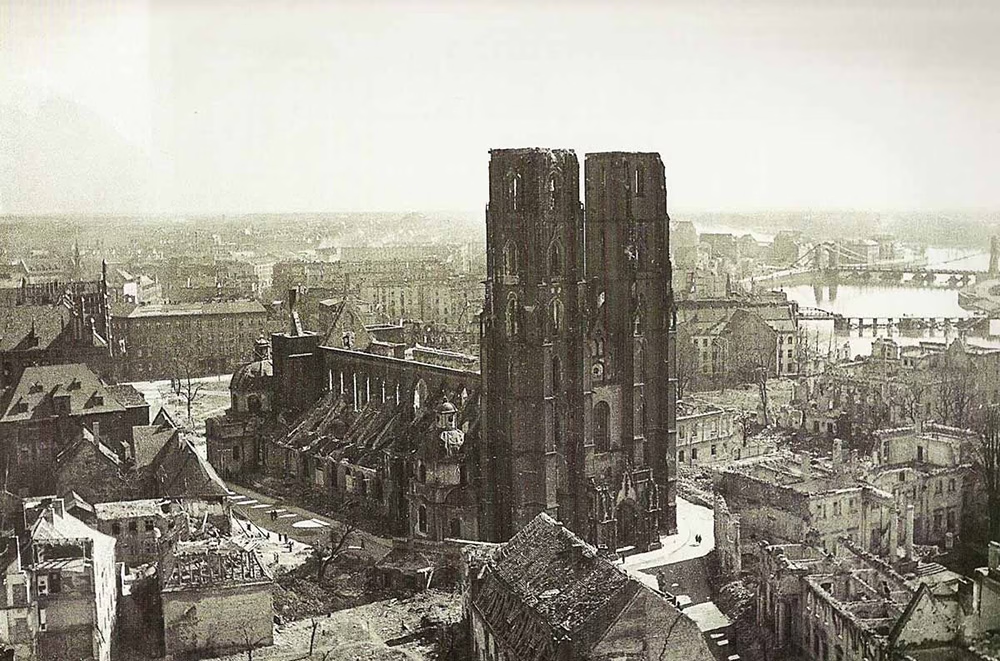
Wałbrzych before the tunnels: coal, industry and collapse
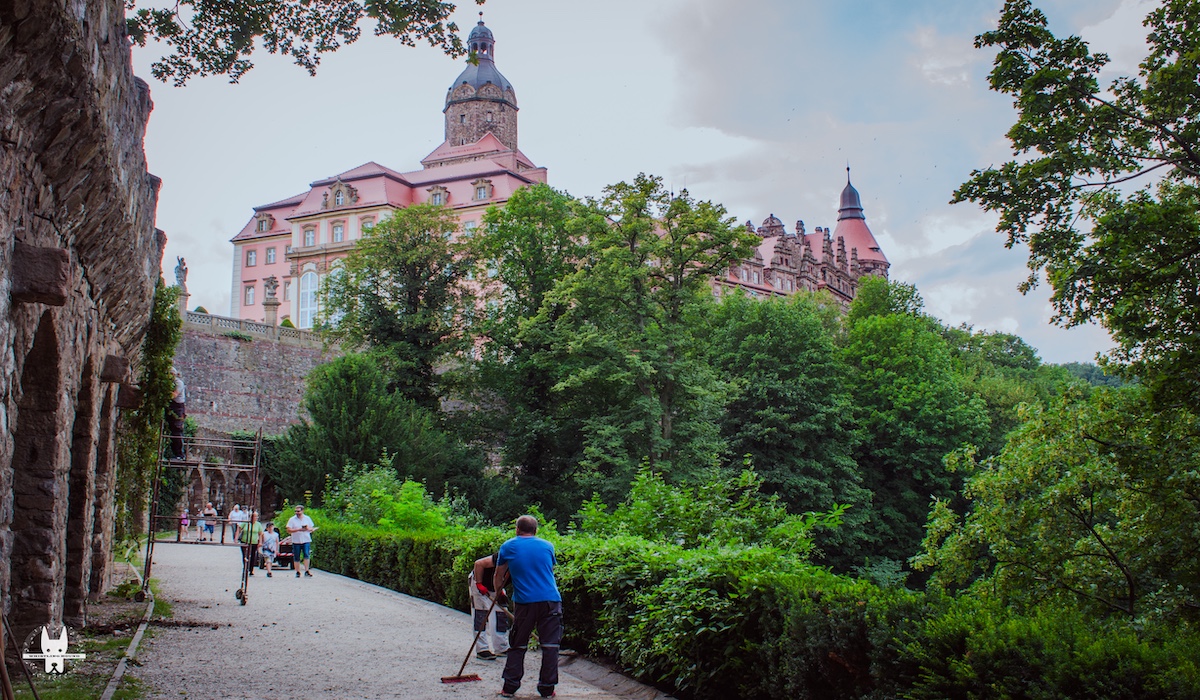
Driving through Wałbrzych
Most visitors come to this region looking for Lower Silesia WWII sites and wartime mysteries. But the deeper story was here long before the Nazis arrived. It was right under the city itself: coal.
Wałbrzych (Waldenburg before 1945) thrived on the edge of the Lower Silesian Coal Basin. Coal mining in this area is recorded from the 16th century, and by the 19th century, it had transformed the town into one of the major industrial centres of Lower Silesia. Mines, railways, textile production, porcelain factories, workers’ districts and aristocratic estates all belonged to the same region. (Source: Official City of Wałbrzych)
It’s important in context for the Osówka Underground and Książ Castle tour from Wrocław. The castle was not just a fairytale residence above a gorge. For centuries, it was connected to labour, forests, mining rights and industrial wealth. The Hochbergs were the castle owners and part of the old Silesian world where aristocratic power, mineral resources and modern industry overlapped.
So, before we reach Osówka or Książ, Wałbrzych offers a deep insight into the region. Mining shaped this place. Eventually, it was mineral extraction, then coal; later porcelain, rail transport and heavy industry. Even the geography contributed to its flourishing. The Sudetic landscape breaks into valleys, ridges and forested slopes. Villages sit in folds of land. Roads disappear between hills. It is easy to understand why, in wartime, this region appealed to planners looking for cover, labour, rail access and distance from Allied bombing.
The Nazi chapter begins late in this story, but it changes the meaning of the whole landscape. By 1943, Germany was no longer expanding confidently. It was defending itself, absorbing the shock of Allied bombing, and trying to move strategic projects underground. That is when the Owl Mountains suddenly became important.
Project Riese (Giant) was one of the most ambitious and least understood construction projects of Nazi Germany. It connected mountains, forced labour camps, Książ Castle, underground halls, tunnels, speculation and death. The surviving documentation is fragmentary, which is why the region still attracts theories: headquarters, arms production, secret weapons, evacuation site, treasure legends. Some are plausible. Some are fantasy. But the physical evidence is real: unfinished tunnels, concrete structures, labour camps, destroyed records, and thousands of prisoners forced to work here in brutal conditions.
The myth is part of the landscape, but it should never replace history. Wałbrzych was created by coal, labour, aristocratic power, industry, war and collapse. The tunnels we are heading towards are only the most dramatic layer of a much older region.
What happened to Wałbrzych?
As we drive through Wałbrzych, you may notice grand old buildings standing beside neglected streets, damaged façades, empty plots and signs of social decline. This doesn’t mean it’s a poor town or a place that “missed” restoration. It is a city that lost its core industry. For centuries, Wałbrzych was known for coal. Mines shaped its economy, housing, railway lines, social life and even the town’s identity. After the fall of communism, the coal mines were closed very quickly. By the end of the 1990s, the local mining industry had effectively disappeared, and thousands of workers lost their jobs. (Source: World Resources Institute)
The result was not only unemployment. The entire district lost its purpose. Shops, workshops and services that depended on mining families weakened. Old workers’ housing deteriorated, and youngsters left the city. Some buildings were too expensive to maintain, but too historically valuable to demolish. That is why Wałbrzych can exhibit different characteristics of industrial pride, aristocratic architecture, poverty, regeneration and neglect all sitting next to each other. (Source: World Resources Institute)
This is important for understanding the region. Wałbrzych is not just the gateway to Książ or Osówka. It is one of Poland’s examples of a post-mining city trying to reinvent itself. The Old Mine complex, cultural projects and urban regeneration show that the city hasn’t entirely collapsed. But the scars are still visible.
Wałbrzych sets the tone for a day of the Project Riese tour from Wrocław. Książ shows aristocratic wealth. Osówka shows wartime secrecy and forced labour. The town itself highlights Wałbrzych’s coal mining history and what happens when an industrial world disappears suddenly.
Into the Owl Mountains: forest, geography and wartime secrecy
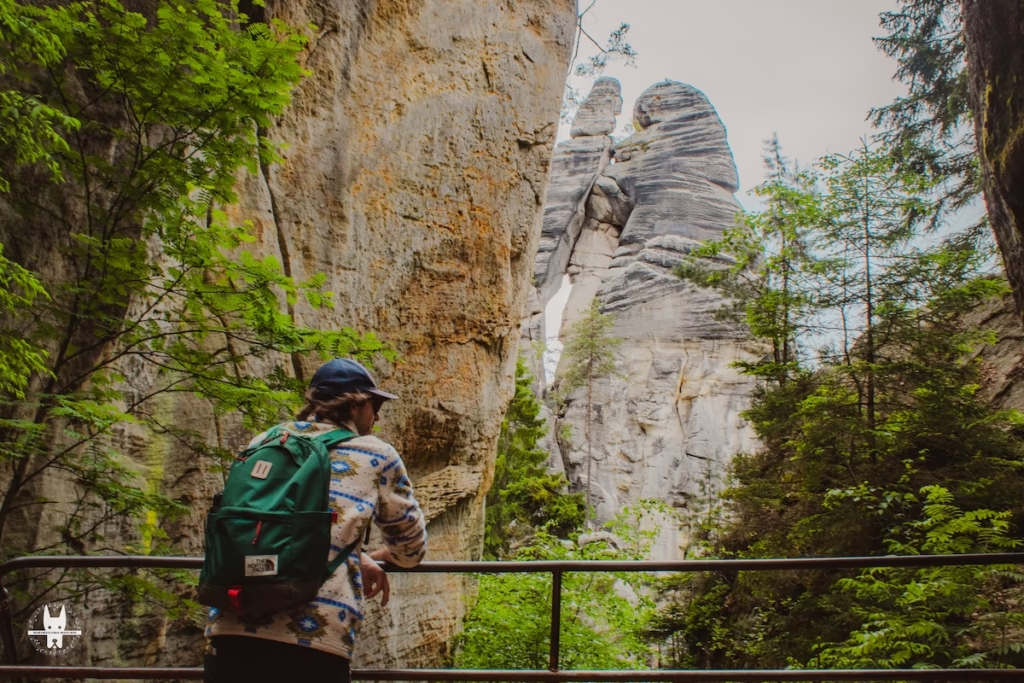
The Wałbrzych forests
As we enter the Wałbrzych forests, it is worth noticing that these woods may look old and untouched, but they are not! The Sudetes have been used for centuries: timber for mines, fuel, glassmaking, construction, charcoal, railways and later industrial production.
During the war, many hilly slopes were more open compared to today. Roads, temporary tracks, barracks, spoil heaps, and construction sites would have been much more visible. Parts of today’s forest landscape were a militarised construction zone in 1944. It was dominated by trucks, guards, prisoners, explosives, drilling, concrete, timber and narrow-gauge transport.
The forest has returned, but it has also covered evidence. That is one reason the Owl Mountains still produce discoveries and rumours. Often it is something more ordinary and more useful to historians: a collapsed adit, a drainage channel, a foundation, a forgotten roadbed, a cable trench, the remains of a camp structure.
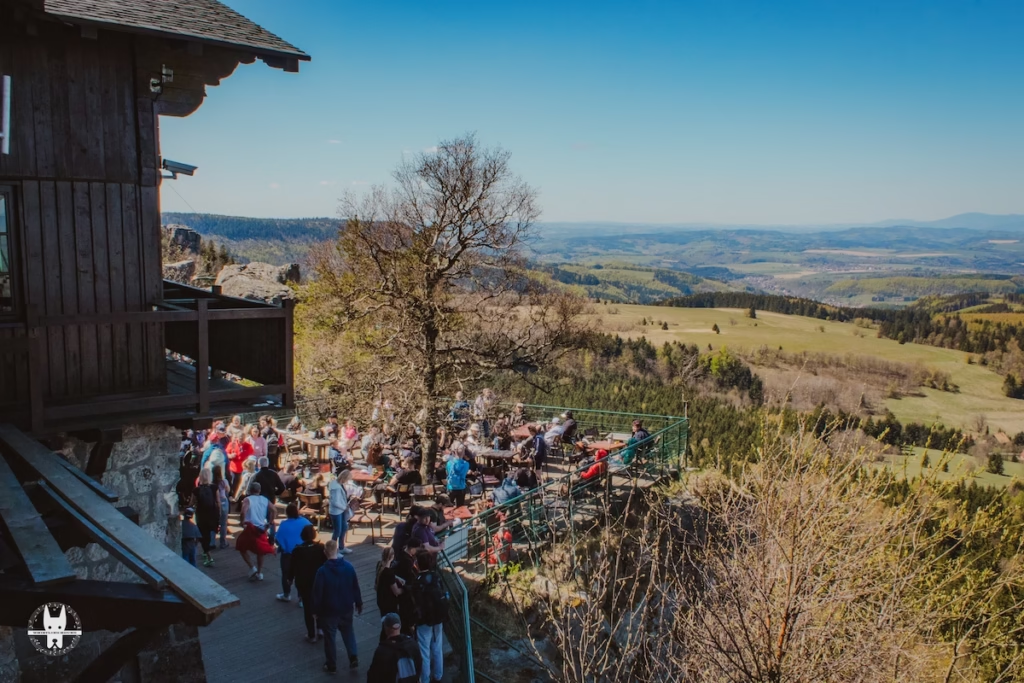
Approaching Owl Mountains
By 1943 and 1944, Nazi Germany was under increasing pressure from Allied bombing and from the war turning against it. Strategic industry, command structures and archives were being dispersed, protected or moved underground. Lower Silesia was attractive because it was still far from the front, heavily industrialised, connected by rail, and full of mountains, mines and forced labour.
This is the setting for Project Riese. The name defines the ambition. The ambition that became the reason behind the failure. It was one of the largest underground construction programmes of Nazi Germany, spread across the Owl Mountains and connected to Książ Castle.
What we can say with confidence is: there were several major underground complexes, including Osówka, Włodarz, Rzeczka, Soboń, Sokolec, Jugowice and Książ Castle. Tunnels were driven into the mountains. Roads, sidings, narrow-gauge transport and construction infrastructure were built in parts of the Riese landscape. Forced labourers, prisoners of war and concentration camp prisoners were used.
What we cannot say with the same confidence is the final purpose. No complete master plan has survived. That is why the discussion remains open. Some evidence points towards headquarters and command functions, especially in relation to Książ. Other evidence points towards underground industrial or armaments production. The most accurate answer is probably not one purpose, but a combination of functions that changed as the war situation deteriorated. (Source: KsiążCastle)
Osówka Underground City: Project Riese inside the mountain
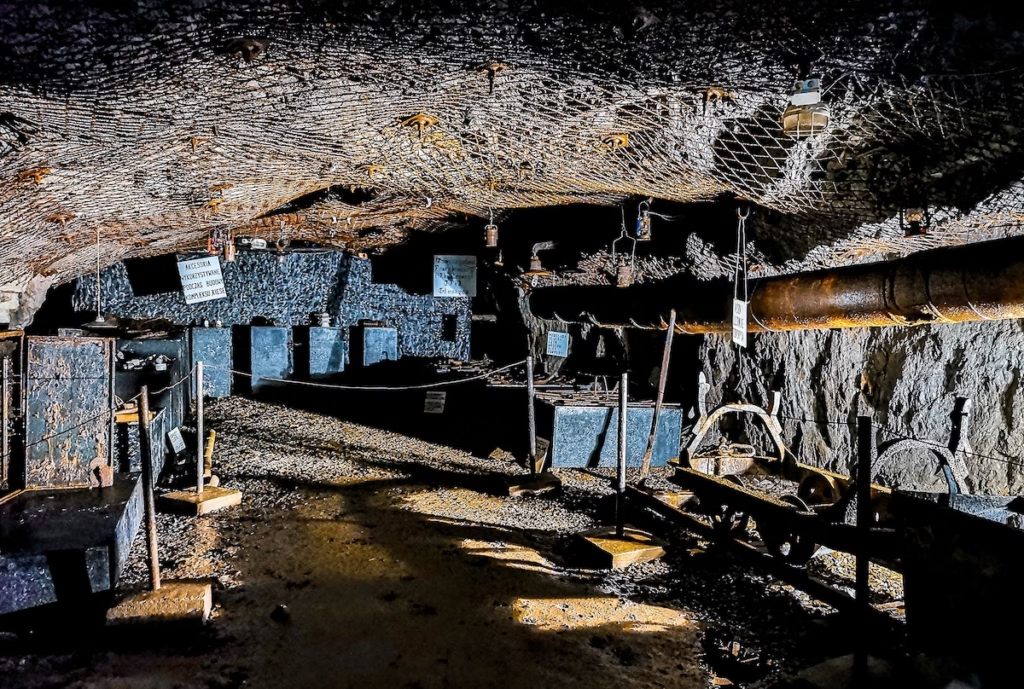
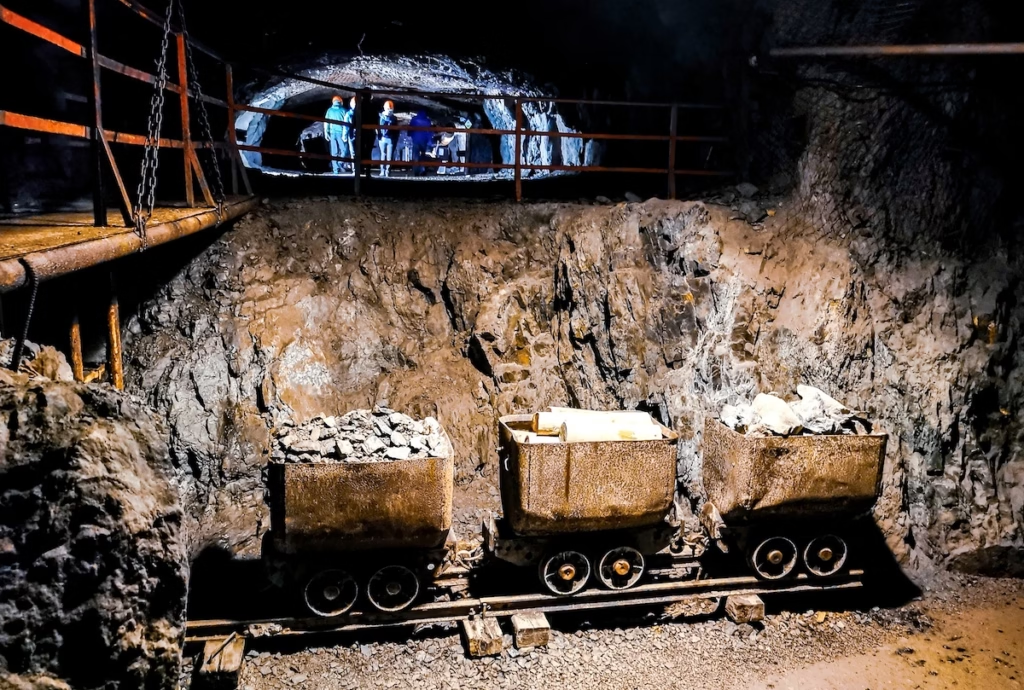
Osówka is one of the most important surviving parts of Project Riese. Work here began in 1943, and the complex was never completed. That unfinished state is exactly what makes the site so valuable. We are not walking through a finished bunker or a polished military headquarters. We are walking through an incomplete construction site.
Inside the tunnels, look at the scale of the project: the height of the halls, the unfinished concrete, the guardroom-like spaces, the changes in level, the places where engineering was still in progress. This required surveyors, miners, concrete, steel, electricity, transport planning and constant labour.
But the labour is the central point. Prisoners worked here with poor food, inadequate clothing, disease, exhaustion and violence. Many came through the Gross-Rosen camp system. Their tasks included cutting trees, building roads, unloading materials, boring tunnels, moving stone and working underground in dangerous conditions. The mystery attracts attention, but the human cost is the historical core. (Source: Gross-Rosen)
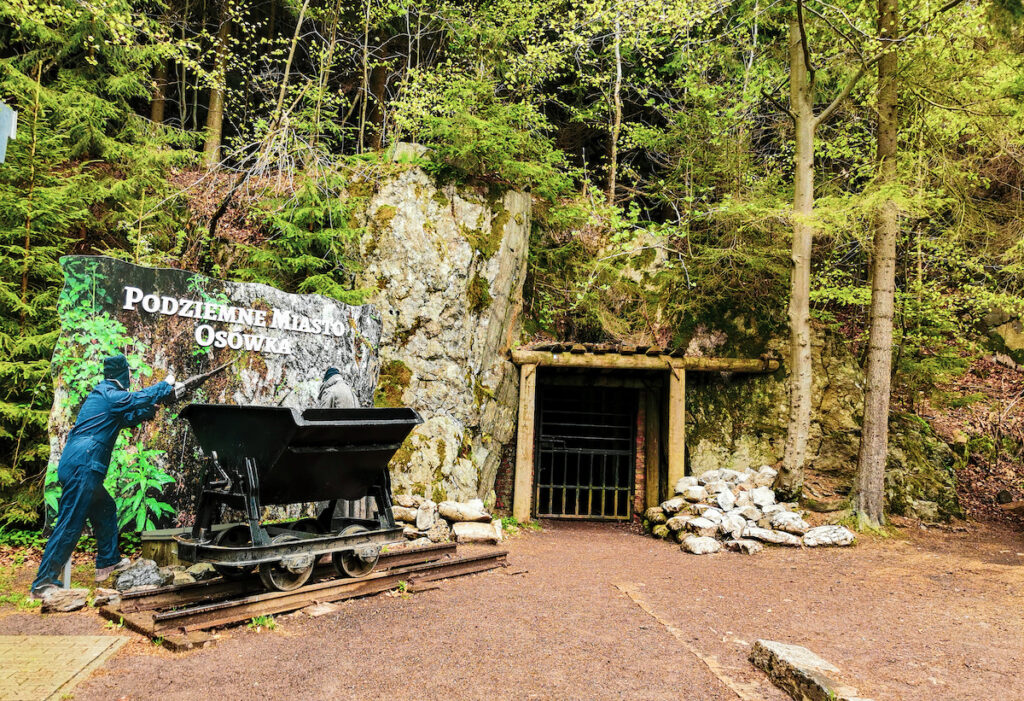
So when discussing what Osówka was meant to become, the answer has to stay focused. If it was intended as part of a headquarters system, the question is why such a scale was needed here. If it was intended for industry, we should imagine machinery, ventilation, power supply, transport and storage. That’s why Osówka becomes part of a wider protected wartime landscape, not merely an isolated bunker. The project was abandoned before completion, and the surviving documentation does not explain everything. That is where history is followed by speculation. The site allows both, but they should never be treated as equal.
The Concrete Structures Above Ground
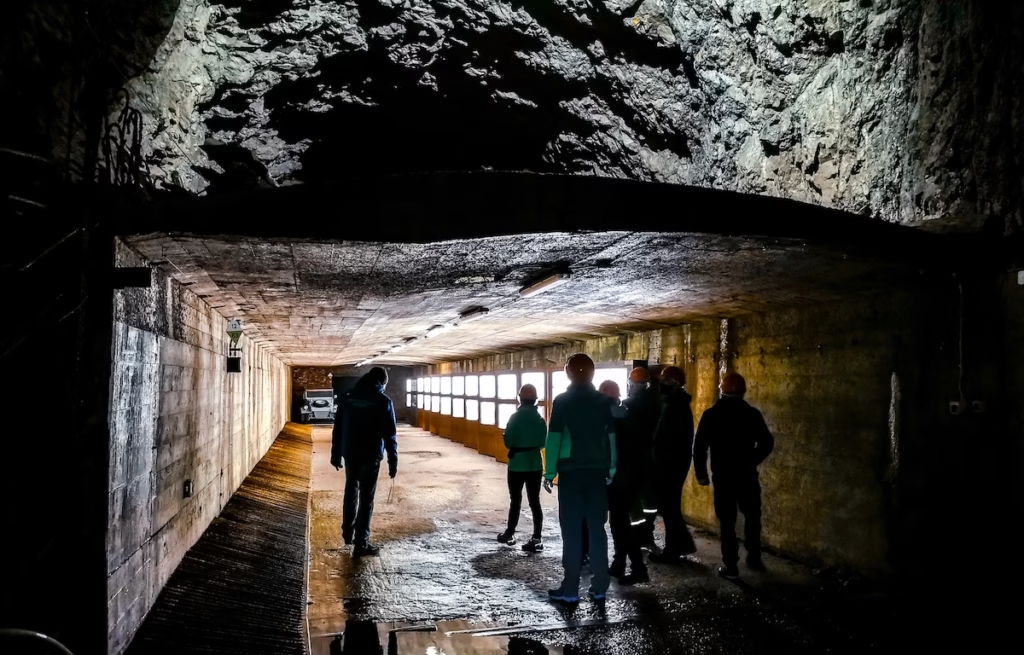
The above-ground remains at Osówka are important because they show that the underground system needed surface infrastructure. They required foundations, access roads, drainage, energy supply, storage and transport.
The best-known structures are usually called the Casino and the Power Station. These are post-war conventional names. The Casino is a long reinforced-concrete structure, about 50 metres in length, with window openings, chimney ducts and installation channels. The other structure is a heavy concrete technical foundation with reservoirs, manholes and internal spaces. Its exact function remains debated.
This is where arguments usually begin. Every unusual feature invites a theory: Hitler’s headquarters, a command centre, an arms factory, a secret-weapons site, storage for archives or valuables. Some theories are reasonable. Some are built on much thinner evidence.
The safest interpretation is also the most historically useful: the Nazis were trying to protect strategically important functions underground at a moment when the war was turning against them. Książ may have had a headquarters or residence role. The Owl Mountain complexes may have been planned for industrial, military or support functions.
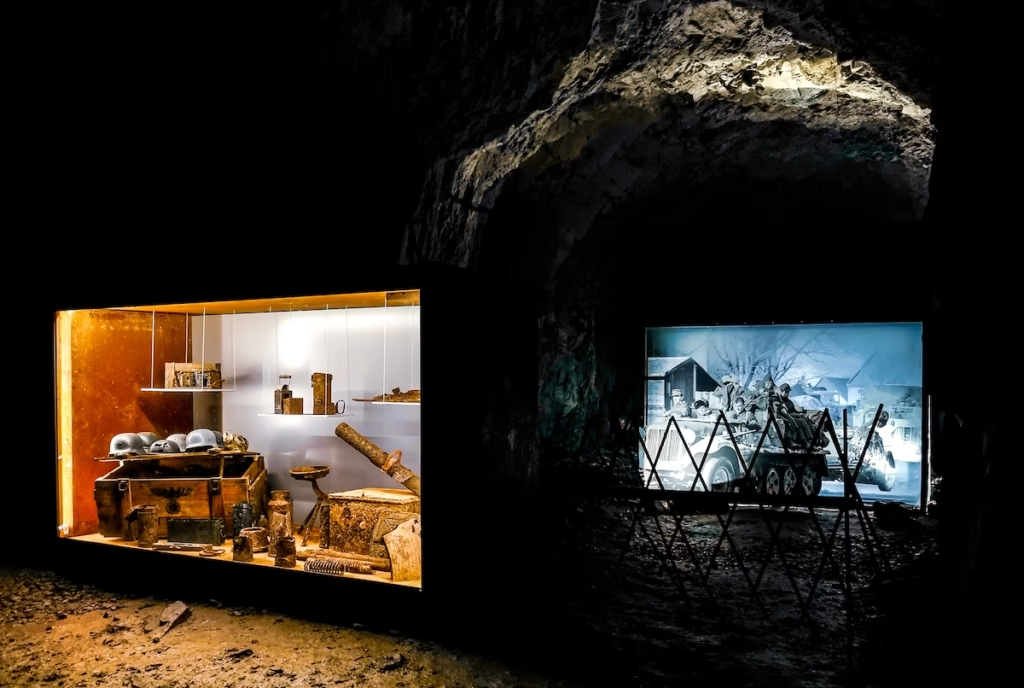
What matters is that these structures reveal ambition under pressure. Project Riese was not a finished secret city. It was a desperate late-war construction programme: enormous in scale, poorly documented, dependent on forced labour, and abandoned before it could become whatever its planners intended.
Osówka Underground City is way more impressive when seen in context: Allied bombing, Project Riese, Gross-Rosen forced labour, Wałbrzych’s coal economy, Książ Castle and the late-war desperation of Nazi Germany.
I guide this as a private full-day WWII and Lower Silesia history tour from Wrocław. For a private Osówka Underground and Książ Castle tour from Wrocław, get in touch. I’ll help shape the route around your interest in WW II history, architecture, and more.
From Osówka to Książ: Why the Castle Belongs to the Same WW II Story
Driving to Książ
Osówka and Książ are two separate tourist attractions in Lower Silesia. First is an underground complex in the Owl Mountains; second is the castle. For Nazis, Książ (Fürstenstein in German) belonged to the same late-war landscape as Project Riese.
At Osówka, the mystery is hidden in rock, concrete and unfinished tunnels. At Książ, the question is more unsettling: why was one of the most important aristocratic residences in Silesia pulled into a military construction project?
Książ connects several layers at once: medieval frontier defence, Silesian aristocracy, industrial wealth, European high society, Nazi confiscation, forced labour and post-war loss. It is not just a castle with underground passages. It is a place where the old world of Silesian nobility collided with the machinery of the Third Reich.
That is why Książ is essential to this Project Riese tour from Wrocław. Książ shows that the project consumed not only mountains and labour, but also heritage, interiors, and the private property of the great family seats of Central Europe.
Aristocracy, confiscation and Nazi transformation of Książ Castle
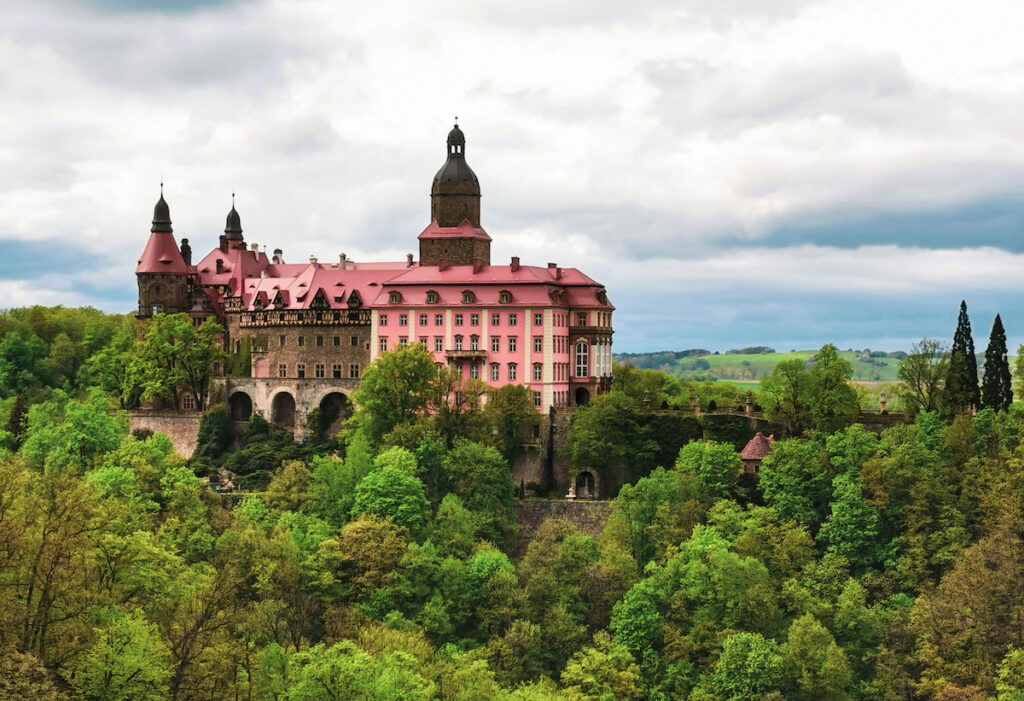
Książ Castle – Poland’s Third Largest Castle & a National Heritage
Książ began as a frontier fortress. The earliest major phase is linked to Duke Bolko I the Strict, ruler of Świdnica and Jawor, at the end of the 13th century. This part of Silesia was not a quiet provincial borderland. It sat between Polish, Bohemian, Austrian and later Prussian power. Castles like Książ were meant to control roads, valleys, forest routes and political territory.
The German name Fürstenstein (Prince’s Stone) already tells us how the site was understood: a princely stronghold on rock, placed above the Pełcznica gorge. Over time, it shed its military character, and its fortifications became a residence. And the residence became a statement. Książ moved from defence to representation. (Source: Książ Castle)
The decisive family in the castle’s later history was the Hochberg family. They took over Książ in 1509 and shaped it for more than four centuries. Their power came from land, status, administration, forests, mining interests and industrial wealth. They belonged to the governing and economic elite of Silesia.
The Castle in its Prime
By the 18th and 19th centuries, Książ had become a major aristocratic seat. Its Baroque rooms, terraces, gardens, library, service buildings and later extensions reflected the ambition of a family trying to stand among the great houses of Europe. The castle was enlarged again in the early 20th century, when Hans Heinrich XV and Princess Daisy were connected to the last great chapter of the Hochberg world.
Princess Daisy is important because she gives the castle a human face. Born Mary Theresa Olivia Cornwallis-West in Britain, she married into the Hochbergs in 1891. She moved in elite European circles, wrote memoirs, observed aristocratic life from the inside, and later became one of Książ’s most recognisable figures. Her story also shows how fragile that world became. The First World War, financial pressure, changing borders, and family crisis weakened the old order long before the Nazis arrived.
So when we look at Książ, we should not see only beauty. We should see accumulated medieval, aristocratic, industrial and social power. That is exactly what made its destruction and militarisation during the Second World War so dramatic.
Książ Castle Under Nazi Germany
By the 1930s, the Hochberg estate was already weakened by debt, political pressure and the collapse of the old aristocratic order. Eventually, the Nazi takeover of Książ happened.
Princess Daisy, already ill and using a wheelchair, was removed from the castle in 1941 and taken to a villa in Waldenburg, today’s Wałbrzych. Her British background and family connections made her politically uncomfortable for the regime. She died in 1943, in a city already being absorbed into the violence and secrecy of wartime Germany. The castle was taken over and transformed. From 1943 to 1945, Organisation Todt began adapting Książ for new military purposes. Interiors were stripped, and decorative elements were damaged. Existing rooms were altered. The castle was no longer being treated as a residence, but as material for a state project. (Source: Książ Castle)
The Nazis not only built new structures, but they also repurposed them. A castle like Książ offered isolation, status, space, thick walls, access routes, and a landscape suitable for underground construction.
The likely plan was connected to high-level command or headquarters use, possibly linked to Hitler’s wider system of protected wartime residences. But we must say this carefully. The surviving evidence points strongly towards a major headquarters-related function, yet the complete plan has not survived. That absence of documentation is exactly why Książ remains part history, part investigation, part myth.
Książ Castle Undergrounds
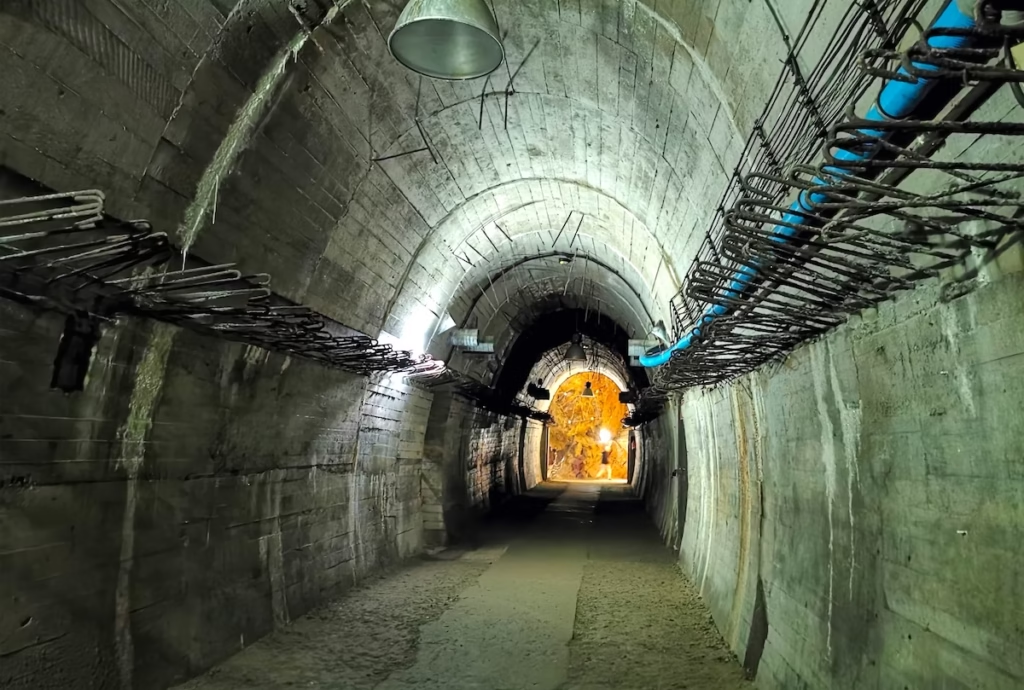
The underground beneath Książ is different from that of Osówka. Osówka is an industrial and military construction site hidden in the mountains. Książ’s undergrounds are an extension of the castle itself. A secret level cut beneath aristocratic architecture.
The underground tourist route is a half-kilometre section. It includes corridors cut into the rock, reinforced halls, bunker-like service rooms and technical spaces. The route descends roughly 50 metres below the castle area. One of the most striking features is the filled-in elevator shaft, which was intended to connect the underground with the castle courtyard above.
The elevator shaft is physical evidence that the underground system was meant to communicate directly with the castle. It was part of a planned transformation of the site. (Source: Książ Castle)
The officially known underground area is around 3,200 square metres, with the possibility that the system was larger than what’s accessible. As with Osówka, we are dealing with an unfinished project. The war ended before the site reached its intended form.
So what was it for? The most responsible answer is: probably a protected headquarters or command complex connected to the wider Riese programme, with support functions that may have included communication, shelter, storage, technical infrastructure and secure movement. The more precise the claim becomes, the weaker the evidence usually gets. It’s safe to say the tunnels are real; Organisation Todt worked here; prisoners were used to build it. We can say the castle was altered for Nazi purposes. We can say the project was unfinished. What we cannot honestly say is that every chamber has a confirmed function.
The Nazi Gold Train in Wałbrzych: legend, evidence and Wałbrzych’s mythology
The Gold Train story
The Nazi Gold Train story belongs to Wałbrzych because it fits the regional landscape. Mountains, tunnels, a collapsing Reich, vanished records, forced evacuations and a region full of abandoned infrastructure.
The legend says that, in 1945, as the Soviet army advanced, the Germans loaded a train with valuables, gold, art, weapons or archives, and hid it somewhere near Wałbrzych, possibly in a tunnel connected to the wider wartime underground network.
No confirmed train has ever been found. No reliable document proves that such a train was hidden here. In 2015, the story exploded internationally after claims that the train had been located near the railway line between Wrocław and Wałbrzych. Scientific surveys did not confirm the claim. Excavations in 2016 found no train and no tunnel at the proposed site.
So, should we dismiss the whole subject? Not completely. The Gold Train is historically useful, but not because it proves hidden treasure. It shows how Lower Silesia became a landscape of post-war uncertainty. In 1945, German civilians fled or were expelled, Soviet troops arrived, borders shifted, Polish settlers came into unfamiliar towns, and many documents, collections and private possessions disappeared. Rumours became a way of explaining real loss.
Could undiscovered wartime infrastructure still exist in these mountains? Yes. Could documents, objects or sealed spaces still turn up? Also yes. But that is very different from saying there is a confirmed Nazi treasure train waiting under Wałbrzych.
The best way to treat the Gold Train is as a modern legend attached to real history. The legend may be unproven, but the conditions that created it were very real.
My reflection on the Osówka Underground and Książ Castle from Wrocław
Most historical sites give us a finished story. Project Riese tour from Wrocław does the opposite. It leaves us with evidence, absence and responsibility.
Tunnels, shafts, concrete, roadbeds, foundations, underground chambers and altered castle spaces are the real evidence. The absence is documentary: no complete master plan, no full explanation, no final version of what the system was meant to become. The responsibility is human: thousands of prisoners were forced to build it, and thousands died because ambition, secrecy and desperation mattered more to the regime than human life.
Wałbrzych helps us understand the beginning and the aftermath. Coal created the city. Industry gave it power. The collapse of mining left scars that are still visible. The Owl Mountains show how geography can become a weapon: useful for concealment, construction and myth. Osówka shows the unfinished underground machine. Książ shows the old aristocratic world being stripped and militarised.
That is why this route is not only about the Nazi mystery. Project Riese survives because it was never completed. Wałbrzych survives because it has had to rebuild itself after every system that once defined it disappeared. And that is the theme of the whole day: ambition, secrecy, collapse and myth, all caught in the Owl Mountains.
FAQs – Osówka Underground and Książ Castle Day Trip
1. Can you do the Osówka Underground and Książ Castle tour from Wrocław in one day?
Yes. Osówka Underground and Książ Castle pair ideally as a full-day trip from Wrocław, usually with Wałbrzych and the Owl Mountains included.
2. What was Project Riese?
Project Riese was a secret Nazi underground construction programme in the Owl Mountains and around Książ Castle during WWII. Its exact purpose remains debated.
3. Is Osówka Underground City worth visiting?
Yes. Osówka is one of the most accessible Project Riese sites and one of the strongest WWII underground attractions in Lower Silesia.
4. Was Książ Castle meant to be Hitler’s headquarters?
Possibly, but not conclusively. The castle was taken over and transformed by the Nazis, and its underground works were linked to Project Riese.
5. Is the Nazi Gold Train real?
No confirmed Nazi Gold Train has ever been found near Wałbrzych. The story remains an unproven legend tied to the region’s tunnels and wartime chaos.