
Wrocław Old Town rewards the curiosity-driven travellers. Once a beating heart of medieval Europe’s largest provinces, such as Bohemia, Habsburg, and Prussia, Wrocław switched names, rulers, and even local population over centuries.
The largest mass immigration post-WWII saw the German population being expelled, and Poles from eastern Poland (now Lithuania, Belarus and Ukraine) settling in Silesia and parts of present-day western Poland. Yes, Poland lost 77,000 sq km of area post-war. The German Breslau became Polish Wrocław.
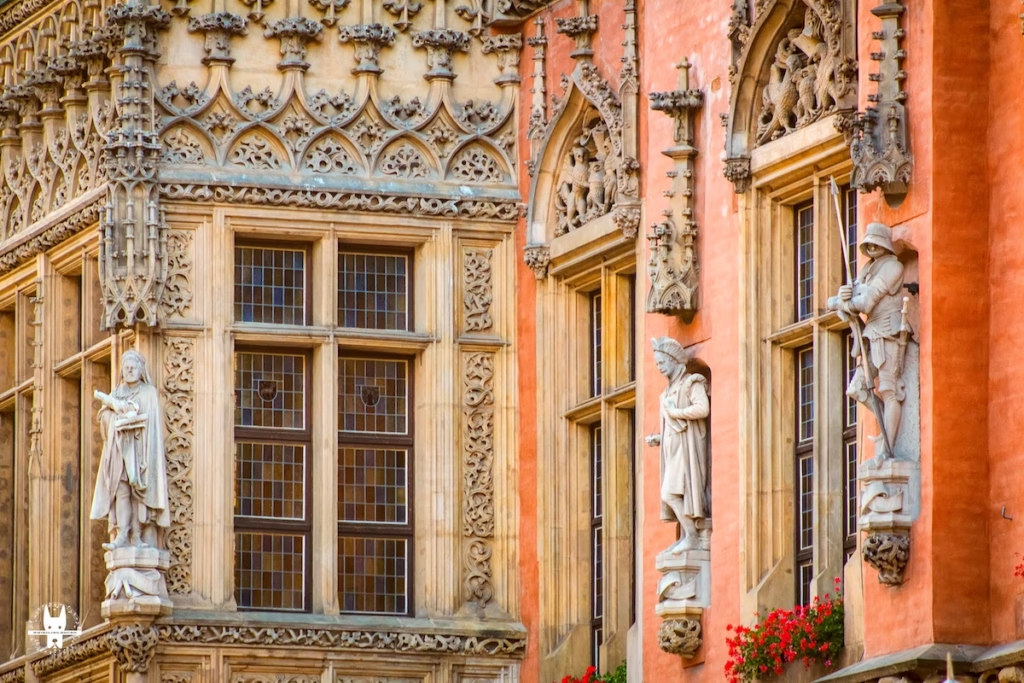
Wrocław had several names in the past, such as Vratislavia, Wrotizlav, Vretslav, Presslau, and Breslau. Different rulers left their unforgettable mark on the city. And the historic Old Town of Wrocław treasures some of the meticulously preserved medieval architecture in Central Europe. Travellers walk through Wrocław Rynek – the Main Market Square, getting amazed by the pastel coloured merchant houses and colourful buildings. Truly so, it is one of the finest Old Town Markets in Europe. But, beyond those vibrant facades, people completely miss the dense layers of history carved into the roofs, drainpipes, and side streets. Back in medieval times, art was a dominant means of self-expression.
Slow down and look closely; those rooflines of Gothic churches, the subtle street names, and carved details on façades are where the city reveals its story – the story of medieval trade, artistic subversion, and structural transformation.
I am a tour guide in Poland, a resident of Wrocław and a history lover for life. Let me take you on an architectural and historical deep-dive into the easily overlooked details of Wrocław Old Town.
Must read: Wrocław Travel Guide 2026 – A Local Handbook for First-Time and Repeat Visitors
Look At The Details Above Wrocław Rynek Streets
The western side of the market square is my favourite. But some of the city’s finest details are just above eye level. Glazing roofs, gutters, finials, mythical animals, eagles and people doing their own thing. Medieval craftsmen loved carving stories with stone, bricks, clay and metal.
Why are the roof tiles of St Elizabeth Church Wrocław green and brown?
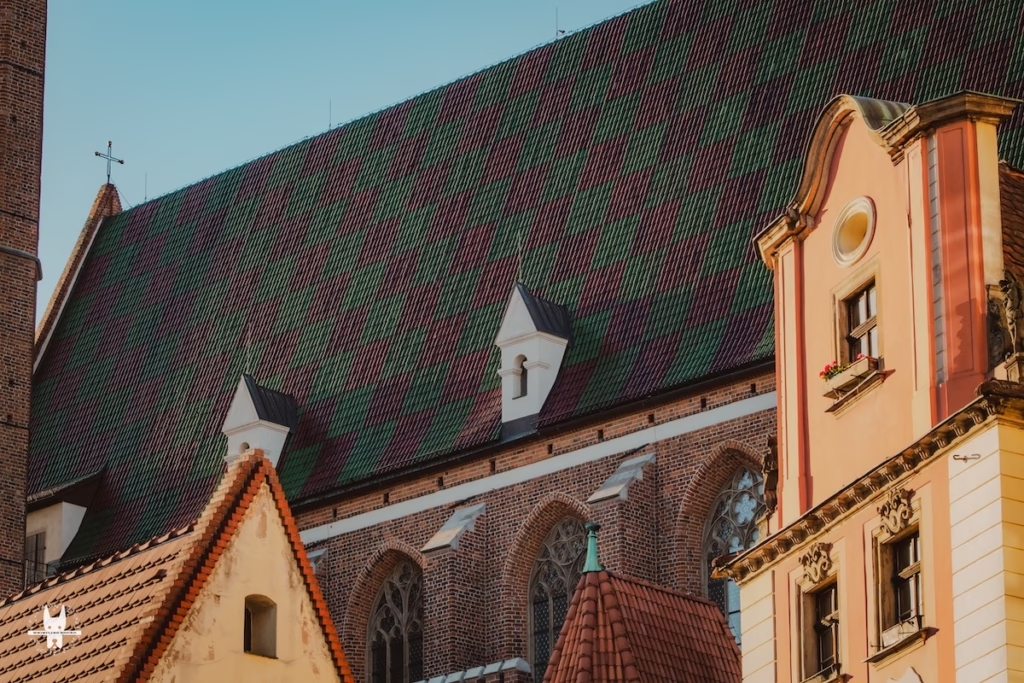
The west of Wrocław Rynek is rich in details. The most dominant is the roof and tower of St Elizabeth Church on the northwestern corner. It’s the roof covered with glazed ceramic tiles in green and red-brown colour. The tiles form a checkerboard roof pattern in Breslau, dating back to 1598. Known locally as szachownica, the tiles use the traditional mnich-mniszka system, known as monk-and-nun tiles. One curved tile sits over another to create the covering.
The tile colours were deliberately glazed, which was engineering as much as design. Firing the Silesian clay with lead glazes involved copper oxide for green and iron oxides for red-brown, which vitrified the surface. It sealed the tiles against freezing winters, which would otherwise shatter unglazed clay.
The St Elizabeth church survived more than one disaster. Its tower lost its spire to a storm in 1529. Remarkably, as the 130-metre wooden spire collapsed into the churchyard, it missed the nave entirely. It sparked the local legend that angels held up the falling timber.
The church itself suffered a major fire in 1976. Following the devastating 1976 fire, state conservators (PKZ) commissioned custom ceramic workshops to replicate the 1598 layout tile by tile, using the original style. You are looking at a roofing tradition that has been part of this landmark since the 16th century.
Looking for the best places near Wrocław? Check this out – Best Day Trips from Wrocław: Castles, WWII Secrets and Unique Places in Lower Silesia
What are the dragons & faces on the Old Town Hall?
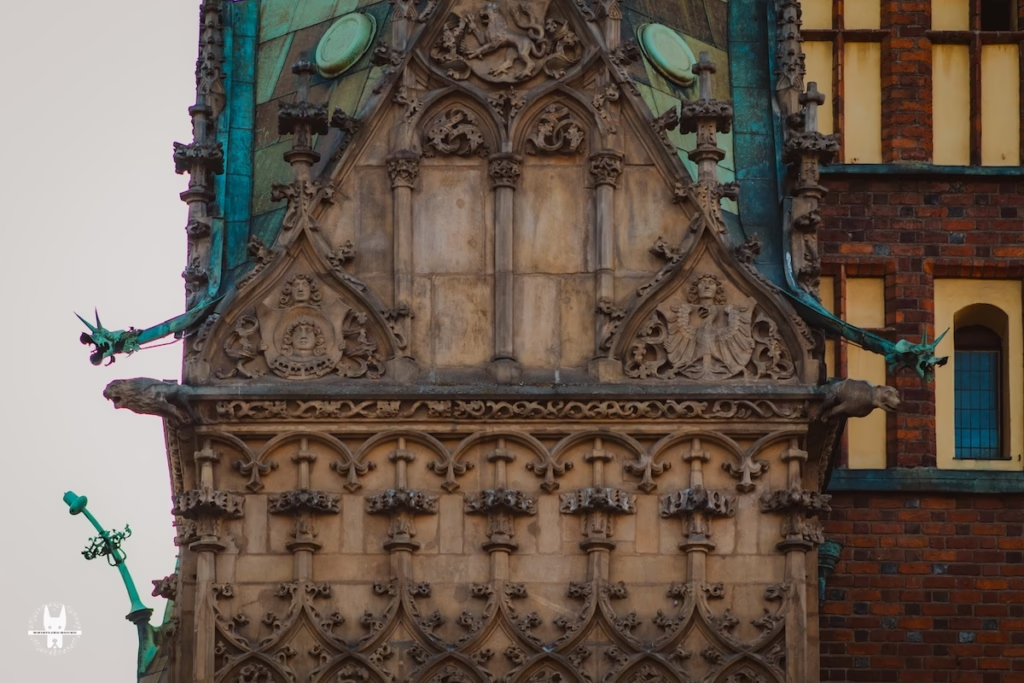
The Old Town Hall in Wrocław Rynek is a proper carousel of medieval life in the city. Among the elaborate stonework are animals, monsters and other strange figures. An easily overlooked detail is the gargoyle built into the roof drainage system.
In medieval architecture, placing grotesque beasts and dragons on the building’s exterior fulfilled an apotropaic function. Scary imagery on the outside kept spiritual evil away from sacred and civic interiors.
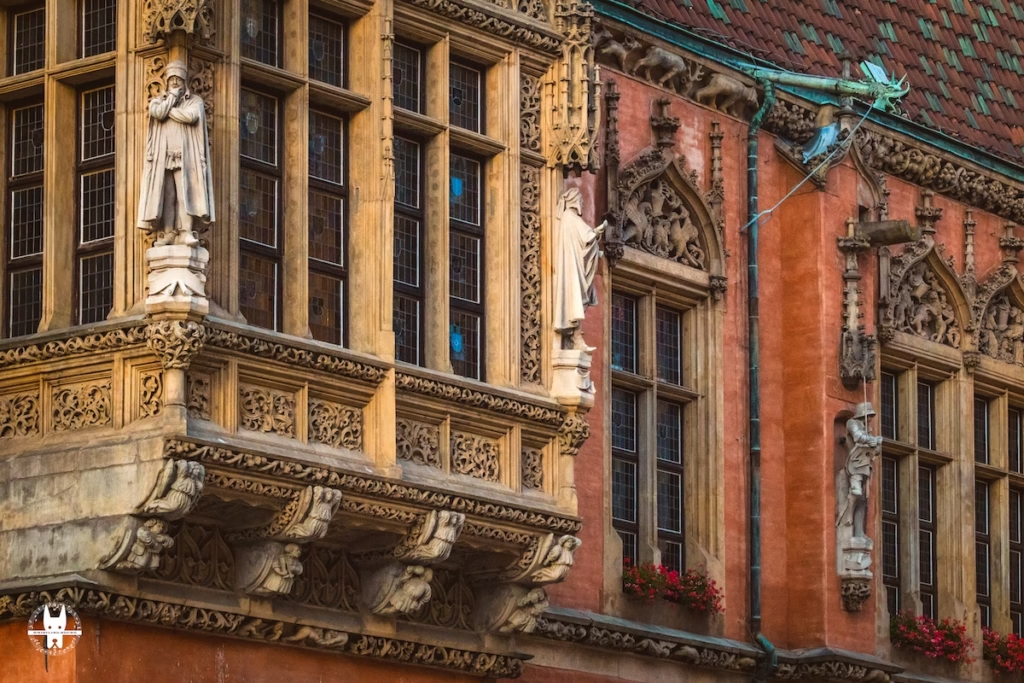
Instead of allowing the rainwater to run down the walls, a projecting stone spout drained it away. The Town Hall’s decoration turns drainage into sculpture. Engineered as stone water spouts, known locally as rzygacze, these gargoyles protected the fragile Late Gothic sandstone from water erosion, blending fine masonry with monstrous bestiaries. Dragons, monkeys, lions and other creatures appear among the stonework. Parts of the building are decorative, while others are practical elements.
Medieval Wrocław Life Depicted at its Finest
Look closely at the southern façade and the roofline. The southern façade of the Old Town Hall is full of people. There are saints, musicians, townspeople, innkeepers and figures from everyday medieval life. The façade was built and decorated in stages during the late Gothic period. Its richest southern section developed between the late fifteenth and early sixteenth centuries.
The building is full of these small encounters between everyday life and fantasy – a knight fighting a dragon, animals chasing one another, musicians playing the pipe and violin, people drinking, sword-fighting, and gambling. A woman being carried in a wheelbarrow. Positioned directly above the Piwnica Świdnicka entrance, these bas-reliefs acted as a 15th-century caricature of tavern life. Above the windows, you can find a drunk journeyman and an angry wife.
Don’t miss this! Dining Inside Europe’s Oldest Restaurant: Piwnica Świdnicka, Wrocław
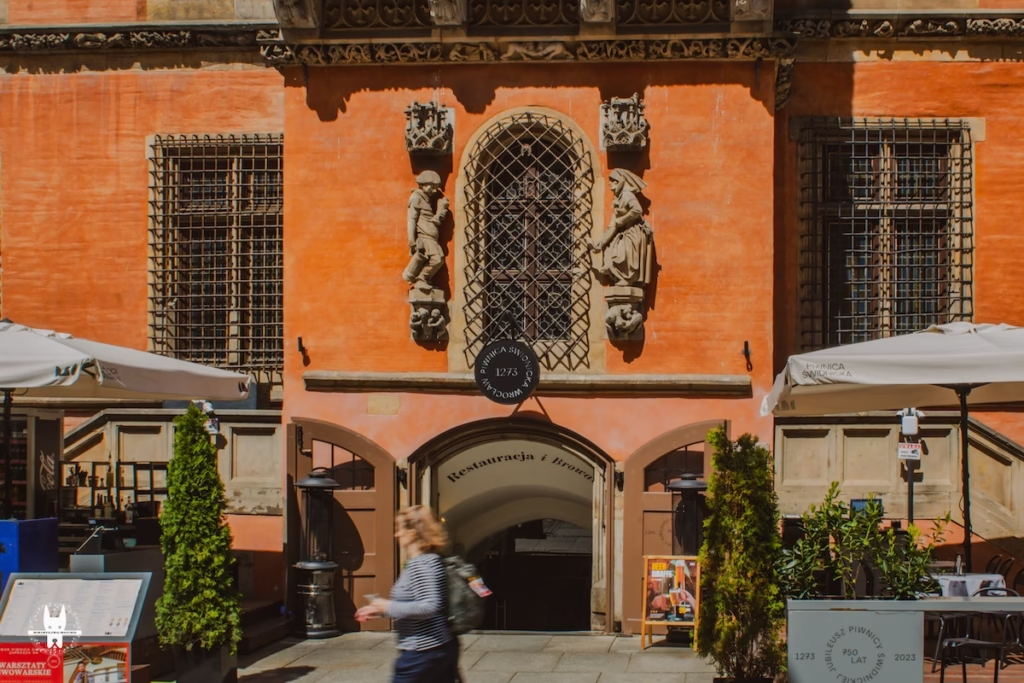
Wrocław Town Hall was the pride of the city and the seat of civic power. The building, decorated with coats of arms and saints, depicted the ordinary life, humour, mythical animals, faith and superstition prevalent in medieval Wrocław.
What are those globes and roosters on the spires and turrets in Wrocław Rynek?
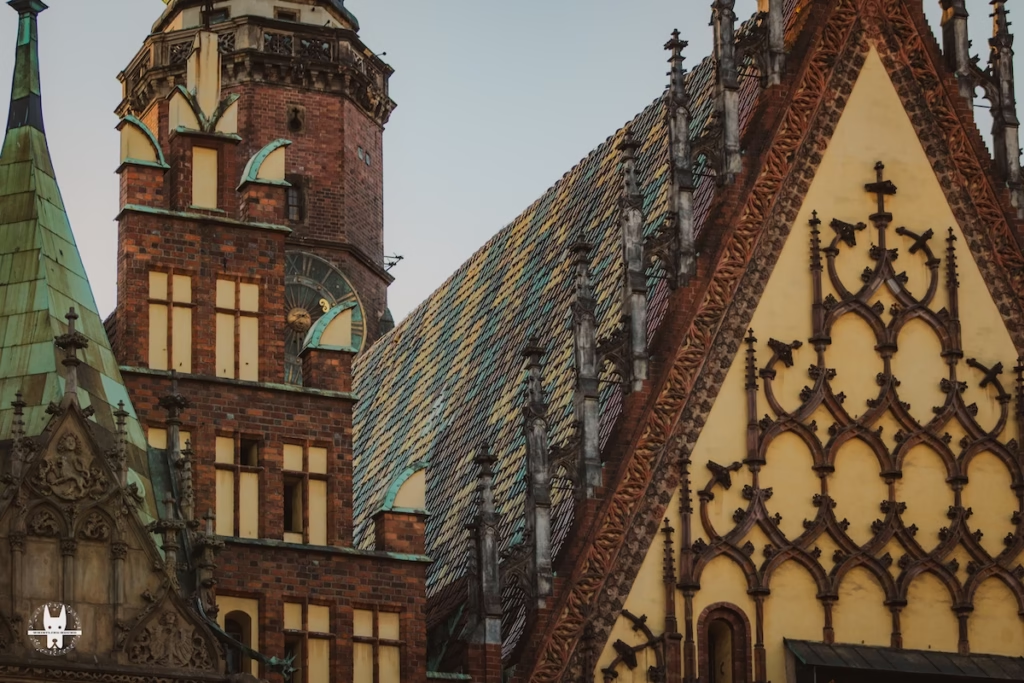
The metal objects, known in Polish architecture as a gałka wieżowa or sygnaturka finial, above historic spires and ridge turrets are often overlooked. Some are weather vanes. The rooster, for example, has long carried Christian associations with vigilance and the biblical story of Peter’s denial. The globe beneath a cross represents the world under Christ’s dominion.
Across Central Europe, hollow metal spheres were sometimes used as time capsules during major roof repairs. Coins, documents and newspapers could be placed inside before the sphere was sealed again. So when you see one of those small metal objects shining above a Wrocław roof, it is hiding the city’s history.
In Wrocław, these spire globes, like those atop St. Elizabeth’s or the Town Hall turrets, have yielded centuries-old coins and handwritten records during post-war restorations, offering insights from past builders across time.
The Faces, Figures and Strange Art of Wrocław Old Town
Wrocław’s historic centre is full of sculptures. Some of them are medieval, some are modern. The best part is that the two periods coexist and complement each other.
Who was Eugeniusz “Get” Stankiewicz?
Beside St Elizabeth’s Church stands a small medieval house known as Jaś (Hensel). It was once the home and workshop of Eugeniusz “Get” Stankiewicz, one of Wrocław’s most distinctive graphic artists. Get worked with copperplate engraving, a demanding technique that produces exceptionally fine lines. Today, Get’s original workshop inside “Jaś” operates as the Domek Miedziorytnika (Copperplate Engraver’s House), holding original plates, printing presses, and graphic works.
For me, the most intriguing trace of Get is outside on the wall of Jaś. There is a cross, a Christ figure, a hammer, and nails. The words underneath it say “Zrób to sam” — “Do it yourself.” Get Stankiewicz created the original work in 1976. The National Museum in Wrocław describes it as an assemblage made from a wooden cross, Christ figure, hammer and nails. A sandstone version was later placed on the façade of Jaś. The title directly parodied Adam Słodowy’s famous 1970s Polish TV show ‘Zrób to sam’ (Do It Yourself), which taught viewers how to make toys and tools during communist-era shortages.
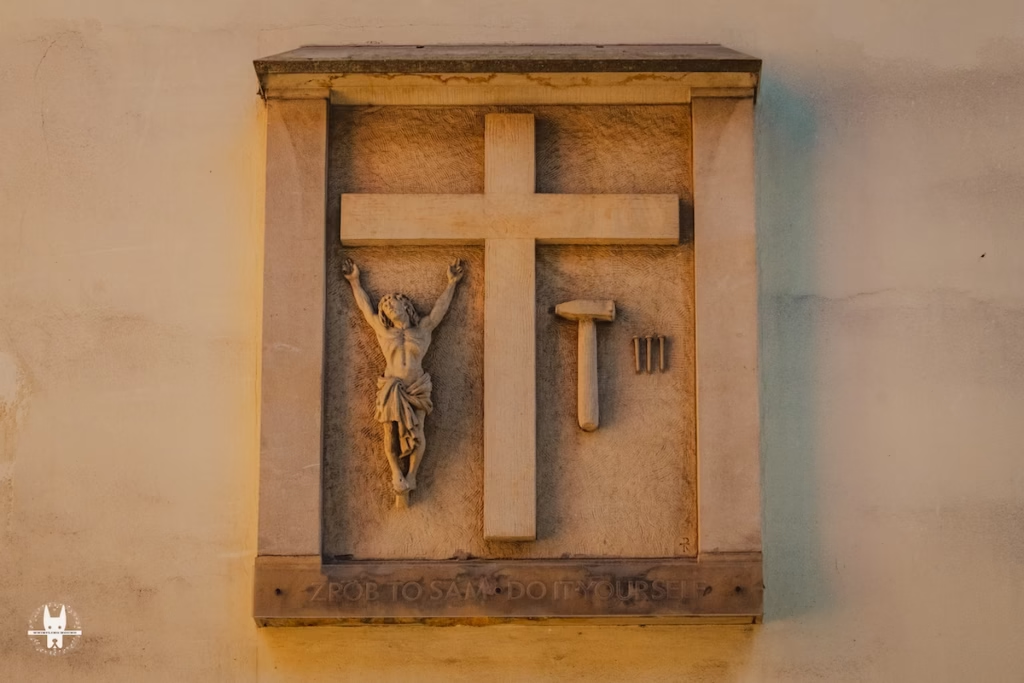
By combining a slogan with sacred imagery, Stankiewicz created a direct commentary on personal responsibility, existential choice, and institutional authority. The viewer is left with the disturbing suggestion that the tools are there. The choice is yours. Wrocław has always found ways to put serious ideas into ordinary streets.
The Bronze Statue of Eugeniusz “Get” Stankiewicz at Plac Solny
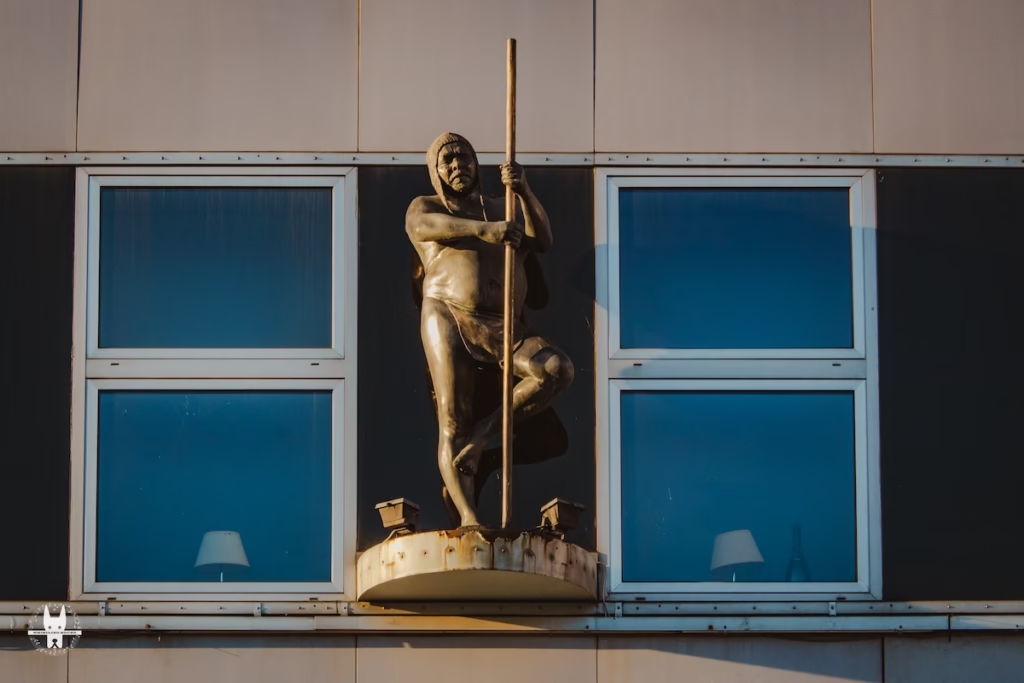
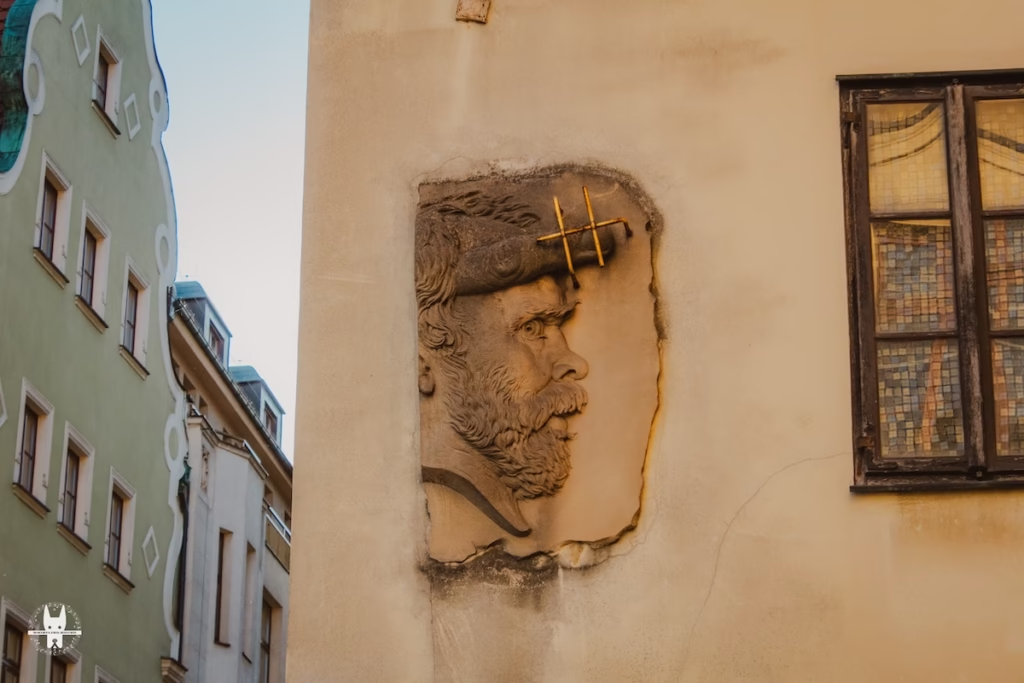
On the corner facade of Plac Solny 2/3 (the historic Apteka Pod Murzynem / “Under the Blackamoor Pharmacy”), a dark bronze relief features Get-Stankiewicz’s visage. The building housed a pharmacy dating back to the 15th century, which traditionally used an exotic figure as its sign to denote imported overseas spices and rare medicines. When sculptor Stanisław Wysocki recreated the historical facade emblem in the 1990s, Get posed as the physical model. The casting was given a dark patina to honour the historic pharmacy’s name and original aesthetic.
Why do Jaś and Małgosia have “Mors Ianua Vitae” above the arch?
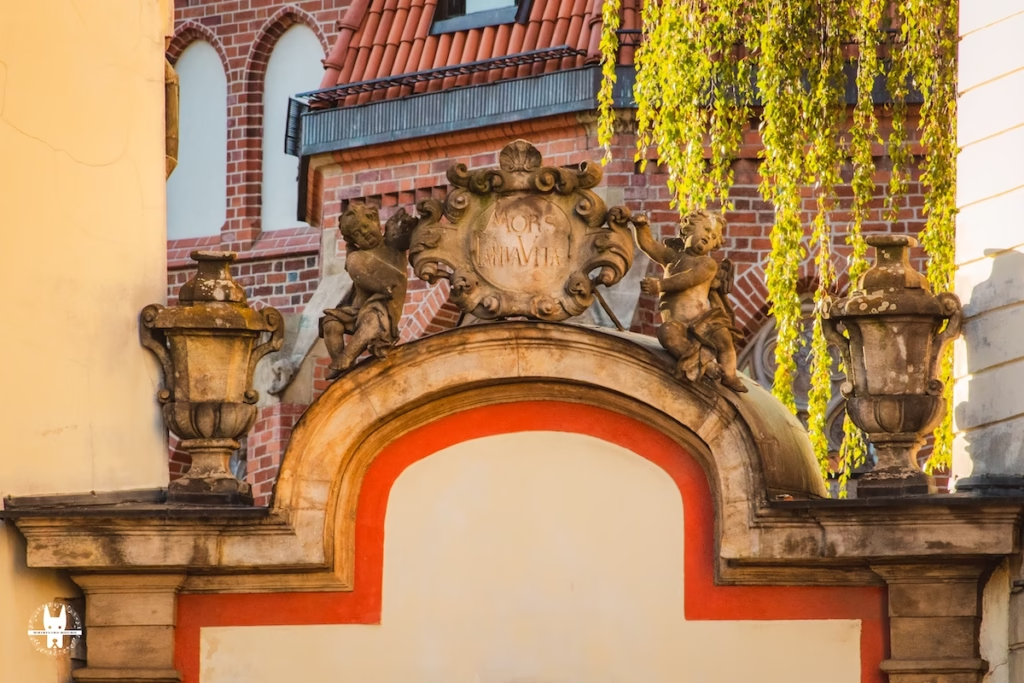
The two tiny houses in front of St Elizabeth church are among the most photographed corners of Wrocław. Their post-war names, Jaś i Małgosia, make them look almost like characters from a fairy tale. The detail above the arch says: Mors Ianua Vitae – “Death is the gateway of life.” This inscription dates to the Baroque gateway of 1728. The arch once marked the entrance to the cemetery beside St Elizabeth’s Church until the eighteenth century. Known as altarist houses (domy altarystów), these medieval cottages framed the parish churchyard until Prussian hygiene laws forced the liquidation of the cemetery in 1772.
Wrocław’s Streets Still Remember Their Trades
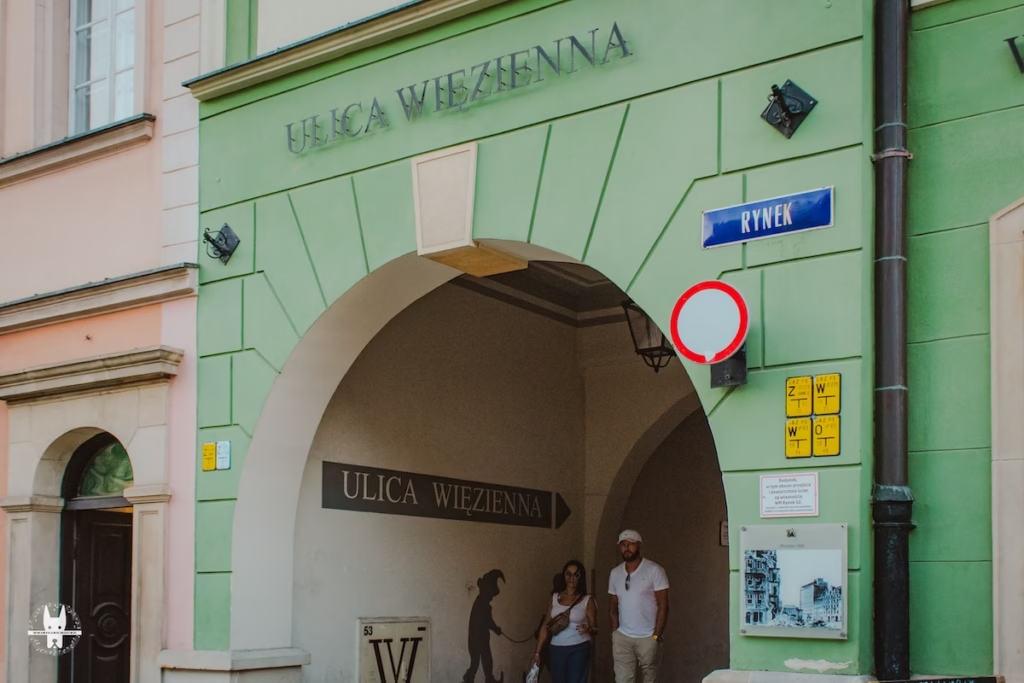
Wrocław’s Old Town is also a map of its medieval economy. Learn to read parts of it in the names of its streets leading to Rynek.
Nożownicza: Nożownicza comes from nożownicy, craftsmen who made knives and scissors. The street’s historical German name, Messergasse, also referred directly to the knife-makers.
Szewska and Kuźnicza: Szewska was the street of the shoemakers. In medieval records, streets like Szewska and Kuźnicza often bore names ending in bridge (Schuhbrücke and Schmiedebrücke), referring to the heavy timber planking laid over the swampy soil to keep heavy trade wagons moving. The name points to the craftsmen who worked here. It is another reminder that medieval Wrocław Centre was organised around trades.
Kuźnicza takes its name from the forge. The street formed an important route between the Market Square and the northern part of the city, leading towards the area of the former castle and the river.
Kotlarska: The name Kotlarska refers to kotlarze, coppersmiths and makers of metal vessels.
Jatki and Kiełbaśnicza: Jatki comes from the butcher stalls that once occupied the lane. Gated at both ends at night and built with a sloping central drainage channel to wash away waste, this narrow lane kept the biohazards of medieval meat processing strictly isolated from the main Market Square. Today, the street is better known for its small historic buildings and the famous animal monument that was erected in 1997 to commemorate the slaughtered animals. Nearby, Kiełbaśnicza street points to another food trade: sausage-makers.
Wrocław Streets Around The Old Town Hall
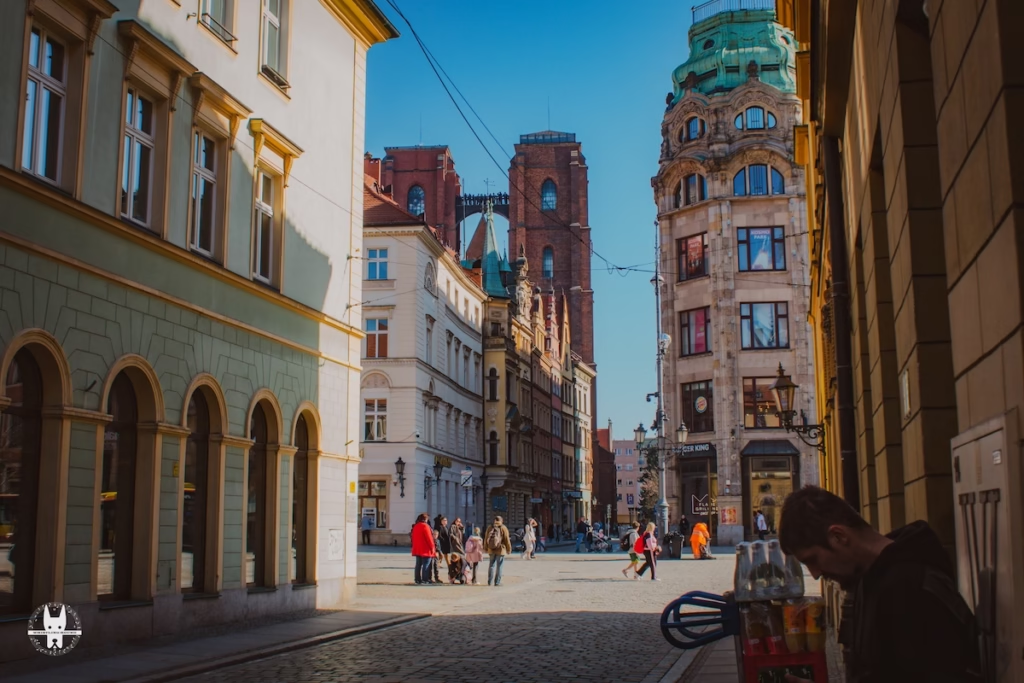
Sukiennice and Mennicza: Sukiennice takes us into the textile trade. The name refers to the cloth merchants who operated around this part of the Market Square. Mennicza refers to the mint. Tucked into the quieter southeastern corner of the Old Town, it housed the ducal and later royal mint (Münzstraße), placed near the city walls for maximum security while pressing Silesian silver coins.
Wrocław street names show how closely trade, money and urban life were tied together. In the Old Town, you are walking through the remains of a medieval commercial map.
The Buildings That Reveal Another Wrocław
Not everything around the Rynek is medieval. Some of the most interesting buildings belong to a completely different Wrocław.
Feniks: the department store that once had a giant globe
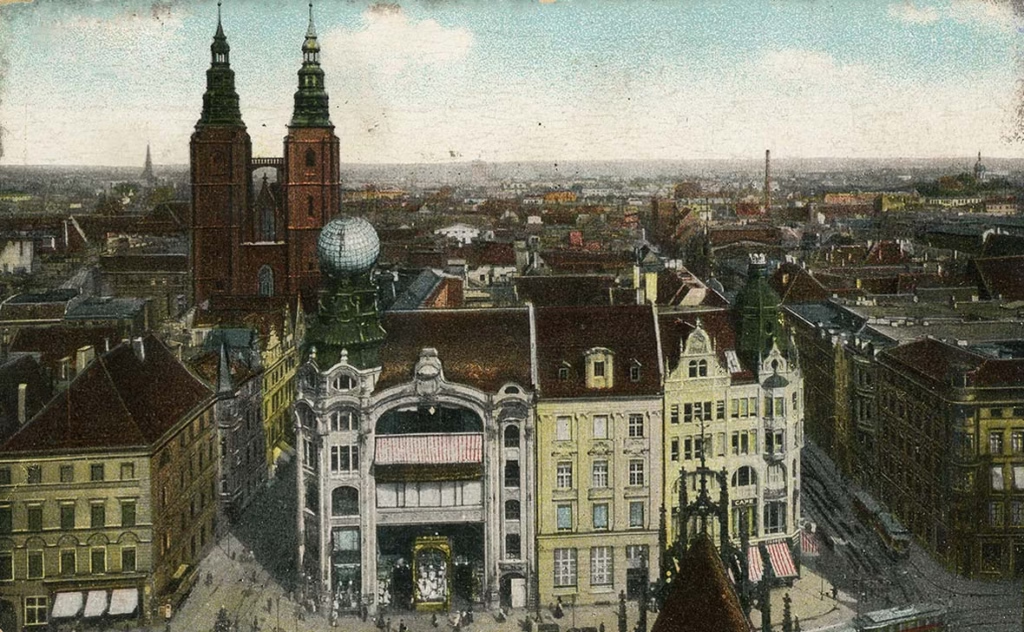
Photo Courtesy: Fotopolska.eu
At the corner of the Rynek and Szewska street stands Feniks, formerly the Barasch Brothers’ Department Store. When it opened in 1904, it was one of the most spectacular commercial buildings in Breslau. It had large glass displays, Art Nouveau decoration and a huge illuminated globe above the corner tower. Designed by architects Georg Griebel and Max Saal, the grand emporium (Kaufhaus Barasch) showcased cutting-edge structural steel framing and wide glass display windows that transformed shopping into urban spectacle. Four sphinxes appeared to carry the globe.
Inside, shoppers entered a world of glass, marble, metal, electric lighting, lifts and luxury goods. In 1929, the department store was modernised. The elaborate Art Nouveau façade was simplified, and the famous globe was removed. In line with the 1920s modernist push toward functionalism, the ornate stonework was stripped back into sleek horizontal bands of travertine limestone. The Baraschs were Jewish merchants who were later forced to sell the business by the Nazi regime. Artur Barasch was murdered in Auschwitz in 1942, while Georg escaped Germany with his family.
The building tells the story of modern commerce, Jewish Wrocław, Art Nouveau, the rise of modernism, Nazi persecution, and War and reconstruction. Look at Feniks today; it’s an icon of the progressive 20th-century Breslau.
The modernist giant at Rynek 9–11
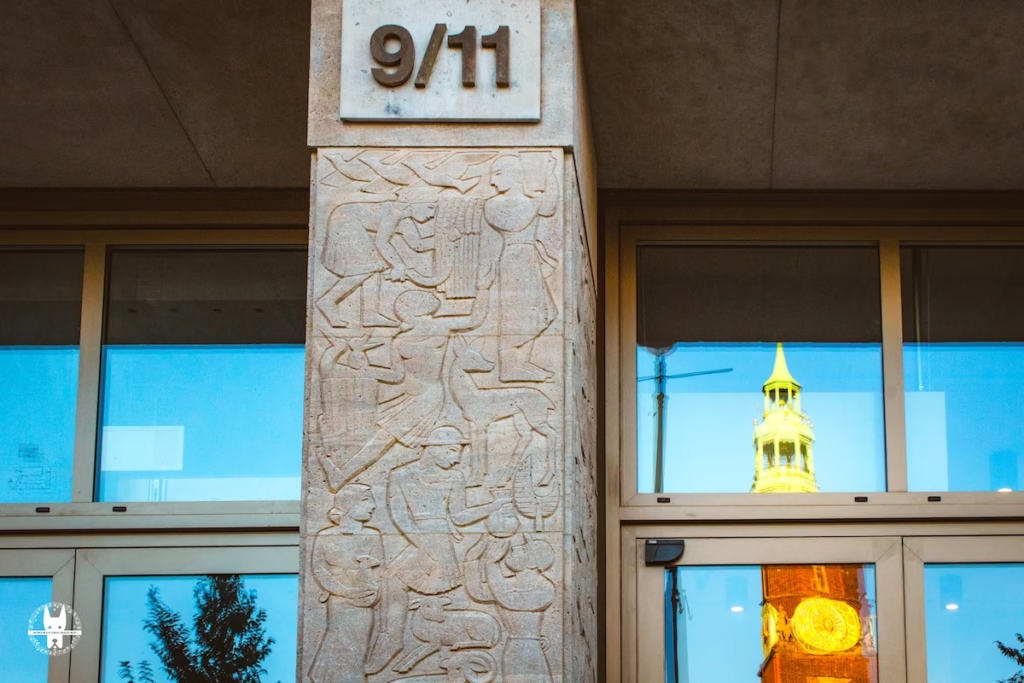
In the south-western corner of the Rynek, the building doesn’t quite belong there. It is now occupied by B&B HOTEL Wrocław Old Town. Built in 1931 as the Municipal Savings Bank, it does not look like the colourful townhouses around it.
Heinrich Rump designed the building after winning an architectural competition. Constructed between 1930 and 1931, it stands as Wrocław’s premier example of New Objectivity (Neue Sachlichkeit). The movement stripped away historical ornamentation in favour of sleek, functional stone blocks.
It was one of the first true high-rise buildings in Wrocław. Its story goes back to an idea that was even more radical. Max Berg, the architect of Centennial Hall and Wrocław’s city architect until 1925, had imagined replacing parts of the historic Market Square with modern high-rise buildings. That never happened, and the old Rynek survived. It stands today as a reminder of what Wrocław might have become. Look at its entrance.
The reliefs by Gustav Adolf Schmidt combine Egyptian-inspired forms with scenes from modern city life. Framed in dark granite, these Art Deco bas-reliefs subtly highlight the building’s original financial function by pairing symbols of modern commerce and industrial gears with ancient motifs of wealth and security. Cars and telephones appear among the imagery. The fascination with Egypt was very much part of the interwar period, particularly after the discovery of Tutankhamun’s tomb in 1922. It is an odd sight beside Gothic and Baroque façades. But that is precisely the point. Wrocław’s Old Town is not frozen in one century. It is a layered city.
Plac Solny: The WWII Bunker Beneath the Flower Stalls on Wrocław Rynek
Plac Solny has another story hidden below ground. Under the square is a wartime air-raid shelter built during the Second World War. The reinforced-concrete structure formed part of the defensive infrastructure of Festung Breslau. Designed under the direction of municipal architect Richard Konwiarz in 1943, the 1,000-square-metre bunker was engineered four metres below ground. It has reinforced-concrete ceilings up to three metres thick to withstand heavy Allied bombing.
Today, you can enter it. The underground space has been adapted into a museum featuring wartime objects, uniforms, equipment, and film costumes. Now operating as MovieGate, the space blends WWII military history with a collection of authentic film props and costumes, set inside the original blast-proof chambers.
Hundreds of people buy flowers on Plac Solny every day, completely unaware that a blast-proof labyrinth sits directly beneath their feet. This is the best way to understand this city.
If these micro-details sparked your curiosity, imagine unravelling them in person. I run private, carefully curated walks for travellers who prefer real history, quiet corners, and rich context over canned scripts. Fill out the private tour request form and let’s craft a walk through Wrocław you won’t find on any standard guide.
FAQs – Wrocław Old Town
Q: What is the significance of the roof tiles on St Elizabeth’s Church in Wrocław?
The green and red-brown checkerboard pattern (szachownica) dates back to the 1598 roof restoration. Fired using lead glazes with copper and iron oxides, the interlocking monk-and-nun (mnich-mniszka) ceramic tiles were engineered to seal the clay against Wrocław’s harsh freeze-thaw winter cycles.
Q: Why are there carvings of people drinking and fighting on Wrocław Town Hall?
The southern façade features 15th-century bas-reliefs depicting brawls, gambling, and tavern life. Positioned directly above the entrance to Piwnica Świdnicka, one of Europe’s oldest subterranean beer cellars, these stonework scenes served as a satirical caricature of the tavern culture unfolding below.
Q: What is hidden inside the metal globes on Wrocław church spires?
Known in Polish architecture as a gałka wieżowa, these hollow metal spheres beneath spire crosses traditionally functioned as time capsules. During major repairs, builders and city officials soldered coins, newspapers, and parish records inside the globe to preserve a snapshot of local history.
Q: What is located underneath Plac Solny in Wrocław?
Directly beneath Plac Solny lies a 1,000-square-metre WWII air-raid shelter built in 1943 for Festung Breslau. Constructed with reinforced concrete ceilings up to three metres thick, the subterranean bunker is now open to the public as the MovieGate exhibition space.
Further read: Festung Breslau 1945: The Siege That Destroyed Wrocław During World War II