They say, the devil is in the details. The best thing about Wrocław is that it does not hide its devil or details. They sit in plain sight, built into façades, bridges, and corners of streets most people cross without stopping. These hidden things to see in Wrocław reveal the part of the city most visitors miss. From architectural illusions to local legends embedded in the streets of Wrocław Old Town, there’s plenty to explore.
A painted window in the Market Square aligns with real ones but does not exist. A carved head remains fixed high on the cathedral wall with no confirmed origin. Two narrow houses beside St Elizabeth’s Church mark the boundary of a former cemetery, still carrying a Latin inscription about the afterlife.
Many of these locations exist without restriction, within the city centre. You just have to look harder. Some belong to medieval construction, others to post-war rebuilding, and a few to contemporary installations placed in older districts.
As a tour guide in Wrocław, I have uncovered these secrets of the city over the past years. Let me present you with a list of Wrocław’s most intriguing architectural curiosities that actually exist in the city. Remember, when it comes to local legends, there’s hardly any factually correct version.
If you’re looking for unusual things to do in Wrocław beyond the obvious, use this list as your guide.
Must read: Ultimate Guide to Wrocław Sightseeing Tours This Spring & Summer
Wrocław Legends You Can Actually See
1. Mostek Pokutnic (Penitent Bridge), St Mary Magdalene Church
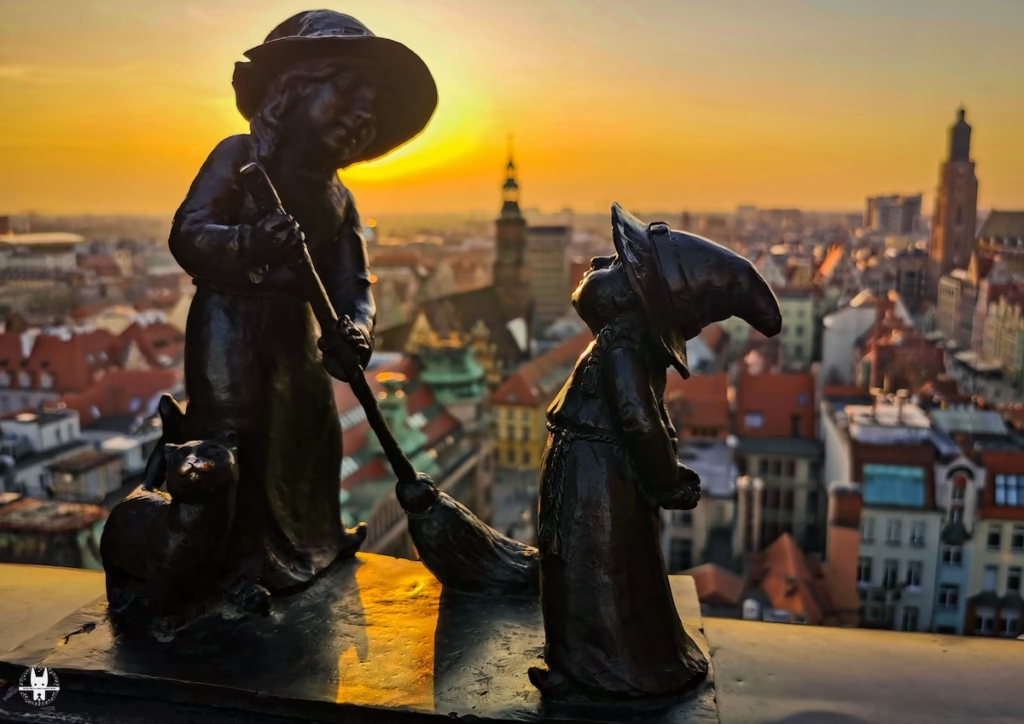
Set between the towers of St. Mary Magdalene Church on Szewska Street, this narrow Gothic bridge sits around 45 metres above ground. It offers a unique perspective of Wrocław Rynek. It was built in the 15th century as a connection between the towers.
The name Mostek Pokutnic appears in local folklore. A popular version describes a young woman named Tekla, known for avoiding work and ignoring responsibilities. According to the story, she was cursed by her father. Later, she was abducted and taken to the bridge and made to sweep it as punishment. Eventually, Martynka and the wizard Michał, a travelling magician, set her free from the confinement.
Today, the Penitent Bridge is a popular viewpoint in Wrocław Rynek. Access is through the church tower, with a stair climb leading to the top.
2. Brama Kluskowa (The Dumpling Gate), Ostrów Tumski
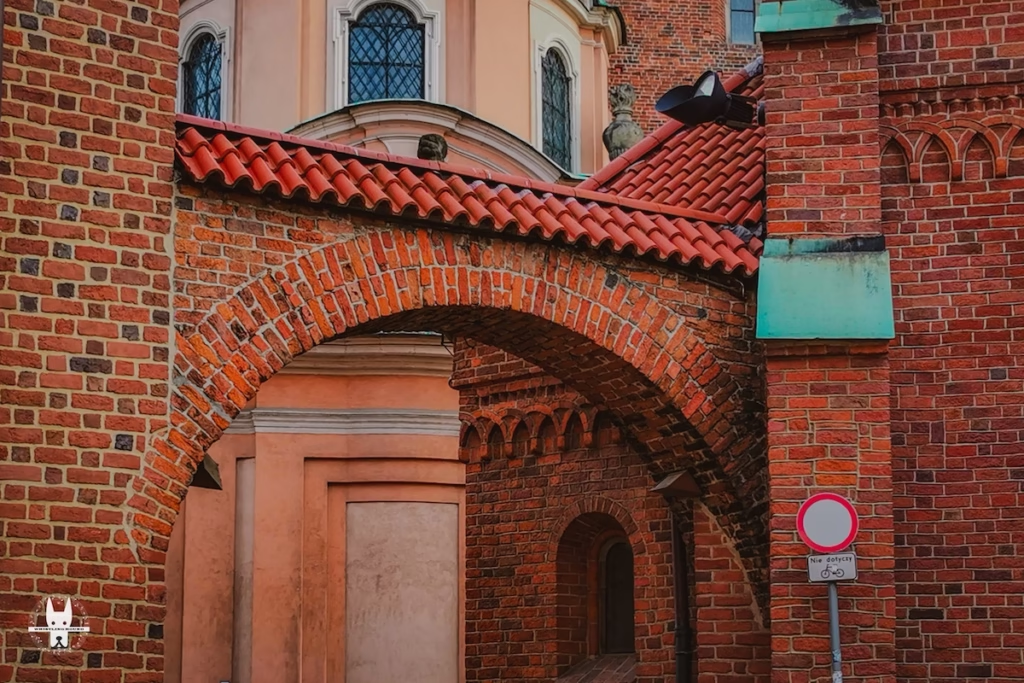
Located between the Church of St Giles and the former chapter house on Ostrów Tumski, this small brick arch is known as Brama Kluskowa. Above the arch sits a rounded stone form that gives the gate its name, making it one of the most hidden things to see in Wrocław.
The associated story centres on Konrad, a widower whose wife was known for making the most delicious Silesian dumplings. In his dream, Konrad was promised a fresh bowl of dumplings one condition: one dumpling must remain uneaten. The day he broke that condition, the final dumpling flew and fixed itself above the arch as stone. The legend appears in modern compilations of Wrocław folklore. The detail is small and easy to miss without looking up.
3. The Stone Head, Cathedral of St John the Baptist, Ostrów Tumski
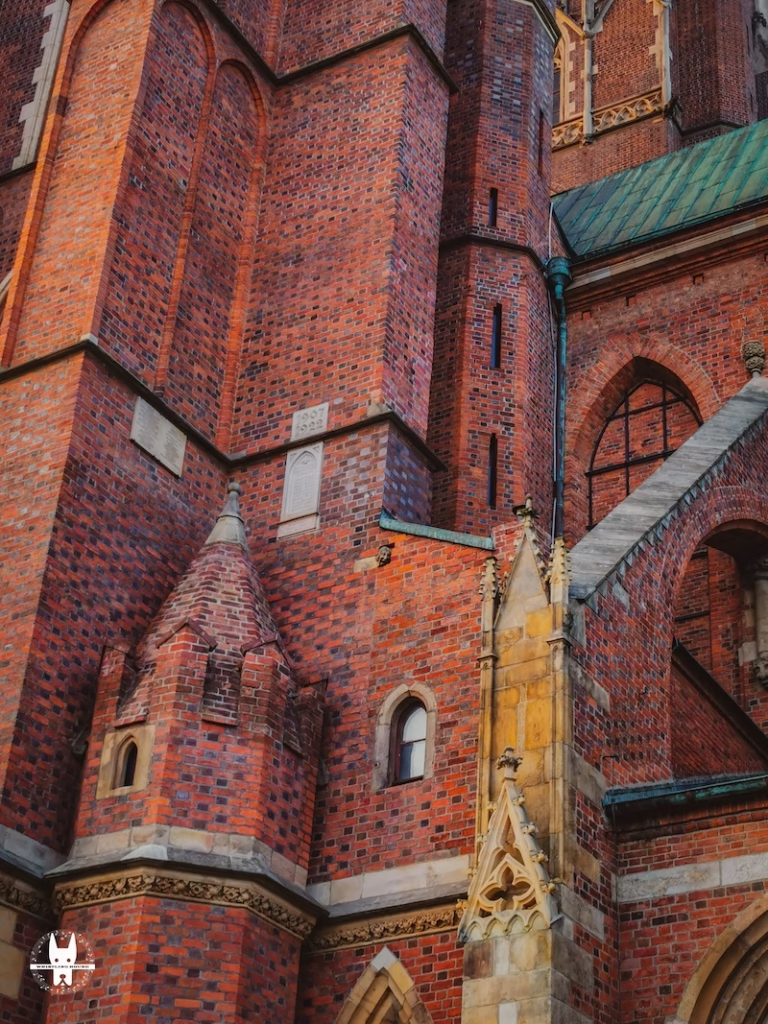
Close to the Dumpling Gate, a face mysteriously appears from the main cathedral. The stone head is embedded high on the exterior of the Archcathedral of St. John the Baptist on Ostrów Tumski, Wrocław. It seems to peek out from the wall near the tower section facing the Papal Faculty of Theology. Henryk is the man commonly linked to this local folklore.
His tragic story begins with a secret engagement with the goldsmith’s daughter. When caught, Henryk vowed to become rich and worthy. He joined a band of robbers, returning years later with stolen riches.
In that version, he returns to the city after joining a band of robbers, attempts revenge against his former master, and climbs the cathedral tower. As he set his master’s house on fire and leaned out of a small window, got trapped forever. His head turned to stone and became a reminder of what greed could lead to. Architectural analysis suggests it may be a reused fragment incorporated during reconstruction phases after damage.
The face is among the most hidden things to see in Wrocław and requires watching with attention.
4. The Saint Without a Leg, Ostrów Tumski
On the outer wall of the Archcathedral of St. John the Baptist, a sculpted figure identified as St Vincent appears with one leg missing beneath the drapery.
A legend connects the figure to an apprentice named Maciej, who worked under a master sculptor and was known for a physical disability. In the story, the completed statue changes overnight, and the missing leg becomes part of a miracle narrative tied to his recovery.
The current condition of the sculpture is consistent with damage sustained over time, including fires and wartime destruction. The figure is located along the side elevation of the cathedral and can be examined at close range.
Hidden Architectural Details in Wrocław
5. Fake Painted Window, Rynek Wrocław
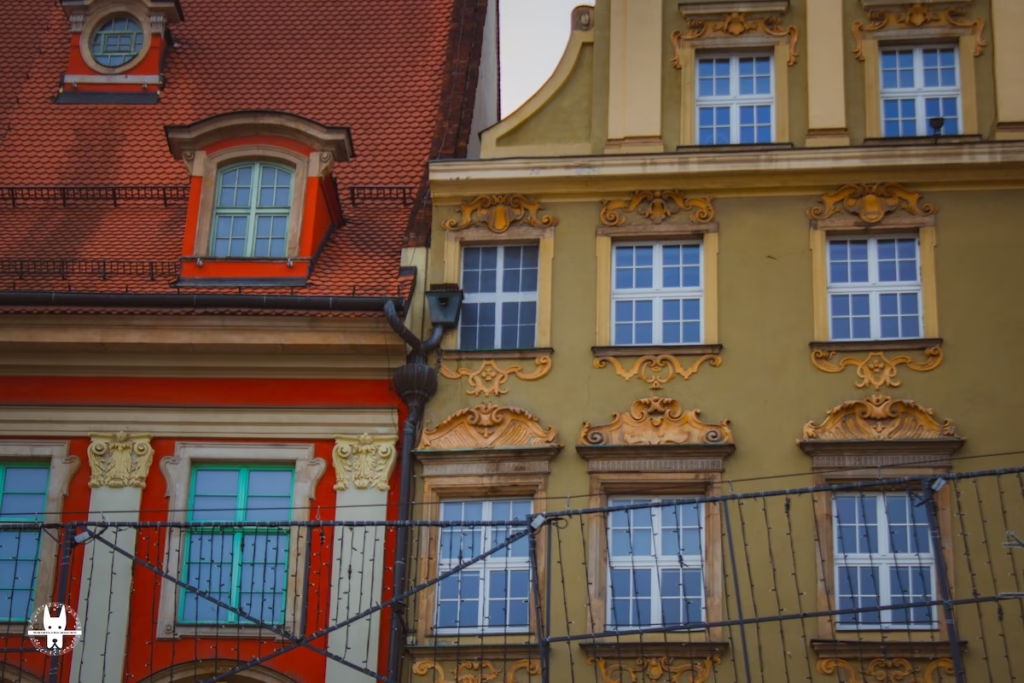
On the façade of Rynek 5, one window is not a window at all. It is painted directly onto the plaster. The illusion was created during post-war reconstruction to maintain symmetry. From ground level, it aligns with the real windows in proportion and detailing.
The building itself dates to the Baroque period, later restored after 1945 damage. Rather than keeping to the regular layout, conservators opted for a trompe-l’œil solution to preserve façade symmetry.
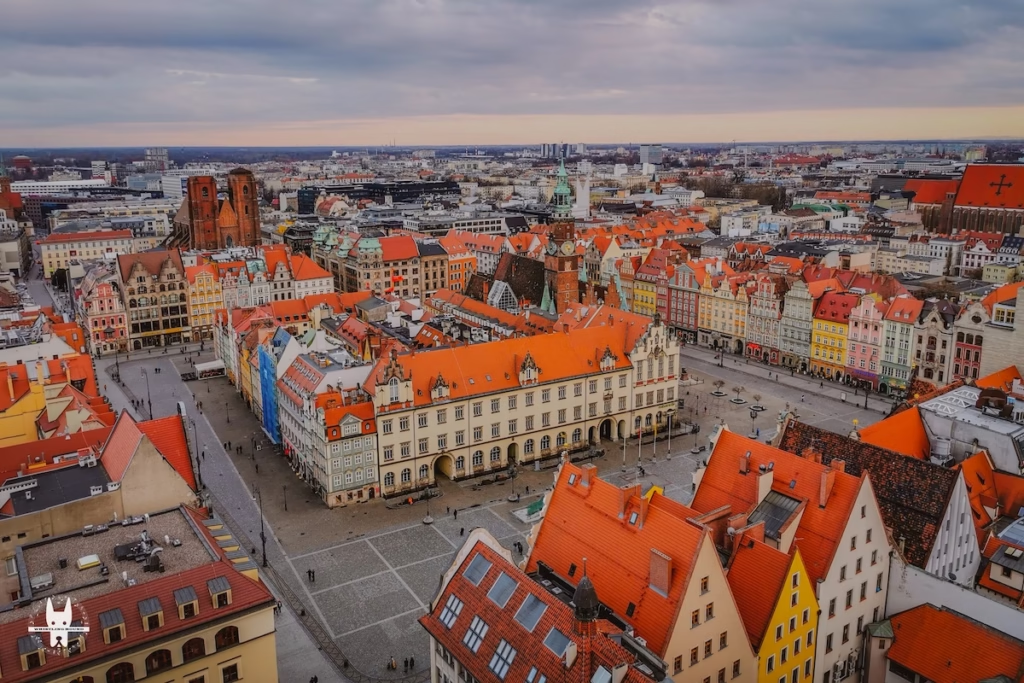
Among the most talked about hidden things to see in Wrocław Old Town, this fake window is visible from the fountain on the western side of Rynek. A slight viewing angle reveals the flat surface.
6. Jaś i Małgosia (Hansel and Gretel Houses), St Elizabeth’s Church
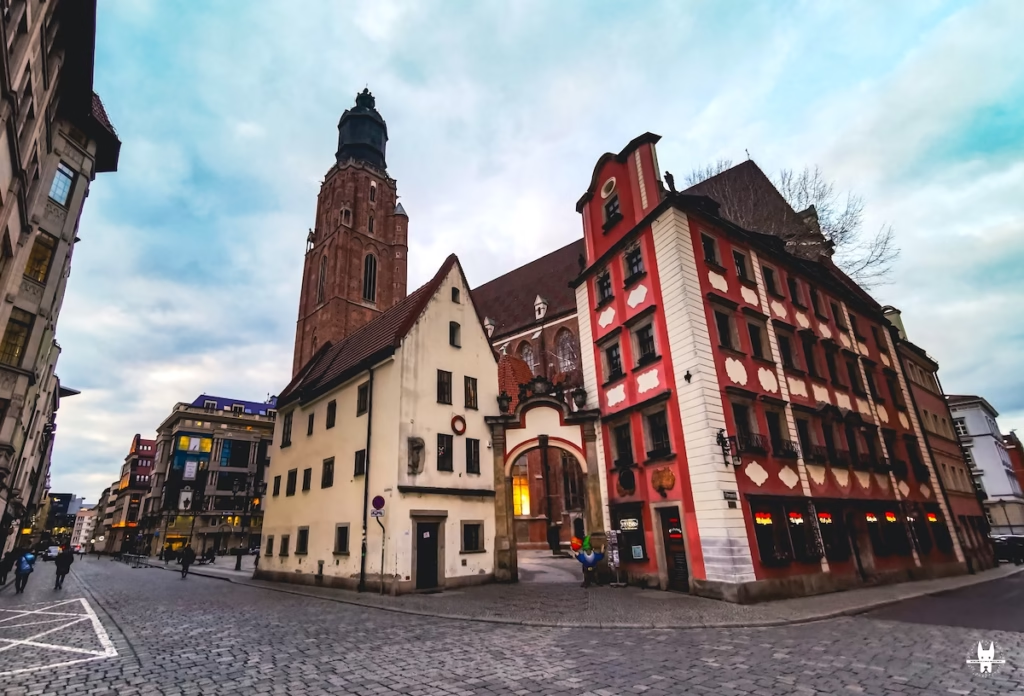
Beside St. Elizabeth’s Church stand two narrow medieval houses known locally as Jaś i Małgosia. They originally functioned as gatehouses to the former parish cemetery.
The connecting arch bears the Latin inscription Mors Ianua Vitae, translating to death is the gate of life. The St Elizabeth’s Church cemetery operated here until the 19th century. The fairy-tale nickname became popular in the modern era, particularly after post-war reconstruction.
The smaller house (Hansel) later served as the studio residence of graphic artist Eugeniusz Get-Stankiewicz, whose typographic interventions can be seen on the wall of the tenement house.
Living Traditions & Public Art in Wrocław
7. Train to Heaven, Plac Strzegomski
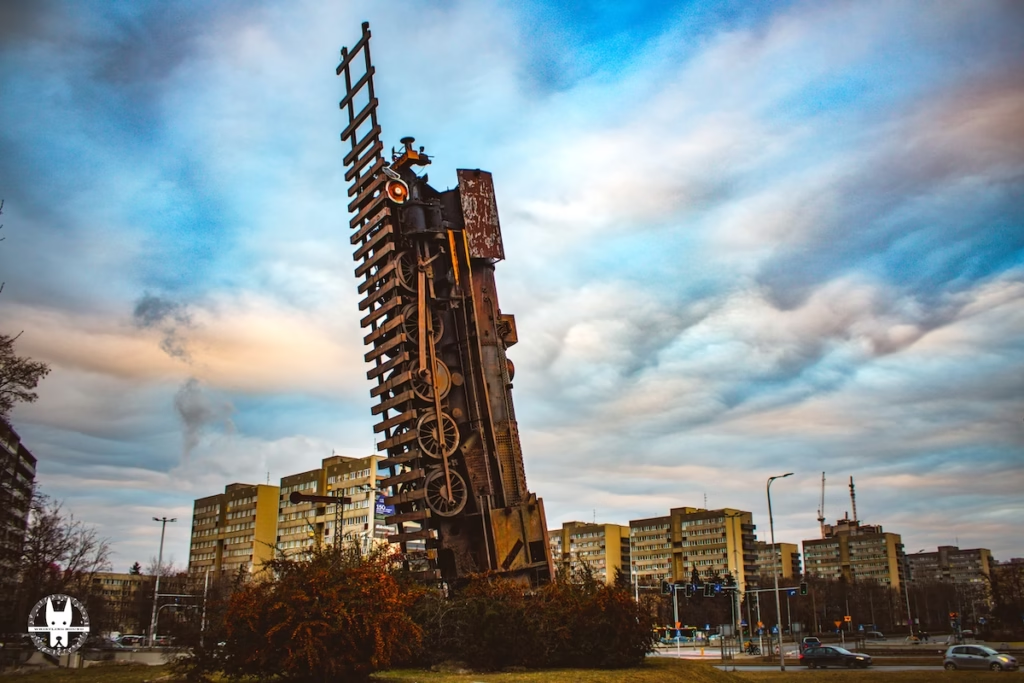
Pociąg do nieba, also known as the Train to Heaven, dominates the busy Plac Strzegomski. Located around 15 min drive (10 min tram ride) from Wrocław Old Town, the Train to Heaven is located on the city’s famous Legnica Street. Installed at Plac Strzegomski next to the Wrocław Contemporary Museum, this vertical locomotive installation was completed in 2010. It uses a real steam engine sourced from Jaworzyna Śląska.
The structure stands approximately 30 metres high and is mounted directly in front of a former WWII air-raid bunker, now adapted as a museum. The placement aligns with the industrial history of the Strzegomska neighbourhood, which developed along the railway infrastructure.
The Train to Heaven is fixed in a vertical position and visible from Plac Strzegomski tram stops and surrounding intersections. It is one of the most accessible large-scale public artworks in Wrocław.
8. The Lamplighter, Ostrów Tumski
Each evening on Ostrów Tumski, a lamplighter manually lights the remaining gas lamps along Cathedral Island. The system consists of traditional gas-powered fixtures that have been preserved rather than replaced with electric lighting.
The lamplighter follows a fixed route and uses a long pole to ignite each lamp individually. The practice continues as part of the city’s maintenance routine rather than a staged performance.
The lamps are concentrated along streets surrounding the cathedral and nearby ecclesiastical buildings. Timing varies seasonally, generally around dusk.
Must read: Uncovering the Centuries-Old Lamp Lighting Tradition on Ostrow Tumski Wrocław
9. Wrocław Dwarfs (Krasnale)
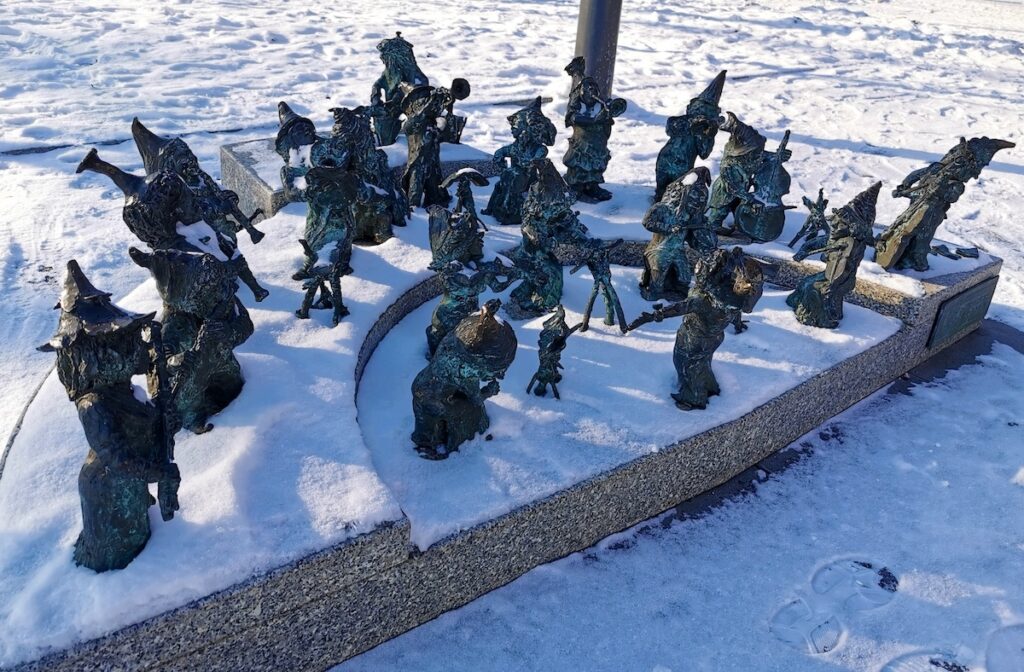
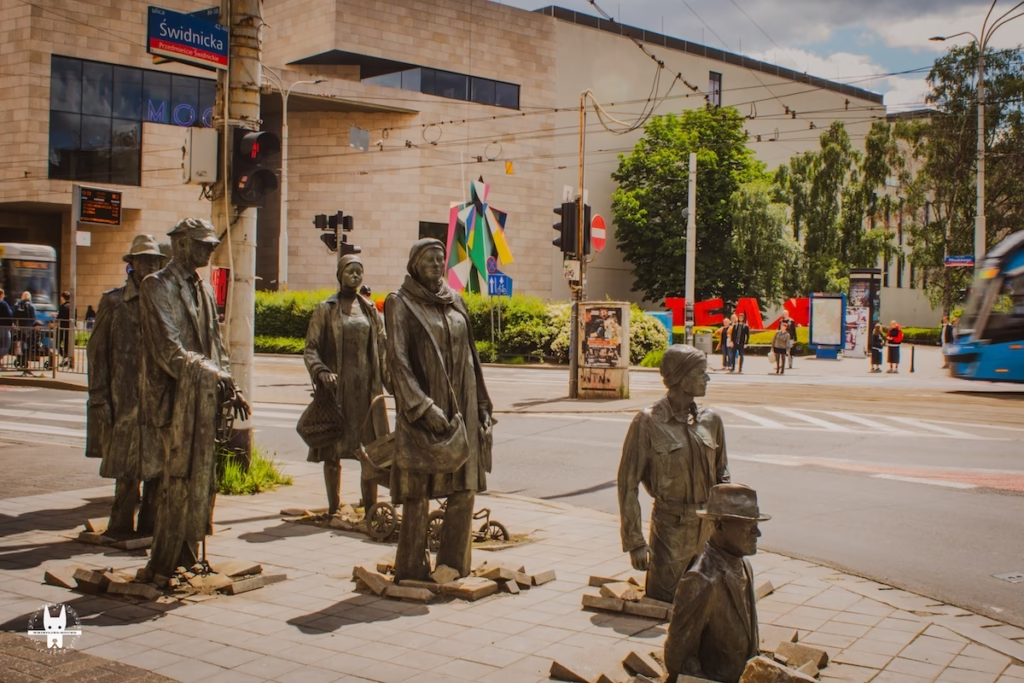
The first dwarf statue, Papa Dwarf on Świdnicka Street, appeared in 2001 on Świdnicka Street. Wrocław dwarfs originate from the Orange Alternative movement, an anti-communist protest group active in Wrocław during the 1980s. Dwarfs are scattered across the city, marking the movement’s use of humour, mixed with absurdity and street symbolism.
Today, there are over 800 small bronze dwarfs installed across the city. Each figure is linked to a place, such as a university, a monument, a restaurant, a bank, or a public institution. They are permanent fixtures, mapped and maintained by the city. Today, dwarf hunting is considered one of the most popular things to do in Wrocław Old Town, especially for first-time visitors exploring the Old Town.
Must read: Complete Guide to Wrocław Dwarfs: History, Walking Routes & Stories
Curious Urban Quirks of Wrocław
10. The Hand on Uniwersytecki Bridge
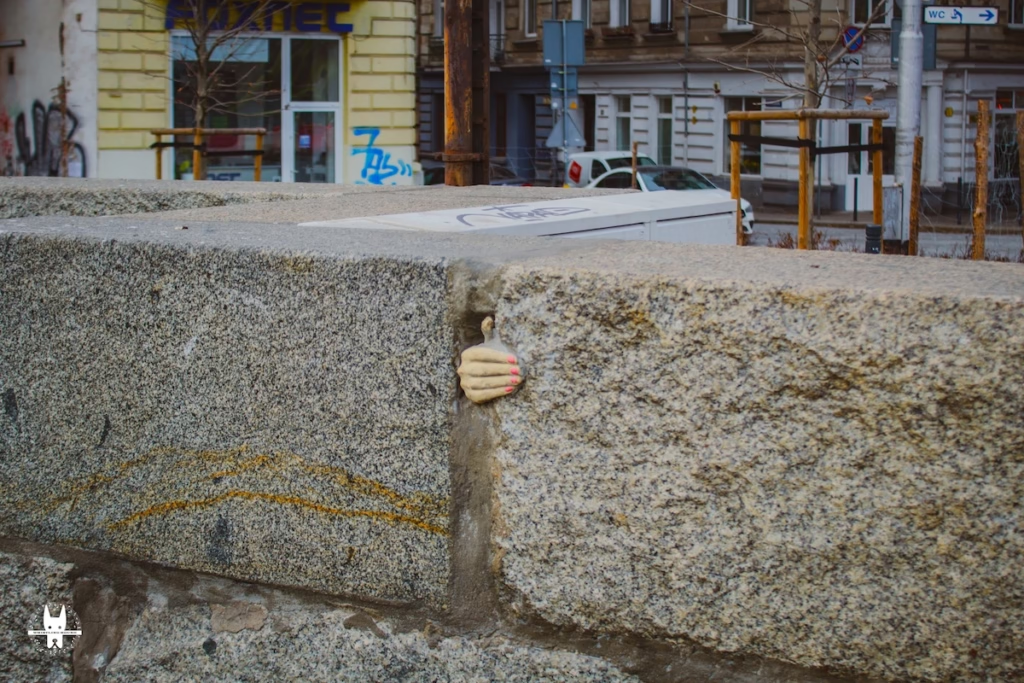
Among the most sought-after hidden things to see in Wrocław, next in the list is the mysterious hand appearing on the University Bridge in Wrocław. On the balustrade of University Bridge, a sculpted hand appears to emerge directly from the wall surface. It is positioned along the pedestrian side facing the river.
There is no official record attributing the work to a specific artist or public art programme. The hand first appeared in the mid-2010s and remains in place.
The hand is cast in a realistic form and partially embedded into the structure, creating the effect of a figure beneath the surface. The detail is easy to miss unless walking close to the railing.
While unofficial, the installation fits into Wrocław’s broader pattern of small-scale urban interventions that appear without formal attribution. Similar anonymous works have appeared across Nadodrze and university areas in recent years.
Wrocław does not separate its history from its streets. Sitting in plain view, these details shape how the city is experienced when you slow down. If you’re exploring beyond the main attractions, these hidden things to see in Wrocław offer a more nuanced way to understand the city.
FAQs: Hidden Things to See in Wrocław
1. What are some hidden things to see in Wrocław?
Wrocław offers several lesser-known details, such as the Penitent Bridge, the Dumpling Gate on Ostrów Tumski, the fake painted window on Rynek, and small urban installations like the hand on University Bridge.
2. Where can I find unusual things in Wrocław Old Town?
In the Old Town, look for the painted window on Rynek, the Jaś i Małgosia houses near St Elizabeth’s Church, and early dwarf statues scattered across central streets.
3. Are Wrocław dwarfs worth seeing?
Yes, the dwarfs are one of the most recognisable symbols of Wrocław, with over 800 figures placed across the city, each linked to a location or institution.
4. What is the most unique viewpoint in Wrocław?
Mostek Pokutnic, or the Penitent Bridge, offers one of the most unusual viewpoints, connecting two towers of St Mary Magdalene Church.
5. Is Ostrów Tumski worth visiting for hidden details?
Yes, Ostrów Tumski contains several hidden elements, including the Dumpling Gate, cathedral sculptures, and the traditional lamplighter routine.
Further read: Visiting Wrocław with Kids? Don’t Miss These Family-Friendly Attractions