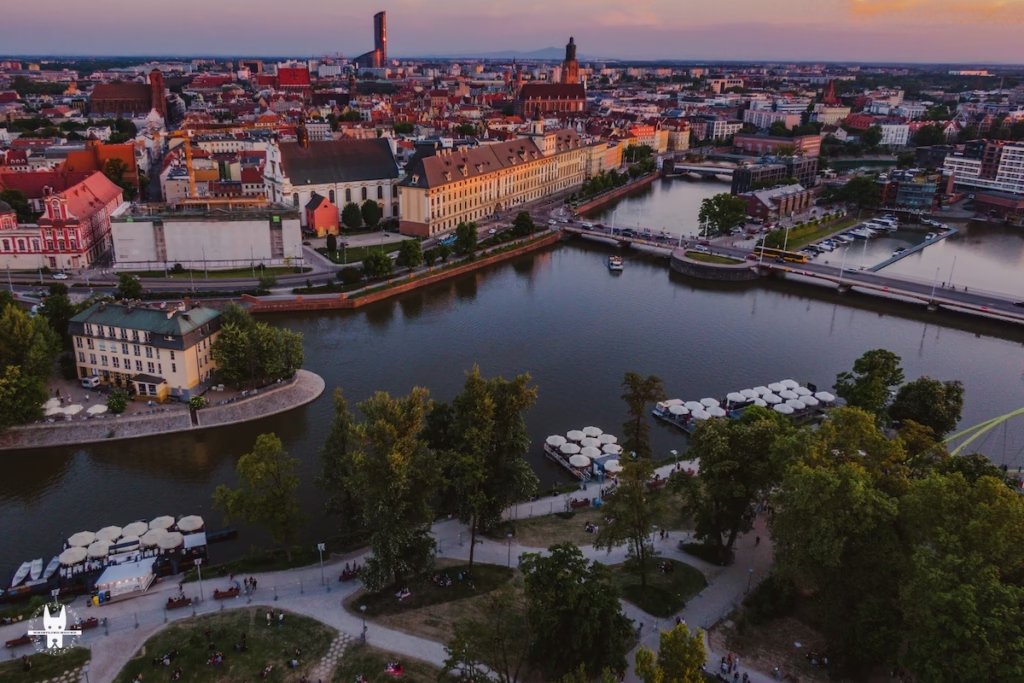
Wrocław is one of Europe’s most water-woven cities, often called the Venice of Poland.
With 12 river islands, over 110 bridges, and a meticulously engineered hydrotechnical canals system, dams, and floodgates, Wrocław is one of Poland’s most complex river cities. This is the part many visitors almost entirely overlook.
In the heart of Old Town lies a mind-blowing maze of six Wrocław islands and bridges, each with a distinct role in the city’s medieval and modern development.
Linked by a sequence of bridges, these islands structured how the city’s defence worked, enabled the movement of people and goods, and sustained the working class. These bridges enabled Wrocław’s rise as a thriving trading city of medieval Poland.
These islands of Wrocław define the present-day city and narrate its versatile past. From hydrology to trade, defence, and control of the Odra River, they were used for different purposes. This blog is part of a comprehensive Wrocław travel guide. It focuses on one of the city’s most overlooked features. We’ll also focus on how these islands and bridges influenced growth patterns.
This blog discusses the six historic islands clustered within the Old Town.
Must read: Wrocław Travel Guide 2026 – A Local Handbook for First-Time and Repeat Visitors
Wrocław: A City Defined by the Odra River & 100+ Bridges
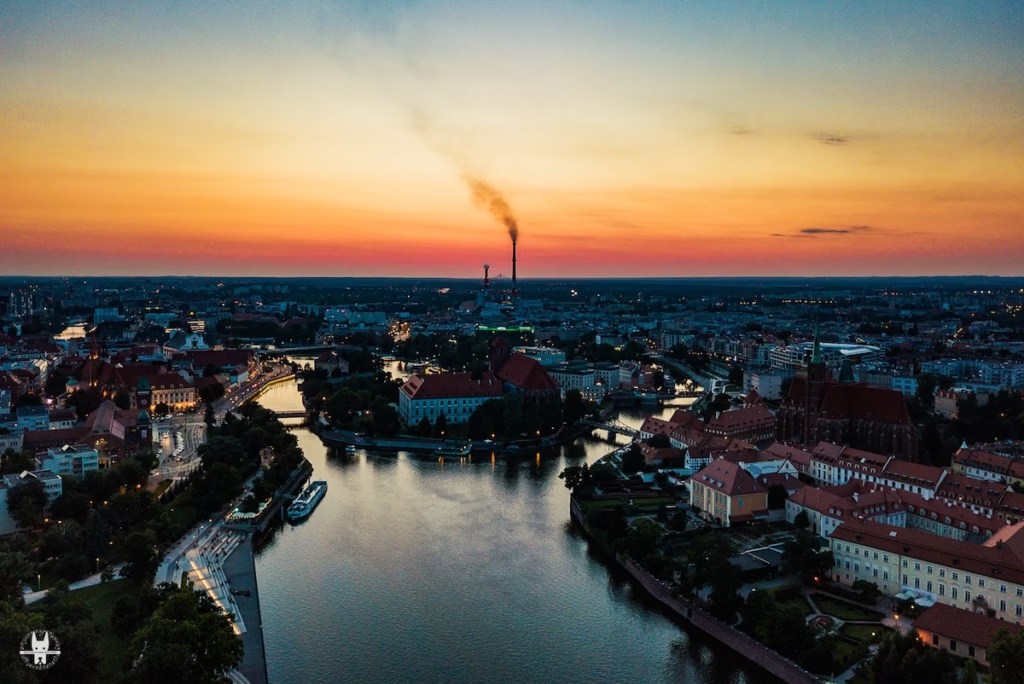
The city of bridges, Wrocław, has evolved around the scenic Odra River, historically known as the Oder. From the Middle Ages onward, the Odra’s channels were divided. The river was controlled and re-channelled to serve defence, drive mills, and support trade. Remember, Wrocław was a major Central European trading city, connected to Hanseatic trade routes.
This resulted in a complex urban geography where water was a resource and a barrier. The bridges in Wrocław were strategic connectors. They enable people to move, markets to form, and the city checkpoints to be strategically placed. Many of today’s central bridges and islands of Wrocław Old Town sit in places where medieval crossings once stood. They anchored critical routes in use for centuries.
Ostrów Tumski (Cathedral Island)
Ostrów Tumski is the oldest settled part of Wrocław, and originally a true island within the Odra’s arms. Its name comes from the Old Polish ostrów (river island), signifying an early water-borne stronghold.
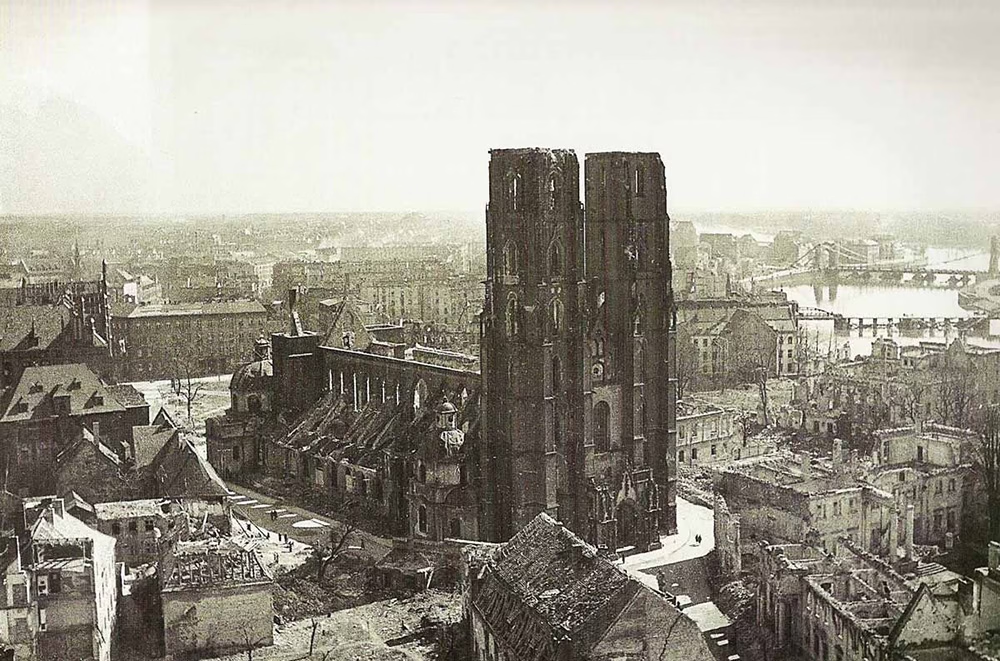
From the 10th century onward, this island became the seat of the church in the region. These places hosted archbishops, early churches, and later medieval cathedrals. Its bridges, including the most romantic bridge of Wrocław, Tumski Bridge, were a critical boundary between spiritual authority and the bustling, urban establishments.
Ostrów Tumski’s relevance made this island both defensible and ceremonial. Pilgrims, clergy, and rulers crossed its bridges in processions, showcasing the might of catholic Poland. Today, the island retains a peaceful character with its traditional gas lamps, some of the oldest Gothic cathedrals of Poland, and cobblestone streets. It remains a popular tourist highlight of Wrocław.
Key attraction: Wrocław’s Oldest surviving Gothic Cathedrals and historic gas lamp lighting ritual
Must read: Uncovering the Centuries-Old Lamp Lighting Tradition on Ostrow Tumski Wrocław
Islands in the Wrocław Old Town
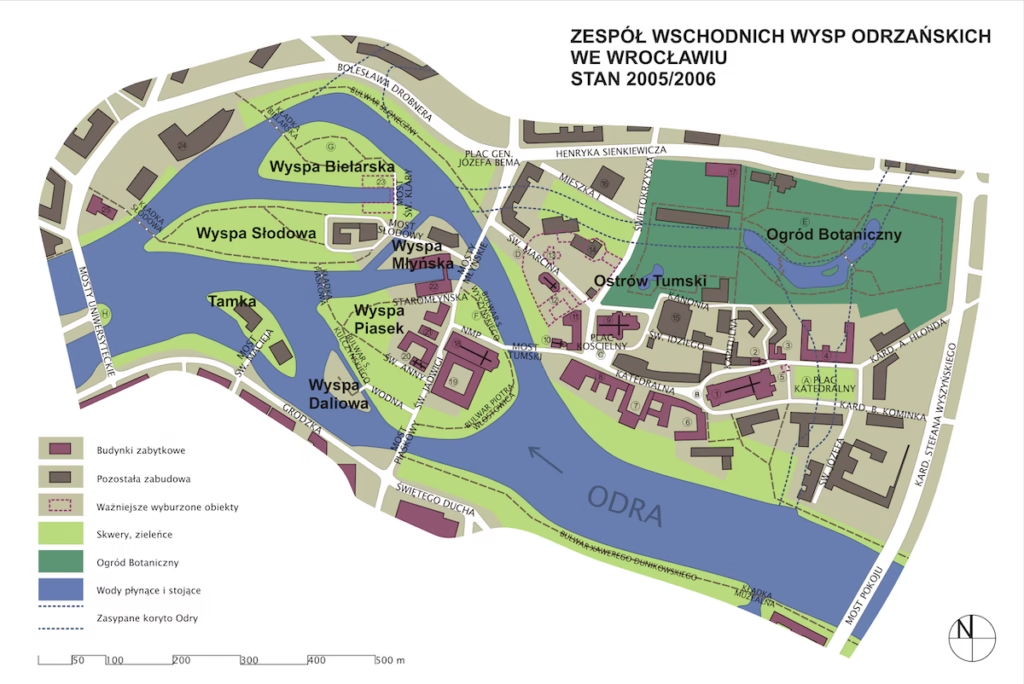
Located just north of the Old Town, it’s hard to miss them, on the way to Ostrów Tumski (Cathedral Island). For travellers looking beyond things to do in Wrocław, they offer a clearer sense of how the city actually grew.
- Wyspa Piasek (Sand Island)
- Wyspa Daliowa
- Wyspa Młyńska (Mill Island)
- Wyspa Słodowa (Malting Island)
- Wyspa Bielarska (Tanners’ Island)
- Wyspa Tamka
1. Wyspa Piasek Wrocław (Sand Island)
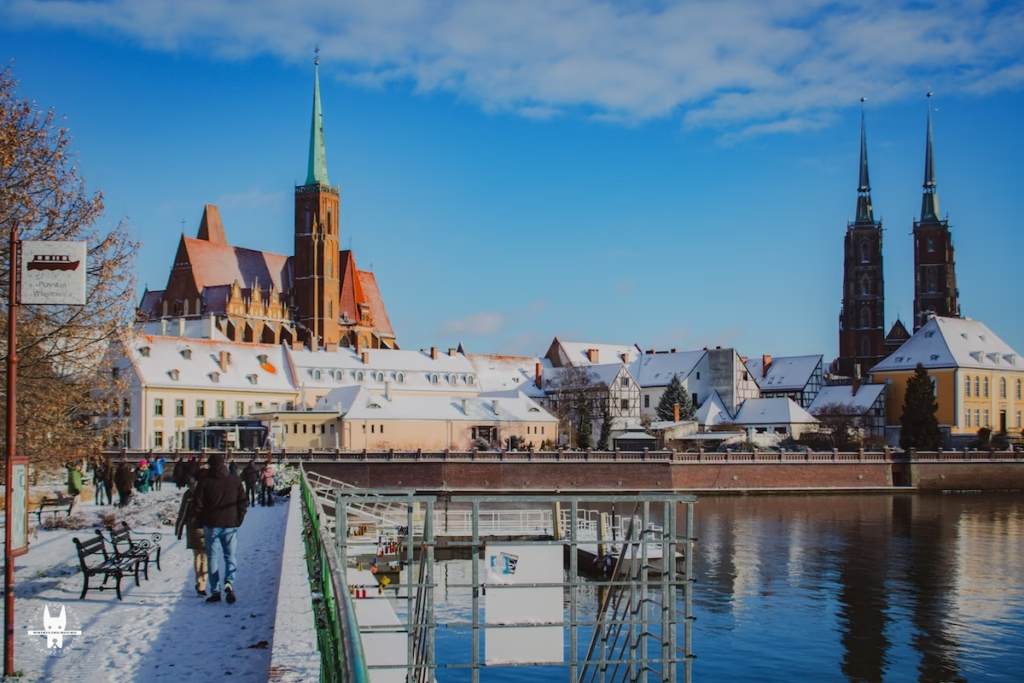
Wyspa Piasek is among the closest islands to Wrocław Rynek and Ostrów Tumski, lying right in the middle. Its sandy alluvial soils and position within the downtown water junction turned it into a multipurpose urban space.
Historically, Piasek Island hosted religious institutions like the Church of St. Mary on the Sand alongside civic structures. Piaskowy and Tumski Bridge connected it to both the Cathedral Island and Rynek, the city’s commercial hub. It served as a connector of clerical influence and urban commerce. As Wrocław grew, Wyspa Piasek shifted from semi-monastic ground to a civic space.
Most Piaskowy (Sand Bridge) is one of the oldest surviving bridges in Wrocław, connecting Stare Miasto to Sand Island. Its origins date to the 12th century, though the current structure is from 1861. This bridge has been an entrance to the city, a checkpoint for centuries. Wyspa Piasek also serves as the most popular ferry boarding point in Wrocław Old Town along the Odra.
Post-World War II reconstruction of Wrocław islands and bridges, and their urban use, have made Piasek a cultural heartbeat. Museums, hotels, restaurants, and riverside promenades lie along the island’s periphery. Its bridges frame views of historic spires and spectacular sunsets over the Odra.
Key attractions: Museum of Illusion, Church of Our Lady on the Sand, and riverside boulevards.
2. Wyspa Daliowa (Daliowa Island)
Wyspa Daliowa functions as a modern extension of Wyspa Piasek. In 2017, the stainless-steel Nawa pavilion (Sculpture of the Nave) was installed here as part of European Capital of Culture celebrations. It’s a rib-like structure reflecting water, sky, and movement. The Nave mimics the nearby Hala Targowa and St. Mary’s Church on Wyspa Piasek.
3. Wyspa Młyńska (Mill Island)
Wyspa Młyńska owes its name to the water mills that operated here since the 13th century. The island itself was shaped and sustained by artificial canals diverting Odra’s currents to power these mills. Młyńska was Wrocław’s industrial hub focused on grain processing.
Powered by fast-flowing water, mills ground grain into flour to feed the city. The island hosted millers, craftsmen, and also city washermen who took advantage of clean river currents for laundering. This working riverside was crucial for the urban food supply. Bridges connected Młyńska to Wyspa Piasek and the Old Town and were used primarily for transporting goods and labour.
As milling technology evolved and industrial centres around Wrocław’s islands and bridges moved, the mills ceased operation by the 20th century. Buildings fell into decay but were later restored. Młyńska today is quieter and greener. The Maria Mill complex is a key historic landmark restored for residential and commercial use. Nearby, green boulevard and park offer urban calm, contrasting with the industrial past, blending history with modern urban life.
4. Wyspa Słodowa Wrocław (Malting Island)
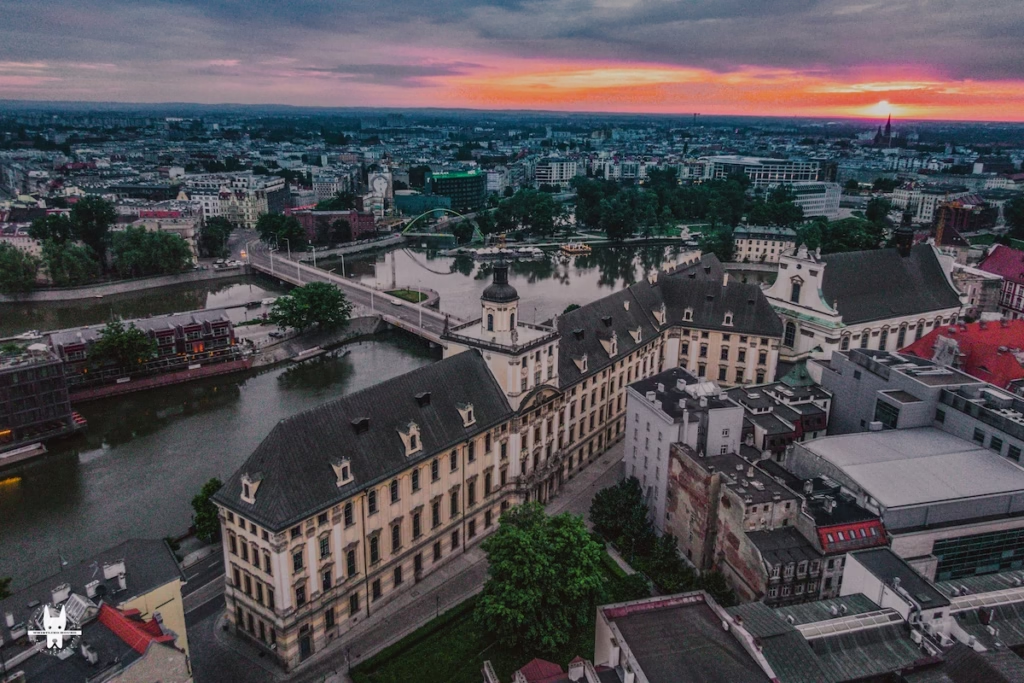
The island’s name comes from słód (malt), as it was historically used for malting grain, a key stage in beer production. Beer was one of medieval Wrocław’s most important industries. Wyspa Słodowa functioned as a production and processing space for malt.
Here, grain was soaked, germinated, and dried before being sent to breweries. Open river access allowed efficient transport of raw materials. Wyspa Słodowa’s location kept intensive processing away from dense residential areas. In medieval Europe, beer was a daily staple, and historic islands in Wrocław Old Town like Słodowa made that supply possible.
Słodowa Island relied on pedestrian bridges connecting it to Wyspa Młyńska and Wyspa Bielarska, and the Old Town riverbanks. As industrial malting declined, storage buildings disappeared, and the island gradually opened up. Post-war planning left it largely undeveloped, making it an open public space, especially among the students and the international community of Wrocław.
Today, Wyspa Słodowa is one of the most happening urban Odra River islands in Wrocław. Since 2018, Wyspa Słodowa has also been one of the few areas where open-air alcohol consumption in Wrocław is legally permitted. Wyspa Słodowa is also one of the most defining things to do in Wrocław for locals and visitors alike. Locals love to go here for a walk, picnic, or barbecue, especially on warm evenings.
Key attraction: Concordia Design Wrocław, a modern creative and business hub, floating bars, pedestrian bridge to neighbouring islands
5. Wyspa Bielarska (Tanners’ and Bleachers’ Island)
Fourth on the list of islands of Wrocław Old Town is Wyspa Bielarska, which gets its name from bielarze, cloth bleachers and tanners. These were water-intensive trades that required space, separation, and access to the river. Wyspa Bielarska was assigned to textile processing and leather work. These industries are essential to the city but unsuitable for dense urban areas.
Cloth was washed, bleached, and treated here using river water. Leather tanning took place away from residential zones due to waste and strong odours. The island’s partial isolation helped control pollution and health risks. Wyspa Bielarska was a working island, tied closely to guild-based production.
Among the least frequently used Wrocław islands and bridges, connections to Wyspa Bielarska were kept minimal. Bridges served craftsmen and material transport. Limited access reinforced the island’s separation from daily city life.
Bielarska functions as a buffer island, separating social space from residential areas and maintaining open river visibility. While tanning and textile processing gradually moved outside the city, the island lost its original function. Unlike other islands, it serves as a green buffer between the commercial Odra River islands in Wrocław and the residential area of Nadodrze.
Key attraction: Riverside open space and heritage traces, kids’ play area
6. Wyspa Tamka (Dam Island)
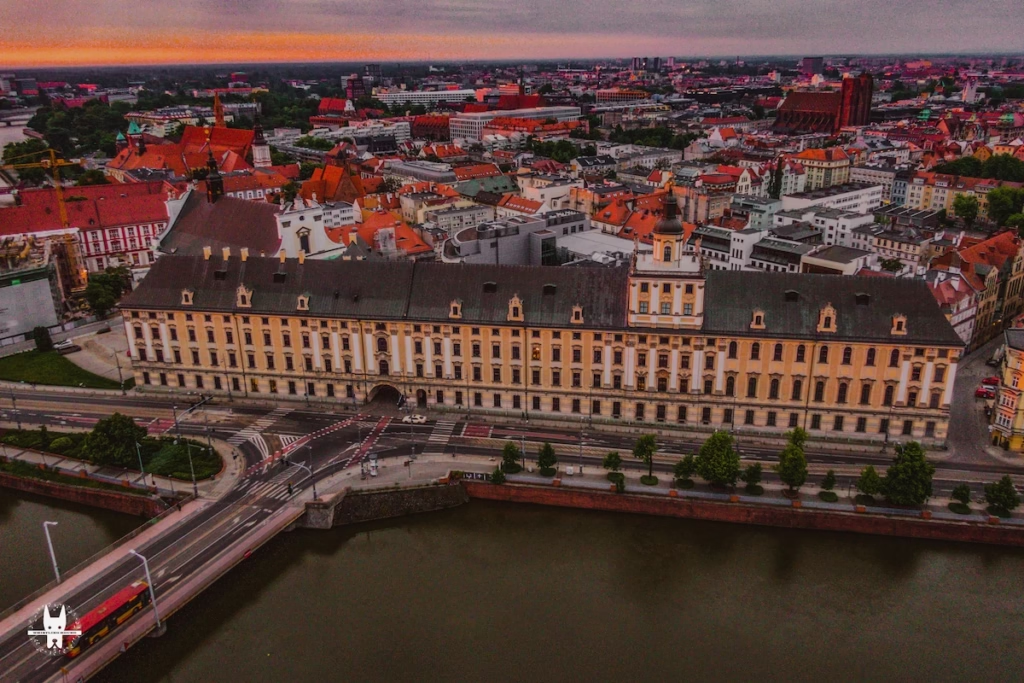
Another notable mention in Wrocław islands and bridges, the name Tamka comes from tama, meaning dam, reflecting its river engineering function.
Tamka’s purpose was technical as it formed part of Wrocław’s water-control system, regulating Odra’s flow. It was critical in managing flooding and protecting adjacent districts. Wyspa Tamka Wrocław supported infrastructure linked to mills, channels, and embankments nearby and stabilised everything around it.
As flood-management systems modernised in the city of bridges, Wrocław, Tamka’s strategic importance diminished. Its physical shape remained, but its role faded into the background of the river system.
Historically, access to Wyspa Tamka was limited. Later, it began hosting late-night techno parties in the summer. With a young crowd and a vibrant atmosphere, it grew into a prominent space in Wrocław’s nightlife.
Why so many islands and bridges in Wrocław
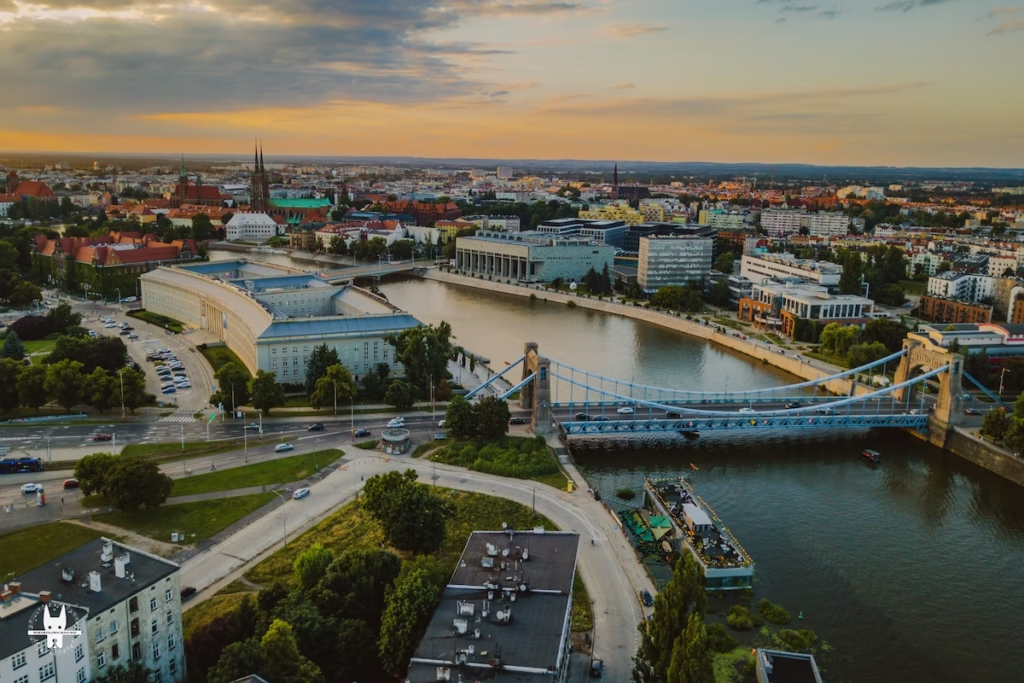
Wrocław sits on a multi-channel section of the Odra, historically divided for defence, milling and industry, trade and transport, and flood control.
The Wrocław islands and bridges are the result of gradually evolving human engineering. Understanding the historic islands in Wrocław is essential to understanding the city itself. The river logic is essential in the Wrocław travel guide, because it explains how the Old Town looks and functions quite well.
Want to walk them and dive deeper into the history of each island? Join my city tours.
FAQs – Wrocław Islands and Bridges
1. Is Ostrów Tumski still an island?
Historically yes. Today, river regulation connects it to the mainland, but its name and identity remain.
2. Which Island is the oldest Odra River islands in Wrocław?
Ostrów Tumski is the oldest continuously inhabited part of Wrocław.
3. Which Islands of Wrocław Old Town are best to visit today?
Visit Wyspa Słodowa for social life, Ostrów Tumski for history, and Młyńska for quieter walks.
4. How many islands does Wrocław have?
Wrocław has 12 river islands, with six central ones shaping the historic core.
5. Why is Wrocław called “Venice of the North”?
Because its network of islands and bridges, fed by the Odra and tributaries, creates a water-woven urban fabric.