
Welcome to the world of gnomes, more popularly known as Wrocław Dwarfs.
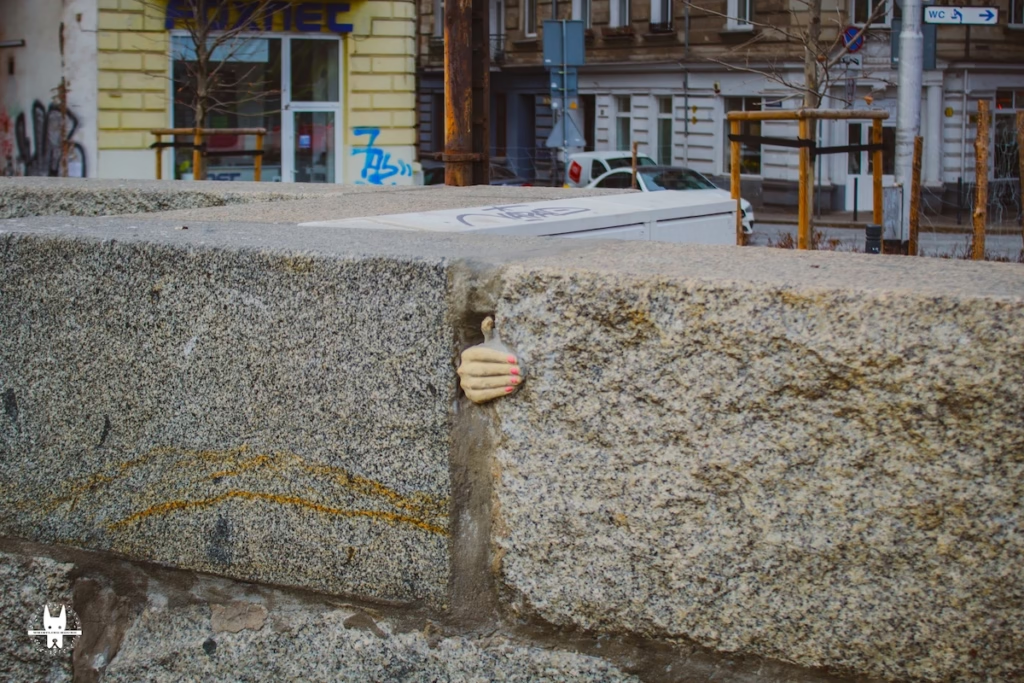
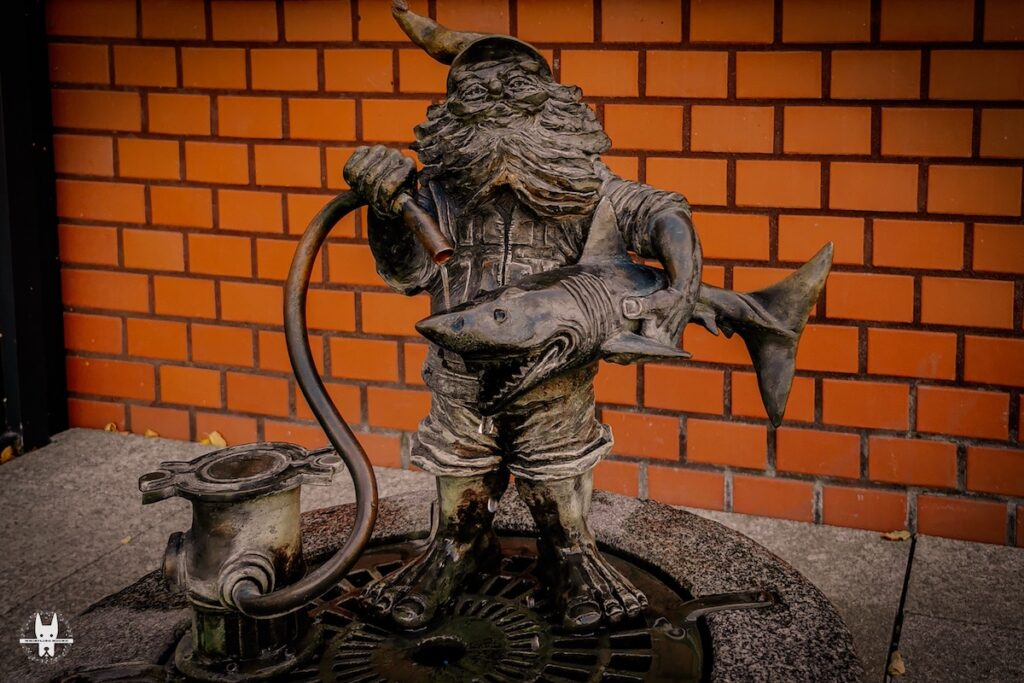
They are everywhere once you start noticing them, or better, stumble upon one of them. Putting out fire. Performing as an orchestra. Guarding a crypt. Checking into a hotel. Eating an ice cream. Leaning against lampposts. Arguing. Reading books. Washing clothes by the river. At first glance, they feel playful, even whimsical. But this city-wide phenomenon did not begin as decoration or a tourism idea. It began as resistance.
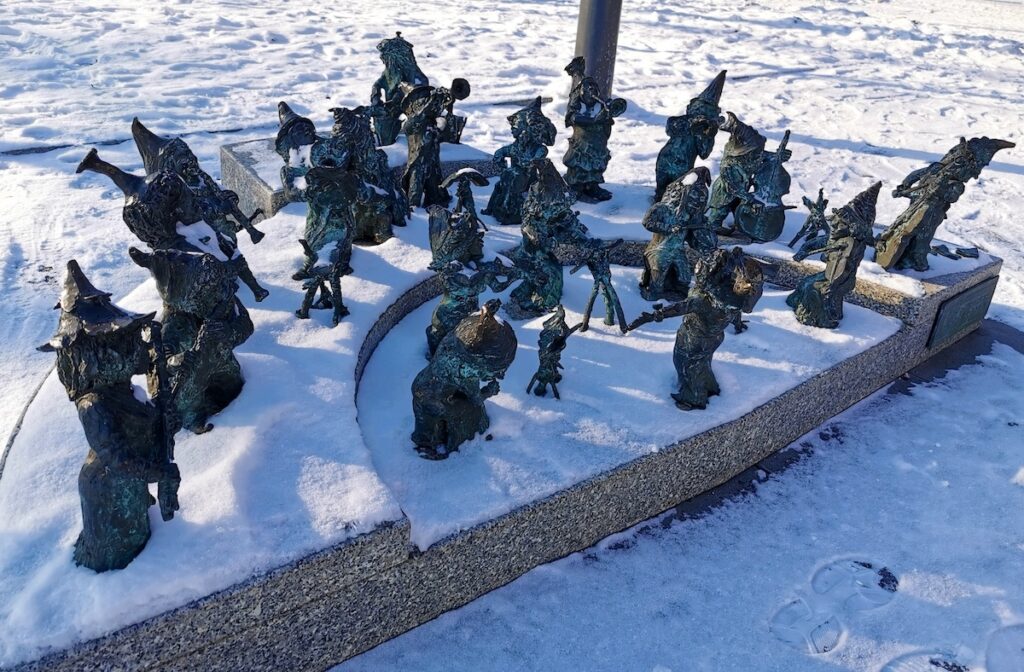
Often called dwarfs, gnomes or krasnale locally, these small bronze figures are one of Wrocław’s most distinctive urban features.
Long before tiny bronze statues became Wrocław’s mascot, the idea of “dwarfs” began as a creative act of resistance against communist authoritarianism in the 1980s. The roots of this story lie in an underground protest movement called Pomarańczowa Alternatywa (The Orange Alternative), centred in Wrocław and led by artist and art history graduate Waldemar ‘Major’ Fydrych.
This Wrocław Krasnale guide is designed to provide its historical, cultural and urban context. It is written for curious travellers, slow explorers, families, and anyone who wants to understand why Wrocław chose krasnale as its most recognisable symbol.
Today, hunting dwarfs is one of the top things to do in Wrocław. Let’s understand what led to this phenomenon.
Why Wrocław’s Dwarfs (Krasnale) Exist
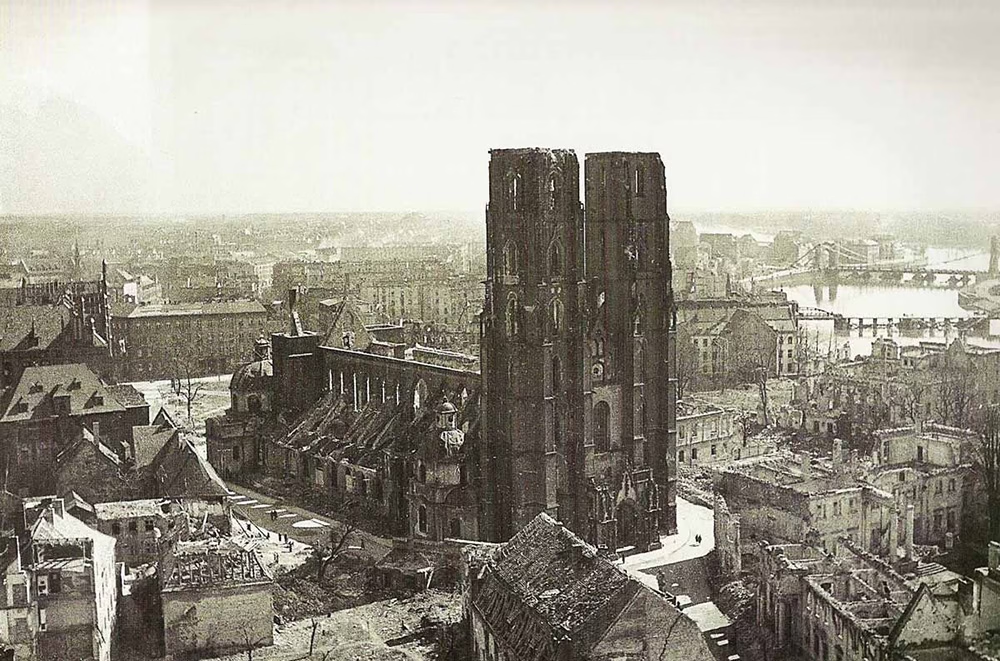
In the early 1980s, Wrocław was one of the key centres of intellectual and cultural opposition in communist Poland. Following the introduction of martial law in 1981, public protest became dangerous and heavily suppressed. Walls across the city were regularly whitewashed to erase anti‑government slogans. Soon, those blank walls became the canvas for something unexpected.
The Orange Alternative: Politics, Protest & Play
A group of University of Wrocław students and artists led by Waldemar Fydrych began responding to the Soviet suppression with humour rather than confrontation. On freshly painted white patches, they started painting small dwarfs. The gesture was disarming. Arresting someone for painting a dwarf exposed the absurdity of the system itself.
This artistic resistance became known as Pomarańczowa Alternatywa, the Orange Alternative. By the mid‑1980s, it had evolved into a series of public happenings that mixed surrealism, satire and performance. Participants dressed as dwarfs, parodied official celebrations, and used humour to reclaim public space.
Wrocław was the movement’s heart, but similar actions appeared in other Polish cities, including Warsaw, Łódź and Kraków. The goal was never a list of demands. It was to undermine fear and ridicule the seriousness of authoritarian control.
What most guides get wrong about Wrocław dwarfs!
The name Orange Alternative was no accident. Orange carried no political meaning in communist Poland. It was neither a state colour nor a colour of opposition. By choosing it, the movement avoided ideology altogether. The word “alternative” was used just as ironically. There was no programme, no demands, no vision of a replacement system. What the Orange Alternative offered instead was disruption. Humour where seriousness was expected, play where obedience was enforced. In that sense, the dwarfs and the colour orange operated on the same logic. Both resisted interpretation. Both made repression look ridiculous. Much like the colour orange, the dwarf was chosen because it meant nothing, therefore could not be controlled.
From Graffiti to Bronze: How Papa Krasnal Changed the City
After the fall of communism in Poland in 1989, the Orange Alternative faded as a political force, but its symbolism stayed in Wrocław’s memory. In 2001, the city installed Papa Krasnal on Świdnicka Street. It was the first official dwarf statue (the largest) and a quiet acknowledgement of the movement’s role in the city’s recent past.
What followed was not a continuation of protest, but a transformation. Dwarfs became storytellers of Wrocław. Each new figure represented a profession, an institution, a neighbourhood, or a local joke. Over time, they spread far beyond the Old Town and became the most popular attraction of Wrocław.
How Many Dwarfs Are There in Wrocław
This is one of the most common questions and also the most misunderstood. Nobody knows the exact number of dwarfs in Wrocław.
What Counts as an Official Dwarf
Official dwarfs are typically bronze statues approved by the city and created by recognised artists. Many are commissioned by institutions, universities, businesses or cultural organisations, each with its own backstory. Alongside these, you will also encounter partner figures, temporary installations and unofficial creations.
As the popularity of Wrocław as a top destination in Poland evolves, so does the city’s dwarf population.
Where You Can Find the Dwarfs of Wrocław
Most first‑time visitors encounter dwarfs in the Old Town and around Market Square, but this represents only a fraction of what exists.
A whole bunch of them appear on Wrocław Rynek, Kuźnicza street, near the University of Wrocław, Oławska, Świdnicka streets, along the Odra riverbanks, Ostrów Tumski, and some even in quieter residential streets. Some of the most interesting figures are the least photographed.
Must read: Uncovering the Centuries-Old Lamp Lighting Tradition on Ostrow Tumski Wrocław
Best Wrocław Dwarf Routes
Trying to see every dwarf in one day usually leads to fatigue. The better approach is to keep an eye out for them while on a Wrocław city tour. Rest assured, there are plenty of dwarves in and around the most popular Wrocław tourist attractions.
Market Square Classics (90–120 minutes)
This route is ideal for first‑time visitors. It includes Papa Krasnal, several well‑known pairs and working‑life themed dwarfs, and keeps you within the Old Town. Properly comb the Main Market Square and popular streets leading to Wrocław Rynek (Kuźnicza Oławska, Świdnicka). That said, expect cobblestones, café stops and constant distractions.
Riverfront & Hidden Corners (2–4 hours)
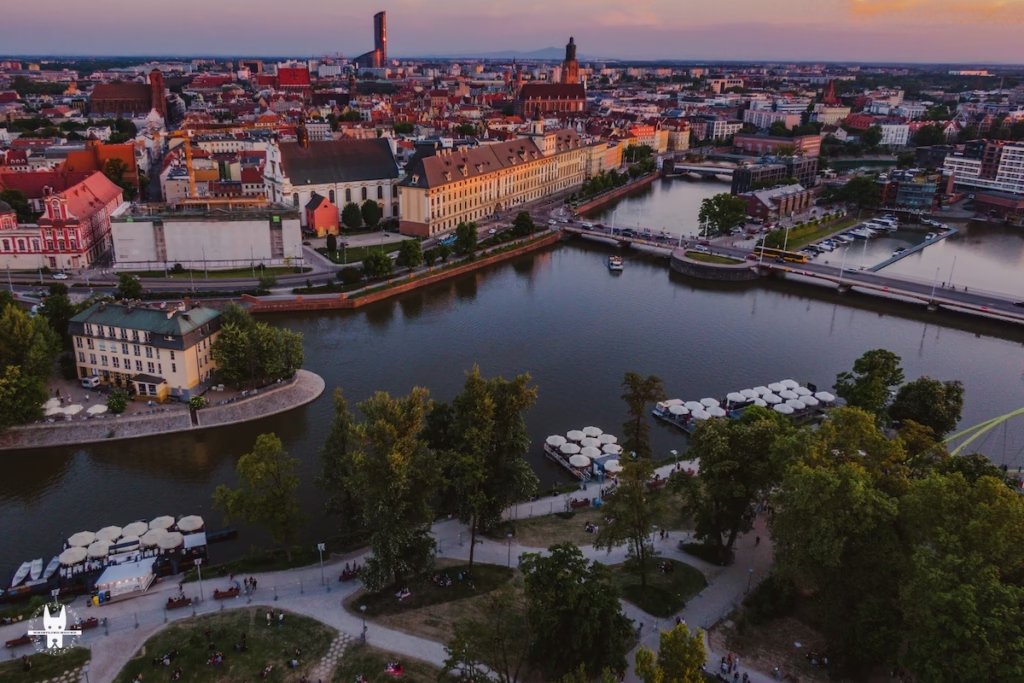
Following the Odra opens up a quieter side of the city. Here, dwarfs interact with water, bridges and university buildings. Walk over Most Piaskowy to Ostrow Tumski, and make a loop from the eastern side, coming back from the Most Pokoju, stopover at National Museum Wrocław, and walk the Xawery Dunikowski Boulevard.
Find the full list of Wrocław Krasnale on the Wrocław official website.
Interested in discovering the layered history of Wrocław with me? Join my private tours!
Famous Gnomes of Wrocław You Should Know
Papa Krasnal
The symbolic starting point. More than a mascot, this figure marks the city’s willingness to acknowledge its protest history through art. Notice the stone he’s hiding in his palm tucked behind.
Syzyfki
Two dwarfs eternally pushing a granite ball near the Wrocław Town Hall. Their name comes directly from Sisyphus, a figure from Greek mythology condemned to roll a boulder uphill for eternity. It is placed near Poczta Polska on the southeastern corner of the main square.
Życzliwek
A friendly figure often associated with kindness and civic warmth. Located behind the fountain, he is often missed, yet locally cherished.
Szermierz (The Fencer)
The fencer dwarf refers to Wrocław’s long sporting and academic traditions, particularly fencing as a discipline historically linked to universities and civic training. He belonged to the first group of dwarfs that settled in Wrocław.
Dwarfs with Disability
Near the Ratusz, three dwarfs depict physical disabilities. These figures are part of the Wrocław Without Barriers initiative, a long‑running city programme promoting accessibility, inclusion and visibility for people with disabilities.
Rather than symbolic abstraction, these dwarfs of Wrocław function as social commentary embedded in everyday space. Their placement in one of the city’s most public locations reinforces the idea that inclusion belongs at the centre, not the margins. These dwarfs reflect a slice of urban identity.
FAQ Wrocław Dwarfs
1. Why are there dwarfs in Wrocław?
They originated as a symbol of anti‑communist protest in the 1980s and later evolved into a city‑wide storytelling project.
2. How many dwarfs are there in Wrocław?
There is no fixed number. New figures appear regularly, while others disappear or relocate. It is speculated that there are almost 900 dwarves in Wrocław
3. Can you see all the dwarfs in one day?
No, and trying to do so usually detracts from the experience.
4. Is there a map of Wrocław dwarfs?
Yes, several maps and apps exist. I recommend using the one from the official Wrocław website.
5. Are Wrocław’s dwarfs free to see?
Yes. They are part of the public urban landscape.
Further read: Wrocław Travel Guide 2026 – A Local Handbook for First-Time and Repeat Visitors