Some of the most significant High Baroque interiors in the city are located inside the University of Wrocław Museums, yet many visitors clearly skip them.
Founded in 1702 as Leopoldina by Emperor Leopold I, the second-oldest university in Poland was established as a Jesuit institution. It was at a time when education was more of a political and religious instrument, and detailedarchitecture reflected that purpose. The main building, with centrepieces including Aula Leopoldina, Oratorium Marianum, and a stunning three-flight staircase, is decorated with vault paintings. This is precision, illusion, and symbolism at its finest.
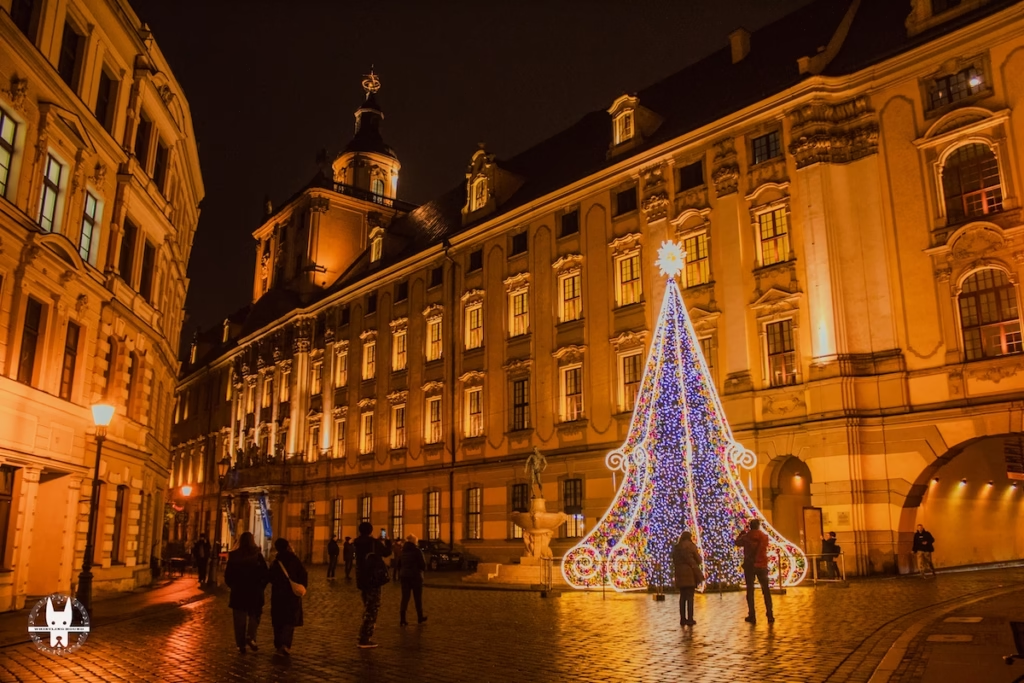
The monumental university building today is the result of both endurance and reconstruction. During the 82-day Siege of Breslau in 1945 (Festung Breslau), the university complex suffered damage but avoided total destruction. Aula Leopoldina and Oratorium Marianum survived in damaged form. The museums of the University of Wrocław are therefore not merely exhibits, but well-preserved academic spaces. The complex depicts Baroque ambition, wartime devastation, and decades of post-war recovery.
Inside the University of Wrocław Museums
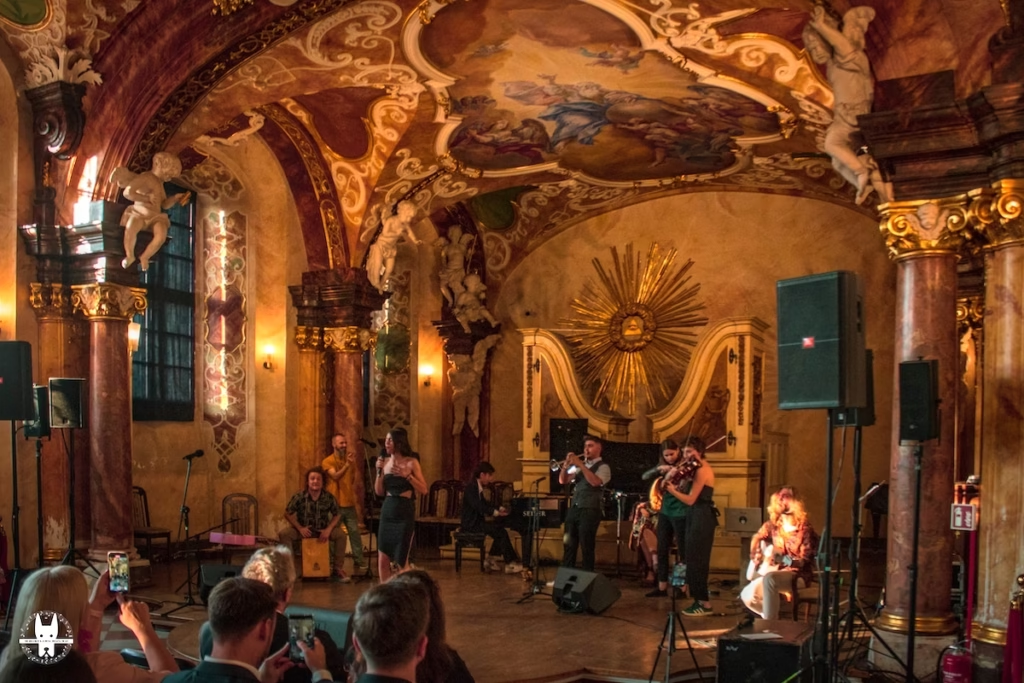
The University of Wrocław museums occupy the original academic interiors of the main Baroque building. Ceremonial halls, staircases, chapels, and towers display the main exhibits. These spaces retain their originality and symbolic hierarchy.
University Museum: A Record of Intellectual Life & Baroque
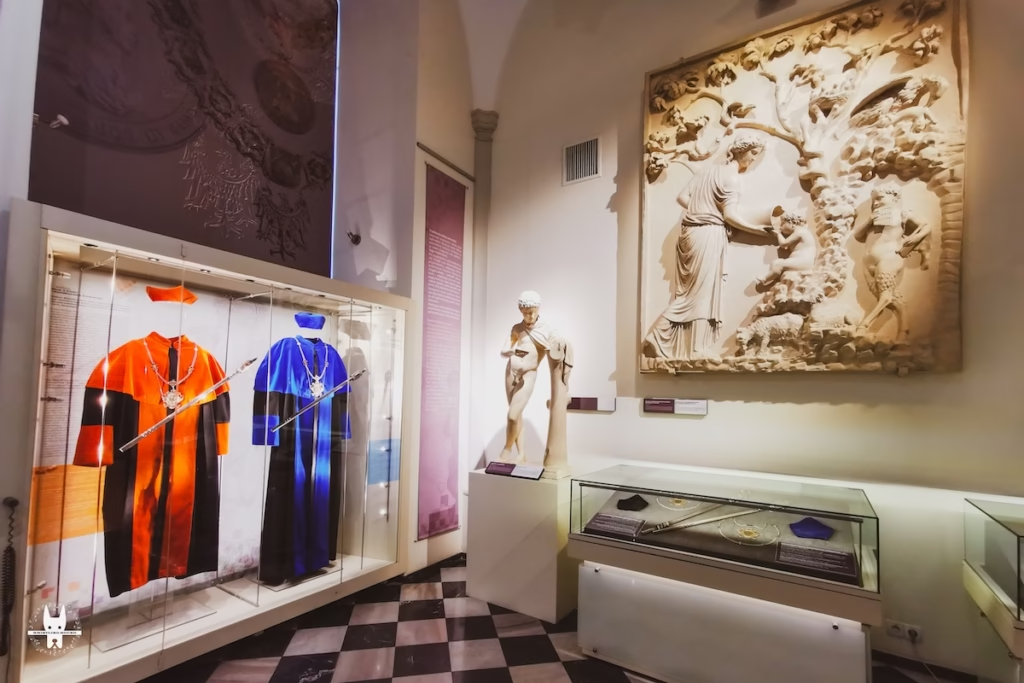
The University Museum’s permanent exhibit is housed within the main Baroque building. Its rooms trace the institutional history of the university from its Jesuit foundation in 1702 through Prussian rule, German administration, wartime rupture, and post-1945 Polish reconstitution. The museum exhibit comprises academic insignia, rectorial chains, early scientific instruments, portraits, and archival documents. It reflects how the university functioned across constantly shifting political regimes.
Today, the University Museum remains among the top museums in Wrocław, depicting examples of how the early modern academic system operated. They preserve the spatial logic of the original university complex, allowing visitors to read continuity, disruption, and restoration directly through the building itself.
Oratorium Marianum: From Chapel to Concert Hall
Oratorium Marianum occupies the former Jesuit Marian chapel on the ground floor of the main university building near Wrocław Old Town. It was constructed in the early 18th century as part of the original Leopoldina complex and functioned as a sacred ceremonial space closely tied to Jesuit academic life.
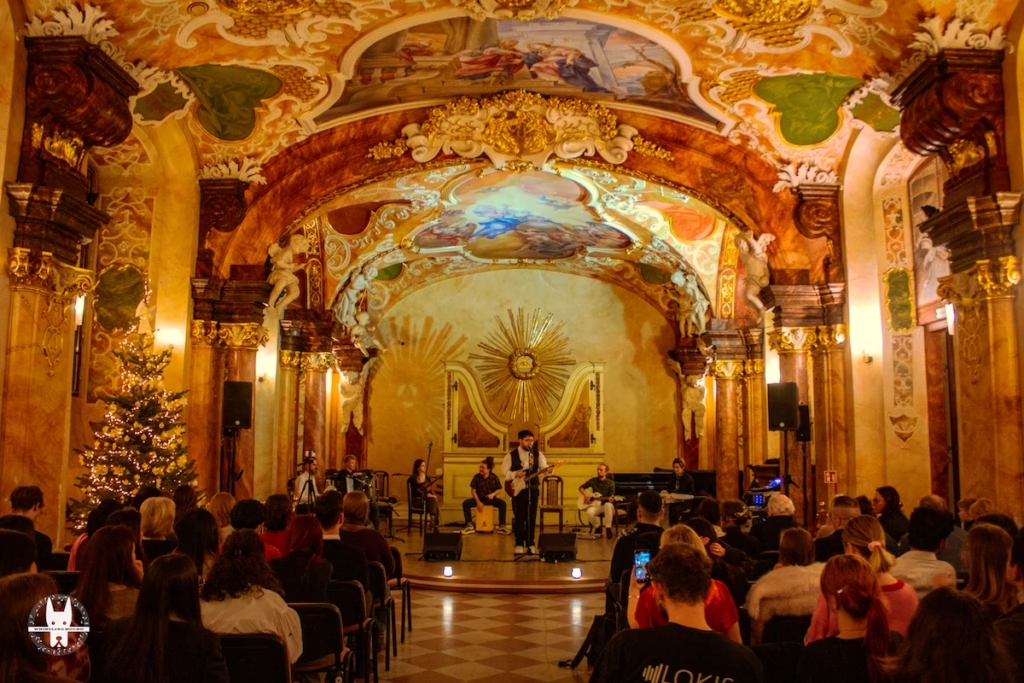
The interior follows High Baroque principles but with a different emphasis than Aula Leopoldina. Where the Aula projects imperial authority, Oratorium Marianum balances devotion and scholarship. The space is defined by painted vaults, restrained illusionistic elements, and a clear axial layout focused on the former altar zone. Architectural decoration reinforces Marian symbolism.
During the Siege of Breslau in 1945, Oratorium Marianum suffered significant damage. Interior decoration and structural elements were affected by shelling and fire, but the core chapel survived. Post-war restoration stabilised the space, with later conservation work focused on recovering its Baroque character based on archival documentation.
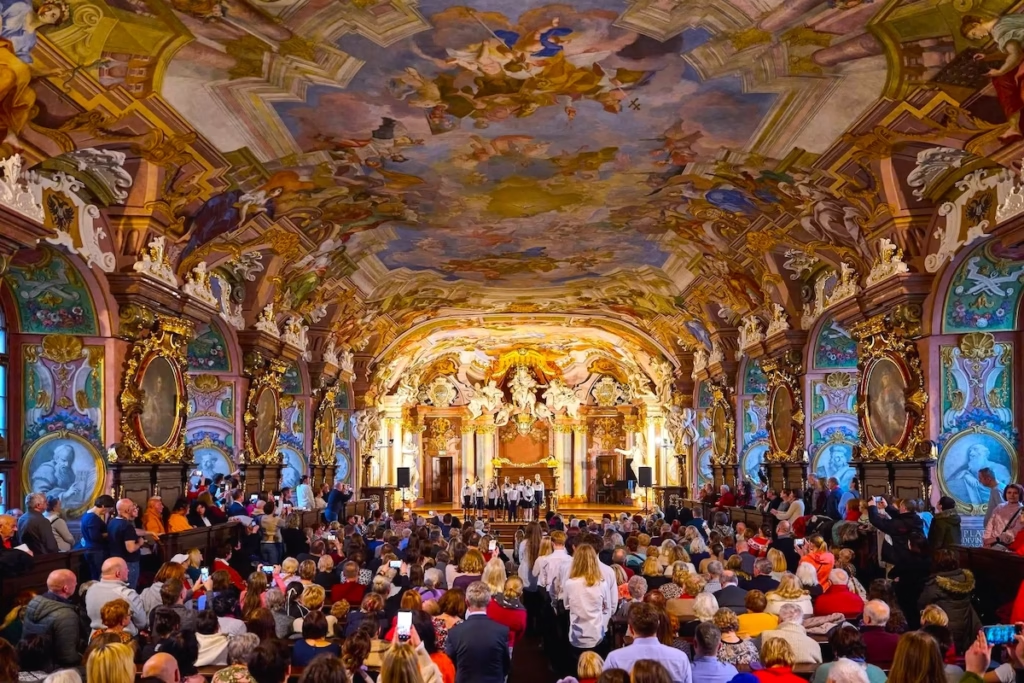
Today, Oratorium Marianum functions primarily as a ceremonial and concert hall featuring premium candlelight concerts in Wrocław. Its acoustics and scale make it one of the most important historical music venues in Poland within the university complex.
Aula Leopoldina: High Baroque, Illusion, and Academic Power
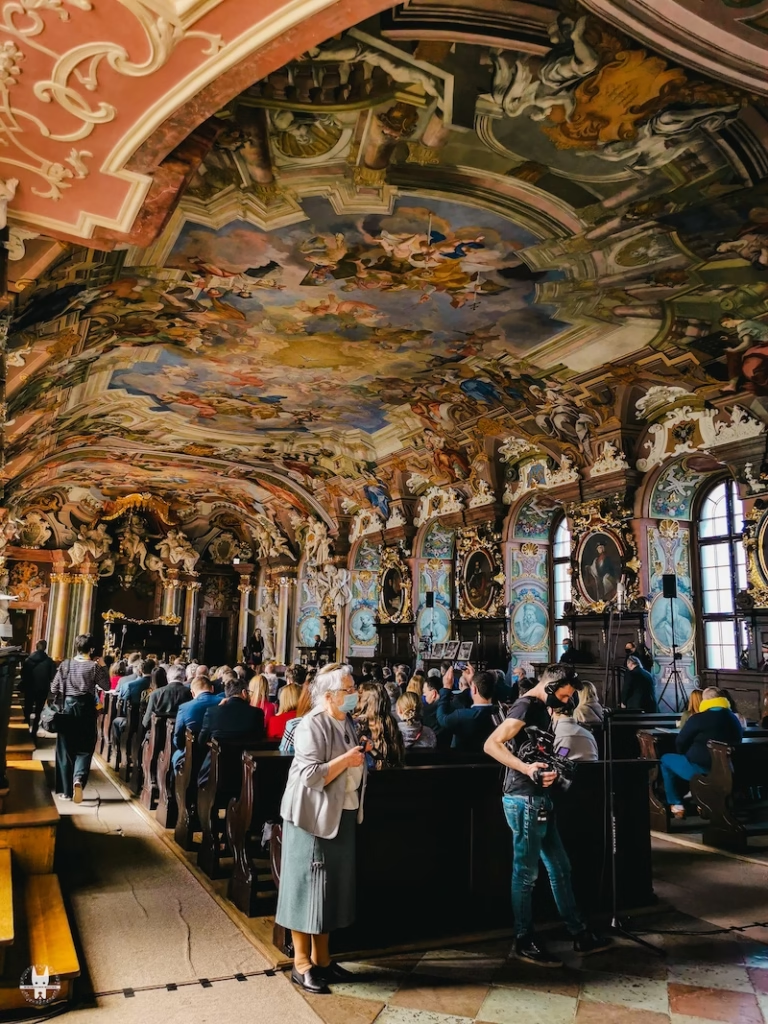
A hidden Baroque gem in Wrocław’s Old Town, Aula Leopoldina is the principal ceremonial hall of the University of Wrocław and one of the most accomplished Baroque interiors in Poland. Constructed between 1702 and 1739, it was designed to stage academic authority through architecture, ritual, and visual persuasion.
The hall is built as a controlled illusion. Painted columns, entablatures, and architectural extensions dissolve the boundary between real structure and fresco, creating the impression of added height and depth. Trompe-l’œil techniques extend the space vertically, while the trapezoidal plan intensifies perspective, directing the eye upward toward the ceiling.
The frescoes, associated with Johann Michael Rottmayr and Johann Christoph Handke, present allegories of divine wisdom and the liberal arts. Philosophy, law, medicine, and theology appear within painted architectural frames, integrated into the spatial logic of the room.
Stucco work by Franz Joseph Mangoldt and the architectural design of Christoph Tausch complete the hall’s composition. Atlantes carry globes symbolising knowledge and cosmic order, while imperial emblems assert Habsburg patronage. At the centre, the rector’s throne anchors the space, framed by allegorical virtues that link scholarship with moral authority.
During the 1945 Siege of Breslau, Aula Leopoldina was heavily damaged by shelling and fire. Ceiling paintings and ornamental elements were largely destroyed. The interior visible today is the result of long-term restoration completed between 2000 and 2014, based on archival research, surviving fragments, and original documentation.
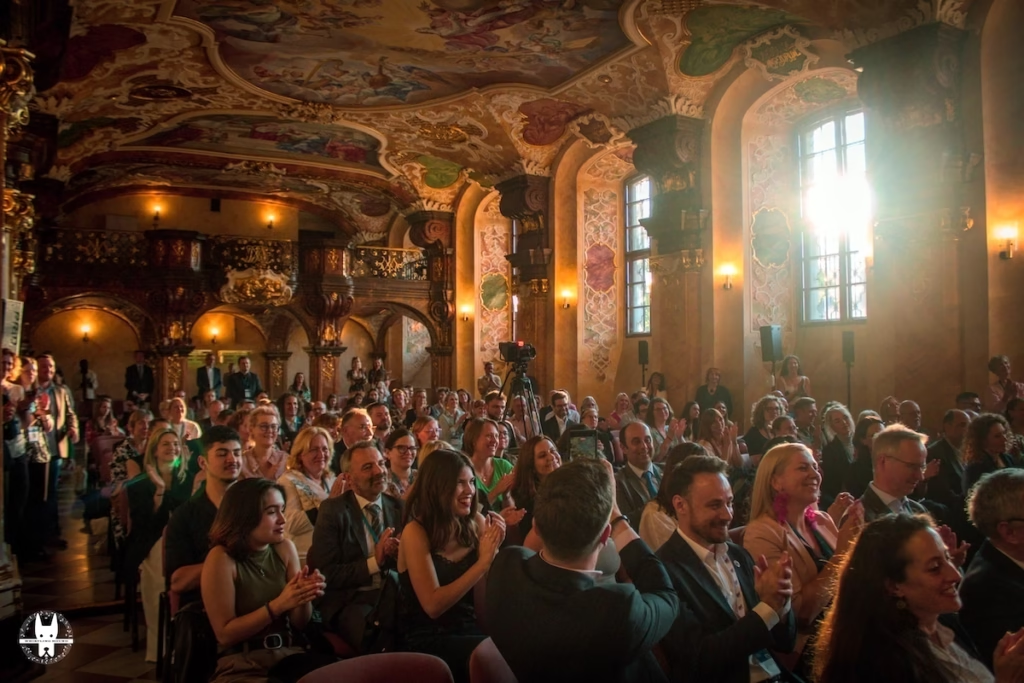
The hall continues to function as an exclusive space to host university ceremonies, graduations, and private live musical concerts in Wrocław.
Mathematical Tower and Observatory
The Mathematical Tower, with four large sandstone statues, is the crown jewel of Wrocław’s Old Town Baroque heritage. It showcases personifications of four major faculties of the University of Wrocław (Theology, Law, Philosophy, and Medicine). These statues survived through all the major wars fought in Wrocław over the last three centuries.
The tower rises above the university’s main building as both a functional observatory built in 1791 and a symbolic culmination of the Baroque complex. Completed in the late 18th century, it was originally designed to support astronomical observation, timekeeping, and scientific instruction, reflecting the university’s expanding focus beyond theology and philosophy into the natural sciences.
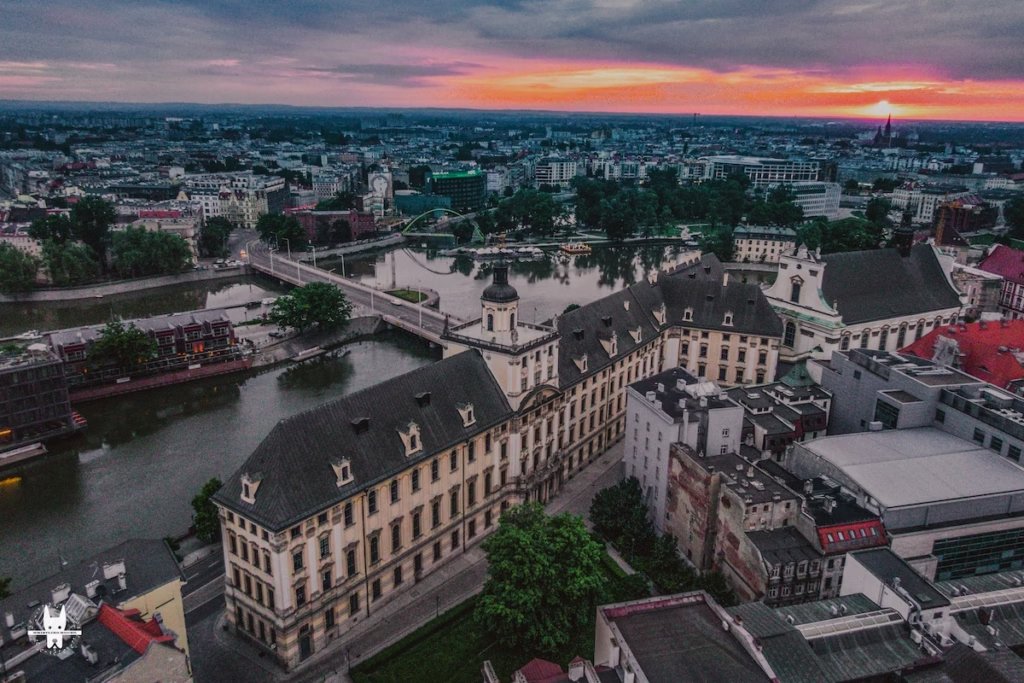
Positioned high above the Odra, these figures form a visual statement of academic completeness and intellectual order. Remarkably, the statues survived all major conflicts that affected Wrocław, including the 1945 Siege of Breslau, remaining intact despite widespread destruction in the surrounding city.
Internally, the tower housed instruments used for astronomical measurement and observation, connecting the university to broader European scientific networks of the Enlightenment period. Its elevation offered clear sightlines over the city and river, essential for precise observations before the invention of modern equipment.
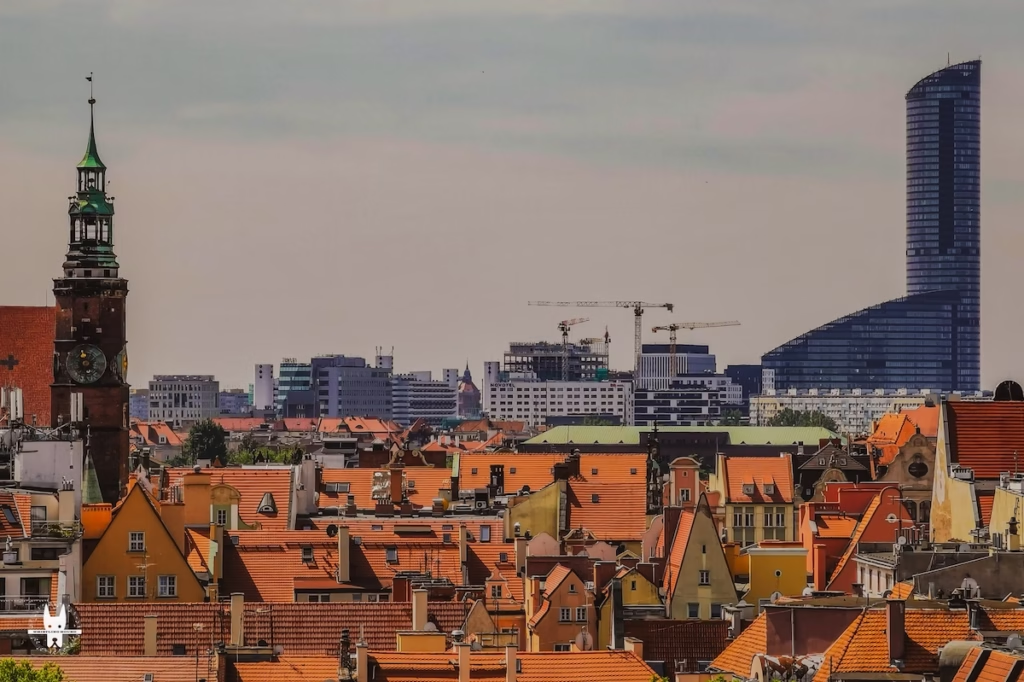
Today, the Mathematical Tower functions as both a museum space and an excellent viewpoint in Wrocław, offering views from the Odra to Ostrów Tumski. The viewpoint also offers a rare perspective over the historic Wrocław city centre, the Odra islands, bridges, and beyond. It remains one of the few surviving academic observatories of its kind in Poland, preserving the scientific ambitions embedded within the university complex. The Mathematical Tower is a must-visit attraction in Wrocław for tourists. It is also included on popular Wrocław Dwarfs trails.
Must read: Wrocław Islands and Bridges: The Historic Heart of the City
Wrocław University Damage, Fire, and an 82-Day Siege
The Siege of Breslau ran from February to May 6, 1945. It was one of WWII’s last brutal stands. Hitler declared the city a fortress in 1944, forcing prolonged defence as Berlin collapsed.
Shelling and fires struck, and Aula Leopoldina lost ceiling frescoes and much stucco to blasts. Oratorium Marianum suffered similar interior damage. Yet the thick Baroque walls held firm compared to crumbling civilian structures.
Immediate post-war stabilisation happened in the late 1940s under Polish administration. Full conservation unfolded over decades: minor fixes in the 1970s, then major work starting in 2008 (research and designs), with key phases 2015–2022 (ceiling reinforcement, podium, vault, stucco). This was cultural recovery, reinstating Baroque symbolism. Today, it’s a key site for understanding Festung Breslau in Wrocław.
Beneath the University Surface: Legends and Stories
The university complex stands on ground with deeper roots. Medieval Piast castle foundations (11-12th century) lie beneath parts of the site, remnants of Wrocław’s early ducal stronghold before the Jesuit university rose. A popular legend is tied to a “Cursed Maiden”, a castellan’s daughter doomed to haunt the walls. That was after a tragic love affair ended in the Iron Maiden torture device (a story echoed in local folklore, as it’s more atmospheric than documented fact).
As a warm gesture, the university in 2015 symbolically restored 262 PhD degrees stripped during the Nazi era from Jewish scholars and others deemed undesirable.
The University of Wrocław (as Breslau) claims historical ties to nine Nobel Prize winners through alumni status, faculty appointments, or research periods in the pre-1945 era. A legacy worth mentioning! Key names include:
- Theodor Mommsen (Literature, 1902) – professor of law and philosophy here.
- Philipp Lenard (Physics, 1905) – taught physics at the university.
- Eduard Buchner (Chemistry, 1907) – professor, Nobel for non-cellular fermentation.
- Paul Ehrlich (Physiology or Medicine, 1908) – graduate and early researcher.
- Fritz Haber (Chemistry, 1918) – professor of chemistry.
- Friedrich Bergius (Chemistry, 1931) – associated through research.
- Erwin Schrödinger (Physics, 1933) – brief but notable connection.
- Otto Stern (Physics, 1943) – PhD from Breslau University.
- Max Born (Physics, 1954) – born in Breslau, studied and taught here early on, Nobel for quantum mechanics interpretation.
Practical Info: Prices, Visiting Hours
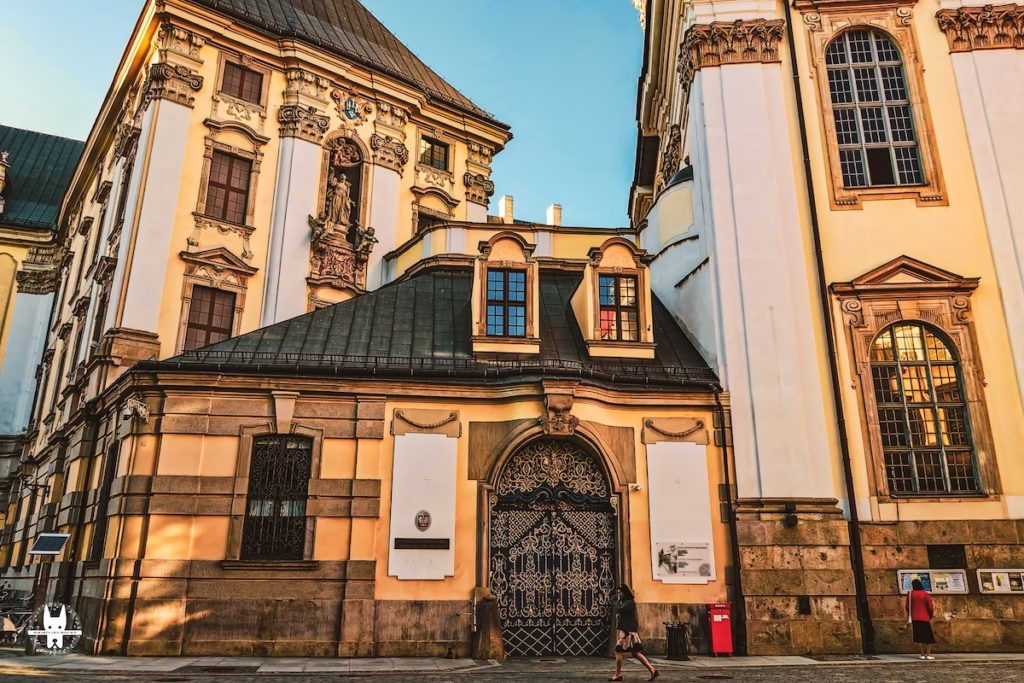
- Prebooking is not needed to enter the University of Wrocław Museums. Buy tickets on-site at the University Museum entrance (Plac Uniwersytecki 1).
- Late mornings on weekdays offer the quietest experience, especially outside concert days.
- Some historic staircases limit full wheelchair access; lifts are not available in all sections.
- Spare 60–90 minutes to see Aula Leopoldina, Oratorium Marianum, and the Mathematical Tower.
- The museum also offers student discounts.
Hours: October–April: Mondays–Tuesdays, Thursdays–Sundays 10:00–16:00 (closed Wednesdays). May–September: Mondays–Tuesdays/Thursdays–Fridays 10:00–17:00; weekends 10:00–18:00. Events/ceremonies may have spaces closed.
Official website: uwr.edu.pl
Tickets: ~28 PLN normal for all halls (Aula Leopoldina, Oratorium Marianum, exhibitions, Mathematical Tower); reduced ~16–20 PLN for students/children (show ID).
FAQs
1. Why is Aula Leopoldina considered one of Europe’s most important Baroque halls?
Its seamless integration of trompe-l’œil frescoes, stucco, sculpture, and architecture creates a unified illusion of infinite space and divine wisdom, rarely matched in preserved academic settings.
2. How long did the Siege of Breslau last, and how did it affect the university?
82 days (February–May 6, 1945). The university took shelling and fire damage, but core structures endured; major interiors required decades of restoration.
3. Can visitors see Aula Leopoldina and Oratorium Marianum today?
Yes, both are accessible via the University Museum ticket. They remain active for ceremonies and concerts, so check for closures. It’s best to combine with a Wrocław Old Town walk.
4. What is the main use of Mathematical Tower now?
Museum exhibits on astronomy history, plus a public terrace viewpoint over Wrocław’s historic centre and the Odra.
5. Is the University of Wrocław built on a former castle?
Parts of the site overlay medieval Piast castle foundations beneath the Baroque surface.
Further read: Wrocław Travel Guide 2026 – A Local Handbook for First-Time and Repeat Visitors