Beneath Wrocław’s Market Square Lies One of Europe’s Oldest Restaurants. 750 years later, it’s still serving!
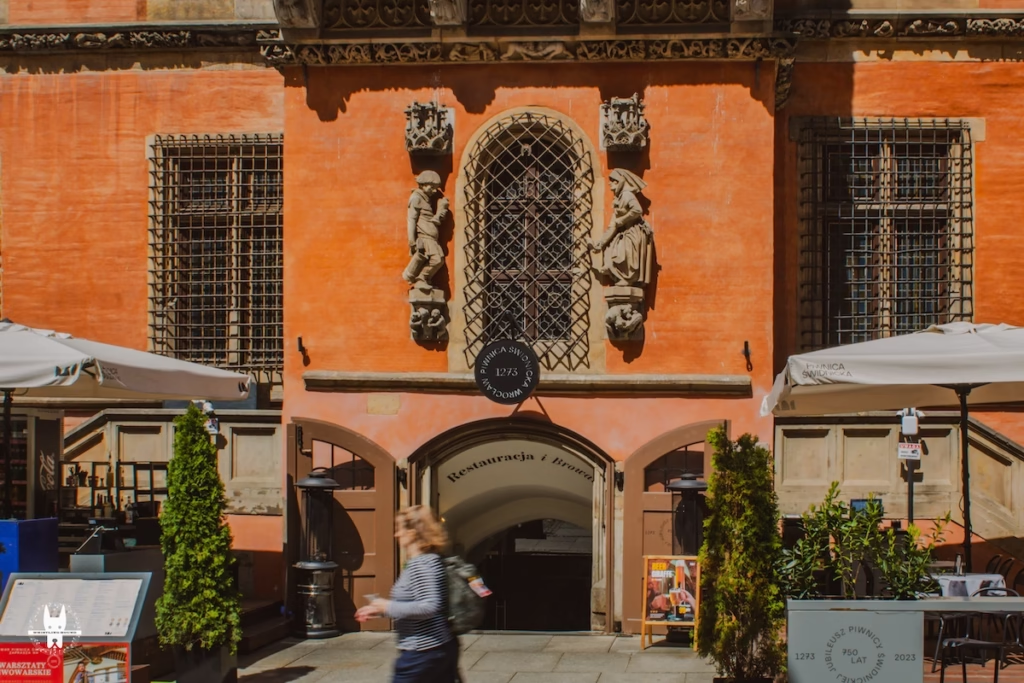
Wrocław is a city that rewards those who look beneath the surface. Hidden under Rynek, beneath the footsteps of tourists, shops, and town hall pigeons, Piwnica Świdnicka Wrocław is a true wonder of Poland. It is one of Europe’s oldest continuously operating dining establishments, serving beer and food in the same vaulted cellar since 1273.
Long before Wrocław became known for its dwarfs or riverside charm, this underground space was already shaping the city’s social life. Merchants met here after market hours. City officials used it formally and informally. Travellers arriving along trade routes from Prague, Leipzig, or further west came here to drink Świdnickie beer and exchange information that rarely travelled through official channels. To understand Wrocław beyond postcards, Piwnica Świdnicka is the place to begin.
Must read: Wrocław Travel Guide 2026 – A Local Handbook for First-Time and Repeat Visitors
Where Exactly Is Piwnica Świdnicka?
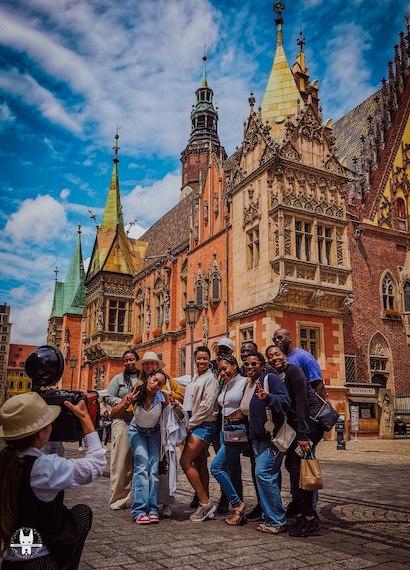
Piwnica Świdnicka is located directly beneath the Old Town Hall (Ratusz) in Rynek, Wrocław’s Main Market Square. The cellar extends under the town hall complex through a sequence of connected chambers supported by thick masonry and Gothic vaults. These structures were engineered to support the administrative buildings overhead while maintaining conditions suitable for long-term beer storage.
A History Older Than Most European Cities
Established in 1273, Piwnica Świdnicka began at a time when the city was emerging as a key commercial centre in Silesia, positioned between Bohemia and the German lands. Its name comes from Świdnica, a town in Lower Silesia renowned during the Middle Ages for its beer production. Świdnickie beer held protected trading privileges in Wrocław, enforced by municipal law. Only authorised beer from approved breweries could be sold in designated city cellars, and Piwnica Świdnicka became the most prominent among them.
By the fourteenth century, the cellar operated under strict city control. Measures, prices, sourcing, and serving hours were regulated, with penalties imposed for violations. Beer was not treated as leisure but as an essential commodity, safer than water and central to urban life.
Gothic Vaults, Stone Pillars, and Medieval Engineering
The structure of Piwnica Świdnicka reflects late medieval engineering. Its low rise gothic vaults were constructed to distribute the weight of the Old Town Hall above, ensuring stability for both the cellar and the municipal buildings it supported.
Thick stone pillars divide the space into multiple chambers, a practical layout that allowed for storage, controlled serving, and supervision. Smaller sections made it easier to manage stock, monitor activity, and maintain order.
In several areas, original medieval masonry remains visible. Wall thickness reaches close to one metre in places, creating a naturally cool environment ideal for beer storage centuries before artificial refrigeration. Uneven floors and worn thresholds are the result of continuous use, underlining the cellar’s role as a working space within Wrocław’s Old Town rather than a preserved architectural exhibit.
Beer, Guilds, and Notable Visitors at Piwnica Świdnicka
Świdnickie beer, from the town of Świdnica, was among Central Europe’s most sought-after brews in the Middle Ages. Its consistent quality, strength, and shelf life earned it protected trading privileges in Wrocław, with Piwnica Świdnicka serving as the official distribution point under strict city regulation.
Medieval beer production and sale were governed by guilds with brewing rights, while serving rights and quality control were the city’s responsibility. Appointed inspectors ensured standards for measures, pricing, and sourcing. Dilution or unauthorised brewing carried heavy penalties. Piwnica Świdnicka operated as a civic institution within this framework, not as a private tavern.
Today, beer tasting at Piwnica Świdnicka continues this long tradition, rooted in centuries-old customs.
Across its history, the cellar welcomed a broad spectrum of visitors. Silesian dukes such as Henryk IV Probus are documented patrons, along with Bohemian kings during periods of political union, and envoys from the Holy Roman Empire. Scholars from the University of Leipzig passed through on academic journeys, while later Prussian officials made use of the cellar’s function in Breslau’s everyday life.
The Secret Tunnel Legend
Stories of hidden tunnels beneath Piwnica Świdnicka have circulated for centuries. While no secret escape passage connecting distant parts of the city has been proven, historical research confirms the existence of extensive underground infrastructure beneath Rynek.
These included storage cellars, drainage channels, and service corridors used to move beer barrels and supplies between municipal buildings. Archaeological surveys conducted during renovations of the Old Town Hall revealed multiple blocked passages and secondary chambers, supporting the idea of a once far more interconnected underground system.
Medieval Cellar – Today’s Fine Dining Spot in Wrocław
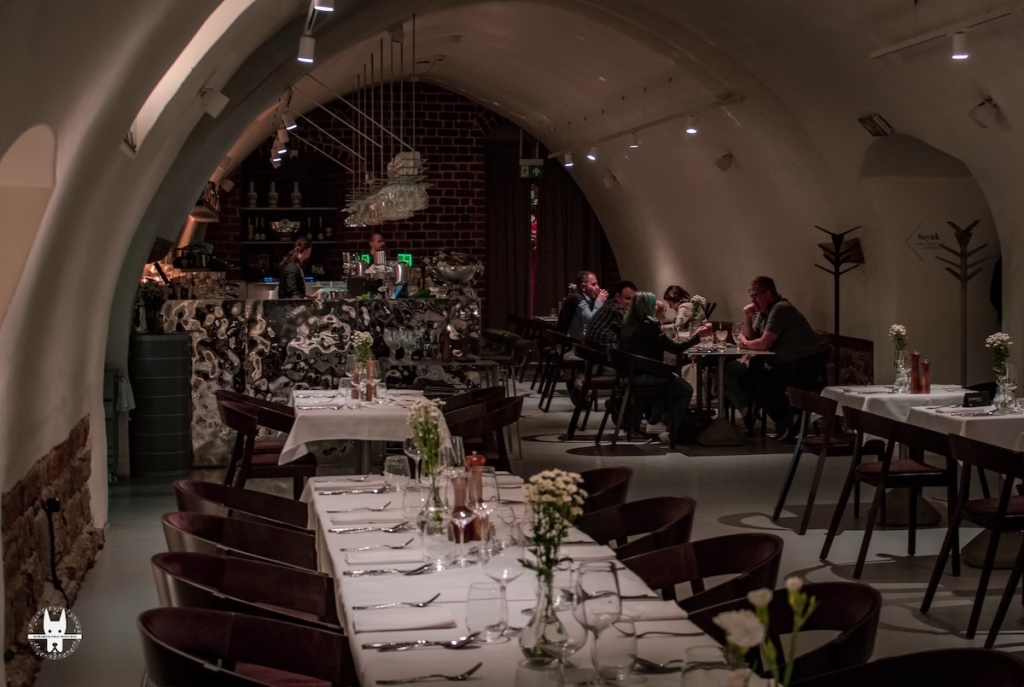
Today, this place blends centuries-old tradition with contemporary craft brewing and regional cuisine. The Piwnica Świdnicka menu showcases Polish and Silesian classics like żurek (sour rye soup), pierogi stuffed with seasonal fillings, and slow-cooked pork knuckle, prepared with attention to authentic flavours.
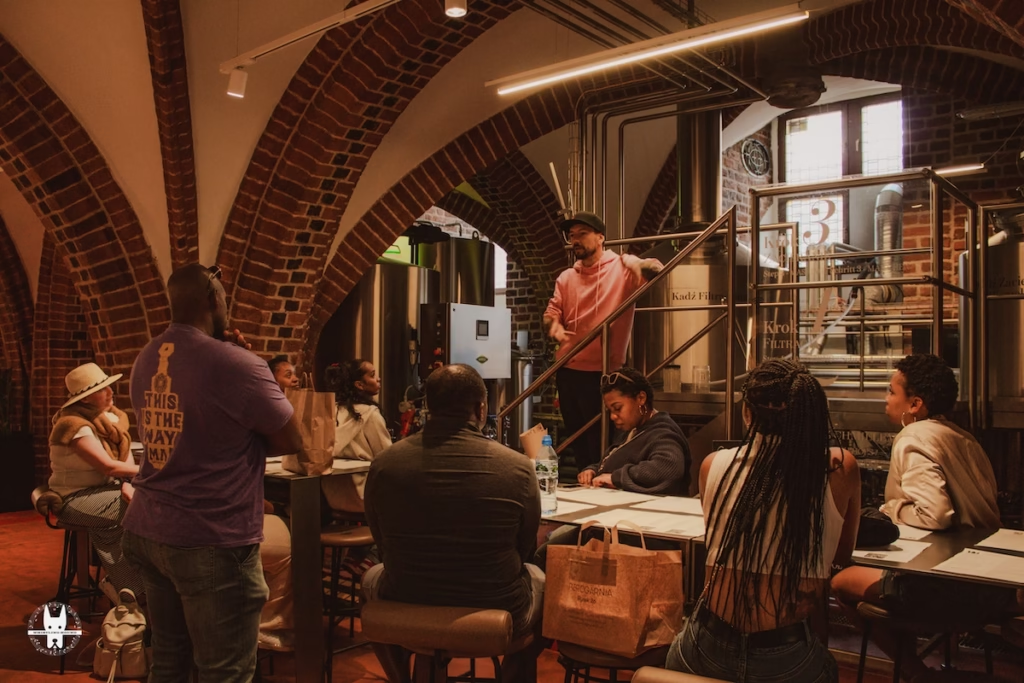
The cellar also features an on-site microbrewery, producing a range of craft beers that respect the historic Świdnickie style while exploring modern brewing techniques. Popular offerings include unfiltered lagers and seasonal ales brewed directly beneath the Old Town Hall.
Visitors can order beer tasting boards, carefully curated flights that allow sampling of several brews in smaller portions. These tasting sessions are especially popular during the warmer months, with outdoor seating, which attracts locals and tourists keen to explore traditional and experimental beers alike.
Piwnica Świdnicka guided tours of the microbrewery are recommended. These tours explain the brewing stages and historic context, connecting the craft to the cellar’s long history as a beer hub.
The dining experience here is among the ‘popular things to do in Wrocław’s Old Town’. The setting makes the cellar a rare blend of living heritage and modern hospitality.
Post-Pandemic Revival of Piwnica Świdnicka

After several years of closure, Piwnica Świdnicka reopened in July 2022 following an extensive renovation and operational reset. The works focused on technical upgrades, safety compliance, and a new culinary concept, including the introduction of an on-site autonomous brewing installation within the cellar space. This marked a significant departure from how the restaurant had functioned historically. It was also the first time in the cellar’s roughly 750-year history that beer was brewed directly on the premises
While the medieval structure, stone vaults, and load-bearing walls were preserved, the interior layout and furnishings were significantly altered. Much of the earlier wooden furniture and tavern-style fittings were replaced with contemporary seating and service layouts designed for modern restaurant operations.
The changes were not universally welcomed. Among long-time Wrocław residents and repeat visitors, particularly those familiar with the pre-closure interior, the renovation sparked criticism. This tension between preservation and adaptation reflects a broader challenge faced by historic restaurants in Wrocław.
Life in the Middle Ages at the Cellar
In medieval Wrocław, cellars like Piwnica Świdnicka played a practical social role. This was where merchants finalised transactions, guild members met after market hours, and travellers gathered reliable information about routes, prices, and political changes.
What survives today is not a performance of the past but a habit of use. People still come here to sit, talk, eat, and stay longer than planned. That continuity is functional rather than sentimental, rooted in how the space was designed to be used from the beginning.
Piwnica Świdnicka Wrocław – From Kingdoms to Modern Poland
Piwnica Świdnicka has survived this city’s major turbulent past. When Wrocław formed part of the medieval Kingdom of Bohemia, the cellar functioned under city law that tightly regulated trade and alcohol consumption. Under Habsburg rule, it remained a municipal space, serving officials, merchants, and visiting administrators.
During the Prussian period, Breslau became a major administrative and industrial centre, and Piwnica Świdnicka shifted with the city’s changing clientele, welcoming civil servants, academics, and military officers.
After 1945, as Wrocław transitioned into modern Poland, the restaurant underwent restoration. Large-scale work was done to preserve the medieval structure while allowing it to function within contemporary dining standards. Today, Piwnica Świdnicka stands as a historic restaurant in Wrocław.
Visiting Tips for Tourists and Residents
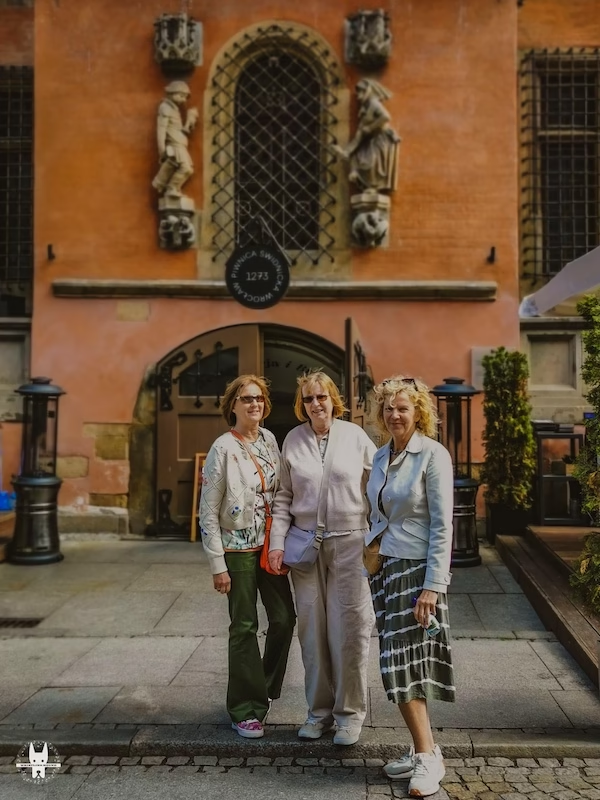
For visitors, it offers context for understanding how Wrocław functioned as a trading city. For long-stay residents, it provides continuity with everyday urban life.
- Best visited in the early to late afternoon when Rynek quiets slightly
- Reservations recommended, especially on weekends and peak tourist season (May – August)
- Ideal stop during a guided Old Town walk
- Pair it with a look inside the Old Town Hall Museum
If you are exploring restaurants in Wrocław with an interest in history rather than hype, Piwnica Świdnicka belongs high on that list. It fits naturally into a slow Old Town walk or a guided route that focuses on how the city actually functioned. Visit their official website for more info.
Frequently Asked Questions
1. Is Piwnica Świdnicka the oldest restaurant in Europe?
It is considered one of the oldest continuously operating restaurants in Europe, with documented activity dating back to 1273.
2. Where is Piwnica Świdnicka located?
It is located beneath the Old Town Hall in Wrocław’s Main Market Square (Rynek) in Poland.
3. Can you visit Piwnica Świdnicka without dining?
Access is primarily through the restaurant, but guided tours of the Old Town often include its exterior history and context.
4. Does Piwnica Świdnicka still serve traditional beer?
Yes, beer culture remains central, with selections referencing historic brewing traditions.
Further read: Complete Guide to Wrocław Dwarfs: History, Walking Routes & Stories