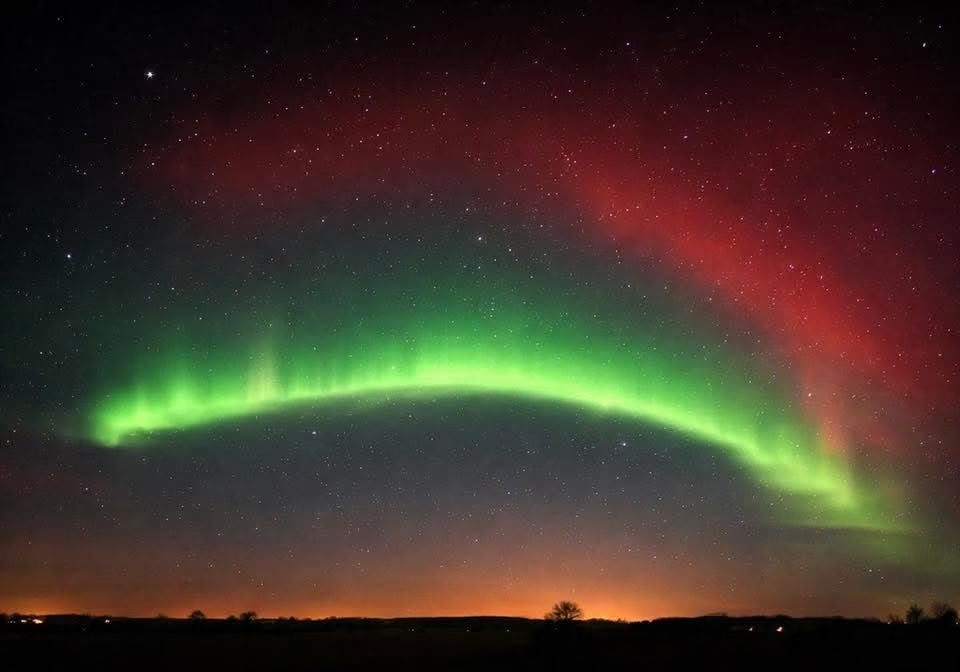
On the night of January 19, 2026, the night skies over the Northern Hemisphere lit up with bright reds. At 51.1093° N, 17.0386° E, we were treated to one of the most powerful Northern Lights displays seen over Poland in recent years. From the Baltic coast to the Carpathians, from Podhale and Małopolska to Wrocław, the Northern Lights produced massive mid-latitude auroras. Largely between 10 PM and 3 AM, the sky stayed open and clear, as the night unfolded in the most spectacular way.
Thanks to the solar maximum and several strong geomagnetic storms in recent years, Northern Lights in Poland are becoming more frequent. Though the country sits well outside the typical auroral zone, auroras along the Polish Baltic coast are always a rare visual treat. This geomagnetic storm generated enough energy to push the auroral oval deep into mid-latitude Europe, with sightings reported across Germany, Belgium, and even Italy.
Must read: Explaining the Historical Geomagnetic Storm of 10th May 2024 – The Day Earth Lit Up with Red Auroras
Severe G4 Geomagnetic Storm Hits Earth
The chain of events began a day before, on Sunday evening, January 18, with a strong X-class solar flare (X1.9) as reported by NOAA SWPC. This flare itself was not among the most extreme in energy classification. But it carried a significant radio signature, detected by space observatories monitoring the event. This burst was an early indicator that the eruption had produced an Earth-directed coronal mass ejection (CME).
What followed was exceptional. The CME generated a very severe S4 solar radiation storm, the strongest recorded since 1991. The last comparable S4 radiation event occurred in 2003, during the declining phase of Solar Cycle 23. Radiation storms of this level are rare and are closely associated with disruptions to radio communication and satellite operations.
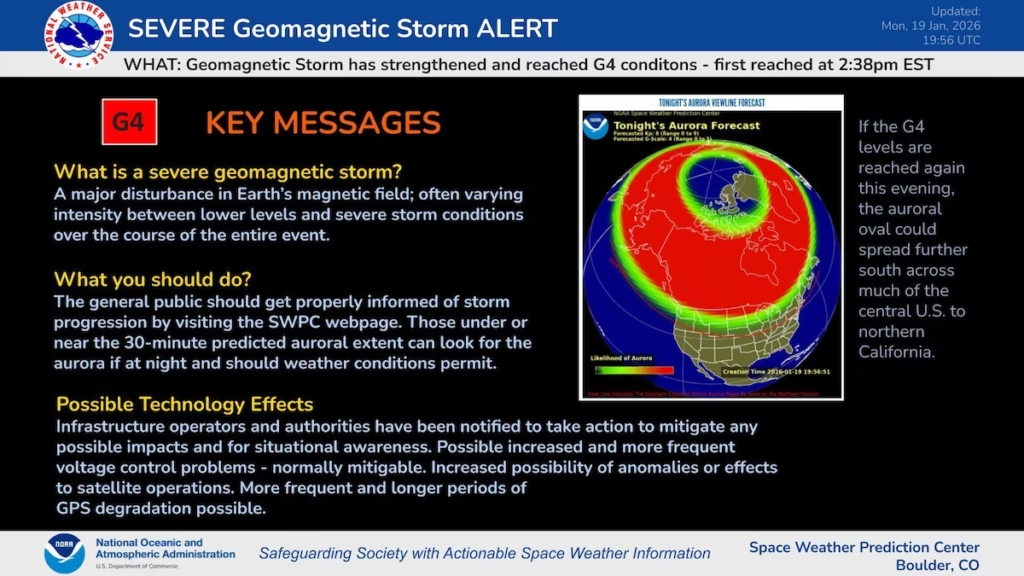
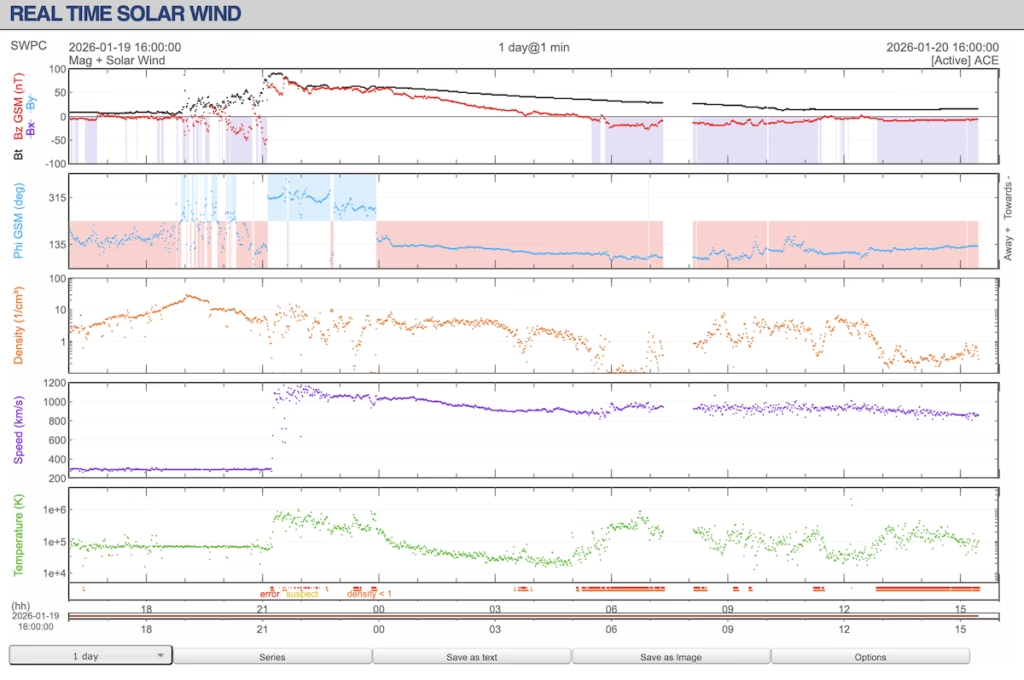
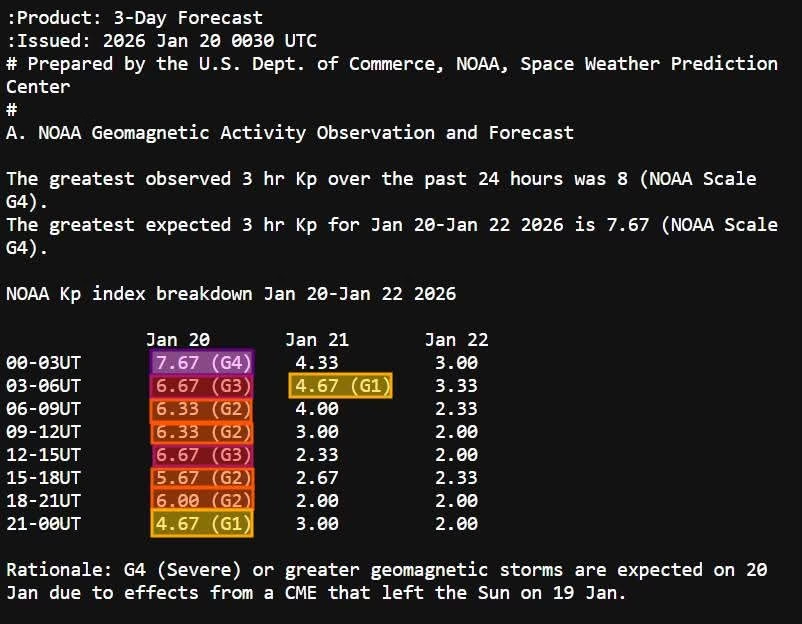
The anticipated CME reached Earth late on January 19, and geomagnetic conditions escalated, culminating in a G4 severe geomagnetic storm. By early January 20, geomagnetic activity weakened into the G1–G3 range, though conditions remained active. Solar wind speeds stayed extremely elevated, exceeding 2 million miles per hour. The interplanetary magnetic field strength dropped sharply, nearly twentyfold from peak G4 levels.
Despite the weakening magnetic field, Earth continued to register geomagnetic responses due to sustained solar wind pressure and a highly agitated upper atmosphere. As January 20 progressed, conditions gradually stabilised but eventually peaked by night. Aurora sightings were reported from across Poland into the night of 20-21 January 2026.
Attention now remains on the same sunspot group, which retains flare potential, and on a coronal high-speed stream, visible as a dark region on the Sun, both of which continue to influence near-Earth space weather.
Get acquainted with Spaceweather terminologies: A Curious Dive into the World of Aurora Borealis & Solar Storm
Widespread Auroras in Poland
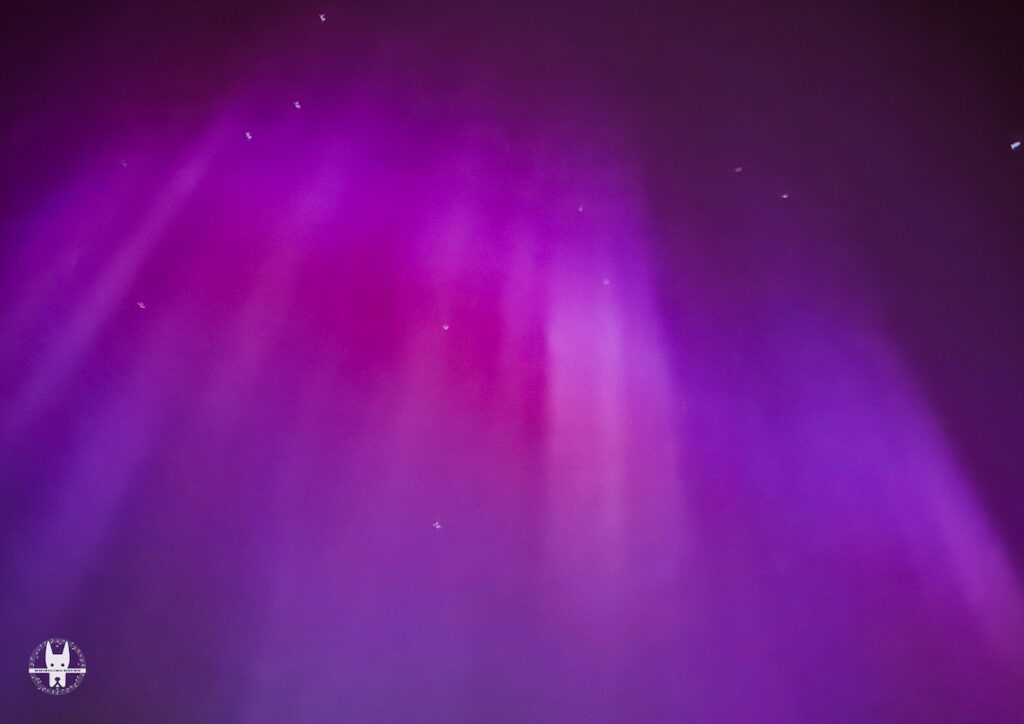
The key factor was the interplanetary magnetic field orientation, specifically the Bz component. During peak activity, Bz turned strongly southward, allowing solar particles to penetrate Earth’s magnetic shield with unusual efficiency. When this happens, Earth’s magnetosphere struggles to deflect incoming charged particles, and energy floods into the upper atmosphere.
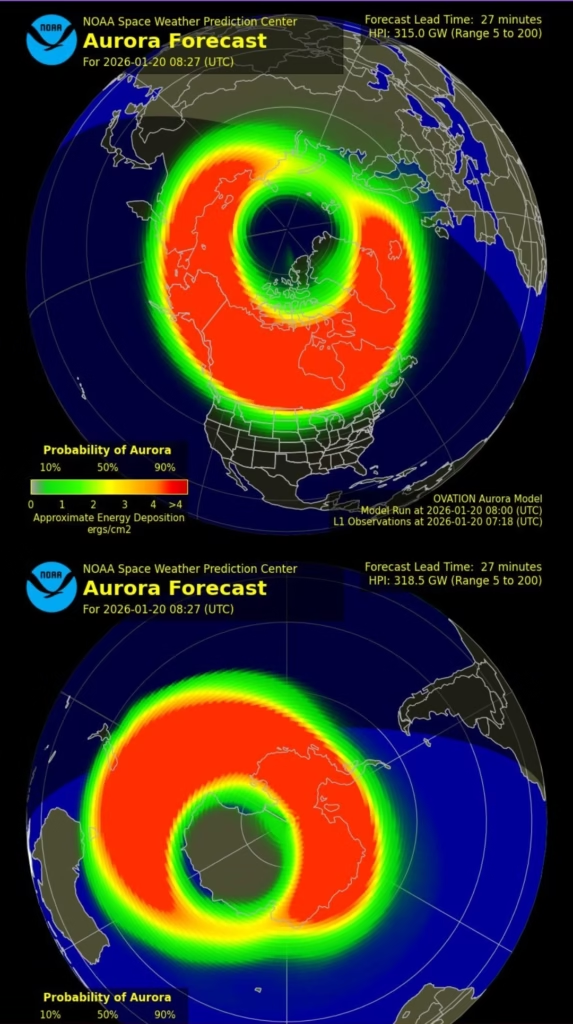
The result was a dramatically expanded auroral oval far into mid-latitude regions like Poland, which sits at approximately 51° north. This explains why auroras were seen not only in northern Scandinavia, but across central Europe.
Northern Lights Colours During the January 2026 Storm
What made this storm visually distinct was the dominance of deep red auroras, paired with intermittent green structures.
Red auroras form at much higher altitudes, often above 250 kilometres, and are typically associated with strong geomagnetic storms. At mid-latitudes, they are uncommon and usually faint. During this event, the reds were sustained and clearly visible, lingering high above the horizon for long stretches of time.
The green auroras appeared lower in the sky and showed more variation in shape and intensity. At times, they faded almost completely, only to reappear minutes later, shifting slowly across the northern horizon. This contrast between stable reds and changing greens defined much of the night’s visual character across Poland.
Solar Maximum and Why Events Like This Are Increasing
This geomagnetic storm sits within the broader context of solar maximum, the most active phase of the Sun’s roughly 11-year cycle. During this period, solar activity increases noticeably. Solar flares become more frequent, big sunspots actively emit strong solar flares, coronal mass ejections occur more often, and those making it to earth cause geomagnetic storms reaching higher intensities.
What set the January 19–20 event apart was not only its strength, but its geographic spread. Auroral visibility across Poland, combined with confirmed sightings from the rest of Europe, places this storm among the more expansive auroral events seen during the current solar cycle.
As the solar maximum continues, similar conditions remain possible, though events of this scale still depend on a precise alignment of solar wind speed, magnetic orientation, and timing.
Beyond the Auroras: What the Geomagnetic Storm Changed
Geomagnetic storms at the G4 level extend beyond auroral displays. At this intensity, disturbances can affect satellite operations, reduce GPS accuracy, interfere with high-frequency radio communication, and place additional strain on power grid infrastructure at higher latitudes.
Storms of this magnitude are closely monitored by space-weather agencies worldwide. They provide valuable real-time data on how Earth’s magnetic environment responds to sustained solar input, particularly during periods of elevated solar activity. About the effects from yesterday’s radiation, we’ll find out more soon.
Northern Lights in Poland: A Rare Alignment
Auroras are not unheard of in Poland, but country-wide visibility, strong colour saturation, and clear naked-eye observation remain uncommon. During the night of January 19–20, 2026, the conditions aligned in a way rarely seen at this latitude.
Red and green auroras were visible simultaneously, stretching from sea level to mountain regions, under clear skies, and sustained over several hours. Displays of this scale require a specific combination of factors: a strong geomagnetic storm, elevated solar wind speeds, and a favourable magnetic field orientation. When these elements align, the auroral oval can expand far beyond its usual limits.
Events like this fall into the category of once-in-a-year, and in some cases once-in-a-decade, for Poland. While solar maximum increases the likelihood of heightened activity, storms of this intensity remain difficult to forecast with precision, as they depend on rapidly changing solar wind conditions and magnetic dynamics near Earth.
Further read: Everything You Need to Know About the Northern Lights in Rovaniemi – Nature’s Most Impressive Arctic Spectacle!